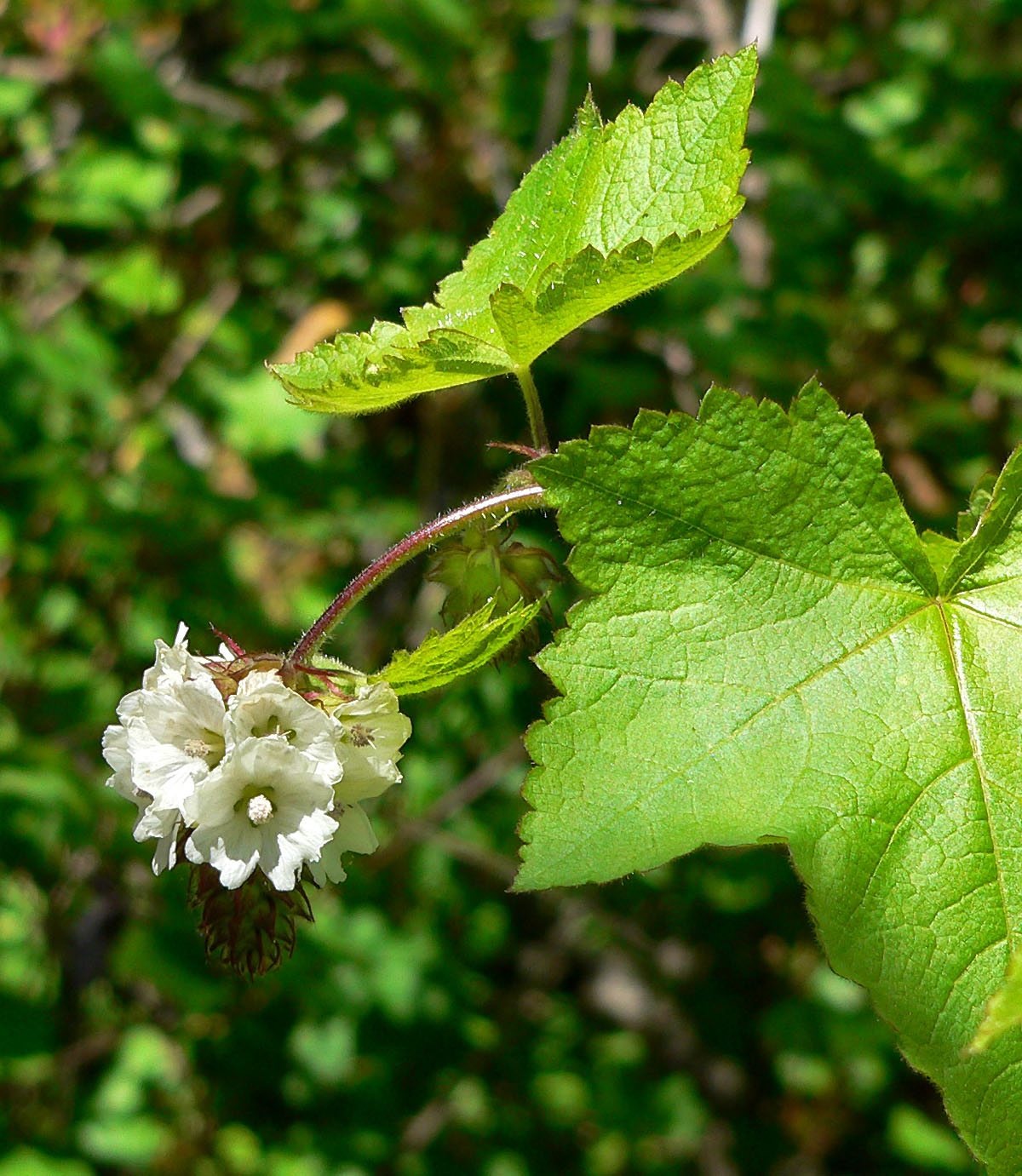
Sidalcea is a genus of flowering plants in the mallow family (Malvaceae, subfamily Malvoideae, tribe Malveae), known by the common names checkerbloom, checkermallow, and — particularly in the United Kingdom — prairie mallow. The genus contains roughly 25 to 29 species and is native to western and central North America, with a particular concentration of diversity in California, Oregon, and the broader Pacific Northwest.
Members of the genus are mostly herbaceous annuals or perennials, several with creeping rhizomes that allow established plants to form spreading clumps. Stems are erect and topped by terminal spike-like racemes of mallow-type flowers. Each flower carries five petals — most often in shades of pink, but ranging from clear white through deep rose to purple — and the petals are frequently notched at the tip, giving the inflorescences a delicate, paper-like quality. Basal leaves are usually rounded and shallowly toothed, while upper stem leaves tend to be deeply palmately lobed, sometimes almost dissected. Plants typically bloom from late spring into late summer.
A characteristic feature of the genus is its breeding system: a number of species are gynodioecious, meaning populations contain a mixture of plants bearing bisexual (hermaphrodite) flowers and plants bearing only female flowers. Most species are diploid (2n = 20), but polyploids at the tetraploid and hexaploid levels also occur. The genus was formally established in 1849 by Asa Gray, with Bentham, in Plantae Hartwegianae.
Sidalcea includes several well-known ornamentals — popular garden cultivars are largely hybrids derived from S. candida and S. malviflora, and three perennial cultivars hold the Royal Horticultural Society's Award of Garden Merit. The genus also has substantial conservation importance: a number of its narrowly distributed species and subspecies are federally listed in the United States, including Nelson's checkermallow (S. nelsoniana) and several varieties of S. oregana. Several Sidalcea species act as host plants for native butterflies, adding ecological value beyond their ornamental appeal.
History
The genus was established in 1849 by Asa Gray with George Bentham, published in Bentham's Plantae Hartwegianae (page 300) and concurrently in the Memoirs of the American Academy of Arts and Sciences, new series, volume 4, page 18. The authorship is therefore conventionally cited as "A.Gray ex Benth." The genus has since served as a focal group for North American botanists studying western flora — California in particular has been a centre of taxonomic effort, and the Jepson eFlora treatment recognises numerous narrowly distributed species and subspecies that have been described or recircumscribed there over the intervening century and a half.
Distribution
Sidalcea is essentially a western North American genus. Species range across western and central parts of the continent, with the heart of the genus's diversity in California, Oregon, and the surrounding Pacific Northwest. The Jepson eFlora alone recognises more than a dozen California taxa, several of them narrow endemics — for example S. covillei in the Owens Valley, S. calycosa in vernal pools, and the various subspecies of S. hickmanii. Other widespread species such as S. oregana extend the genus's range from British Columbia south to California and east to Utah, while S. nelsoniana is largely restricted to the Willamette Valley of Oregon and adjacent southwestern Washington.
Ecology
Sidalcea species are typical of moist meadows, marshes, riparian zones, and seasonally wet habitats across western North America. S. oregana grows in marshes and meadows from British Columbia to Utah, and S. nelsoniana occupies sedge and grass meadows and riparian wetlands of the Willamette Valley, where periodic fire historically helped maintain the open habitat the species depends on. Several Sidalcea species support specialist invertebrates — S. oregana, for instance, is a larval host plant for the West Coast lady butterfly. Reproduction is by seed and, in rhizomatous or root-sprouting species like S. nelsoniana, by vegetative regeneration from root fragments. The flowers attract a range of insect pollinators.
Cultivation
In gardens Sidalcea grows best in deep, fertile, well-drained but moisture-retentive soil, in full sun or with light afternoon shade in hotter climates. The genus tolerates a range of textures from light through heavy soils and a fairly broad pH window from mildly acidic to mildly alkaline. The garden trade relies heavily on hybrids between S. candida and S. malviflora, and three perennial Sidalcea cultivars currently hold the Royal Horticultural Society's Award of Garden Merit — a useful shorthand for the genus's reliability in temperate herbaceous borders.
Propagation
Sidalcea is most commonly propagated either by seed or by division. Seed can be sown in spring under glass and the resulting young plants planted out in summer once they are large enough to handle. Established clumps of perennial species can also be lifted and divided in spring, which both rejuvenates older plants and produces uniform copies of garden-worthy individuals. Some species, notably S. nelsoniana, additionally regenerate vegetatively from root fragments in the wild.
Conservation
Although the genus as a whole is widespread, several Sidalcea taxa are of significant conservation concern in the United States. Sidalcea nelsoniana (Nelson's checkermallow), endemic to the Willamette Valley and adjacent areas of southwestern Washington, has been federally listed as endangered since 1993; restoration progress led to a proposed delisting in April 2022. Within S. oregana, the variety calva — restricted to the Wenatchee Mountains of Washington — is federally endangered, and the subspecies valida, known from only two marshes in Sonoma County, California, holds both federal and state endangered status; subspecies eximia is critically imperilled, with around ten remaining populations in northwestern California. Documented threats across these taxa include fire suppression, conversion of wetlands to agriculture (roughly 99% of Willamette Valley wetlands have been altered), invasion by aggressive non-natives such as reed canary grass, and genetic swamping by hybridisation with related species.
Taxonomy
The genus Sidalcea was formally described by Asa Gray, with George Bentham, in 1849 in Plantae Hartwegianae (Pl. Hartw. 300; also in Mem. Am. Acad. n.s. 4: 18). It sits in the mallow family Malvaceae, subfamily Malvoideae, tribe Malveae. GBIF's backbone recognises about 70 descendant taxa under the genus (species plus infraspecific names). Most species are diploid (2n = 20), but tetraploid and hexaploid lineages exist. A taxonomically noteworthy trait is gynodioecy — populations of species such as S. nelsoniana contain both bisexual and female-only individuals — which has consequences for both reproductive ecology and conservation genetics.










