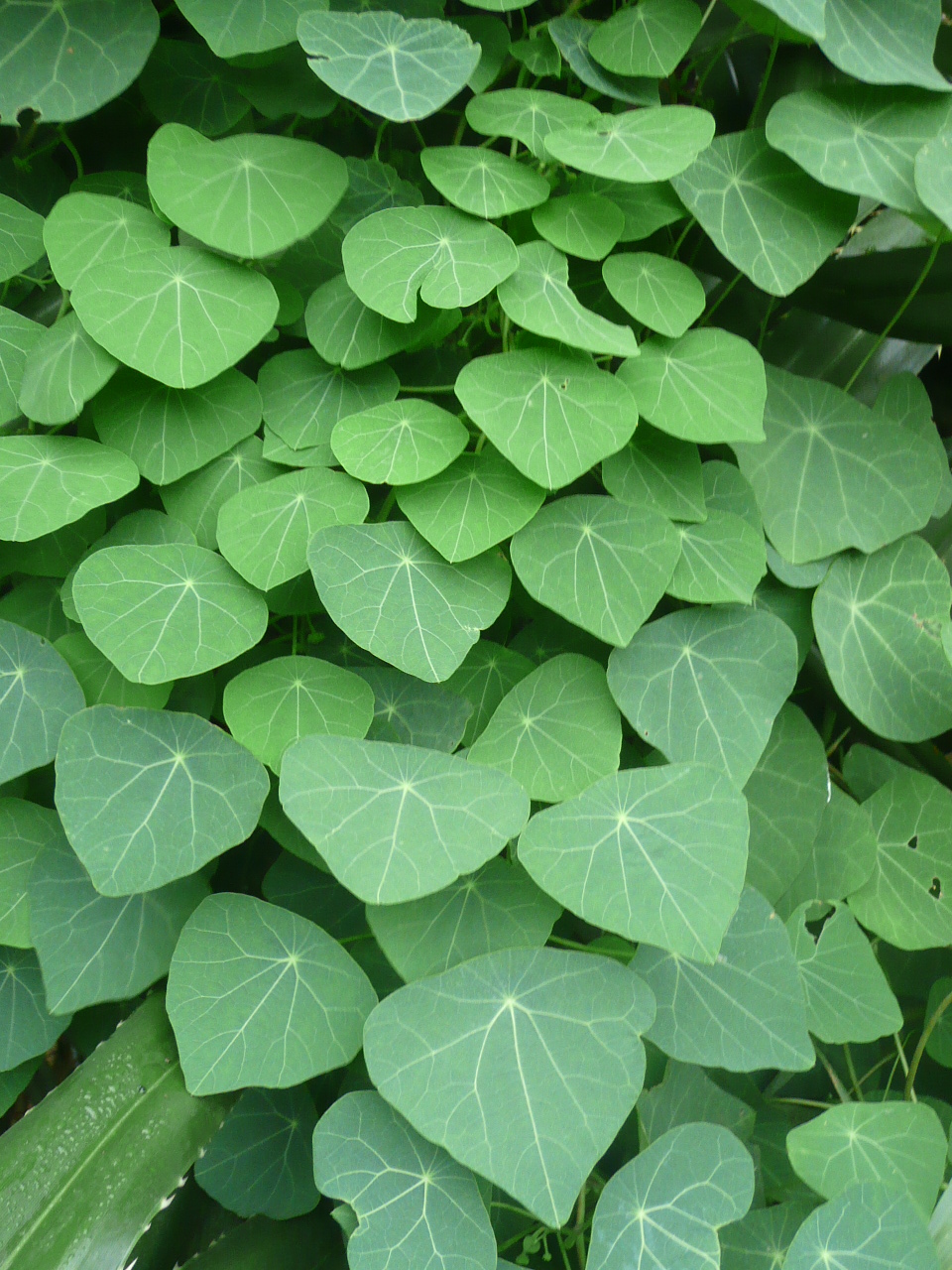
Stephania is a genus of roughly 70 species of climbing or twining vines in the family Menispermaceae, placed within the order Ranunculales. The genus was described by João de Loureiro in 1790 in his Flora Cochinchinensis and is named from the Greek word for "crown," a reference to the distinctive arrangement of the anthers in a crown-like synandrium.
Plants are herbaceous to woody perennial vines, typically growing to around four metres in length. A defining feature is the large, often fleshy rootstock — which in many species is a massive tuber that can emerge partly above the soil surface. The leaves are arranged spirally and are conspicuously peltate, meaning the petiole is attached not at the margin but near the centre of the blade, which is deltoid to broadly rounded and palmately veined.
Inflorescences are typically umbelliform cymes, sometimes condensed into tight heads on a disc-like receptacle. Male and female flowers are borne on separate plants (the genus is dioecious). Male flowers have sepals in one or two whorls of three to four and stamens that are fused into a shield-shaped synandrium — the crown-like structure that gave the genus its name. Fruits are small drupes, red to orangish-red and slightly flattened, with a bony, intricately sculptured endocarp and a horseshoe-shaped seed.
The genus contains more than 50 alkaloids across its species, and tuberous roots are widely used in traditional Chinese medicine and other regional medical systems. Several species have been studied for pharmacologically active compounds; Stephania rotunda, for instance, has yielded numerous known and novel isoquinoline alkaloids.
Etymology
The genus name Stephania derives from the Greek stephanos, meaning "crown." Loureiro chose the name in 1790 to describe the arrangement of the anthers, which are fused into a peltate synandrium that forms a distinctive crown-like structure in male flowers.
Distribution
Stephania is native to tropical and subtropical Africa (from West Africa through Central Africa to southern Africa), eastern and southern Asia (including China, Southeast Asia, the Indian subcontinent, and the Himalayas), northern Australia, and the tropical Pacific Islands. In China alone, 37 species occur, of which 30 are endemic; the genus is particularly diverse across tropical Asia.
Cultural Uses
The tuberous roots of many Stephania species are important in traditional medicine across Asia. Flora of China notes that the genus contains more than 50 alkaloids, and tuberous roots are widely employed in traditional Chinese medicine as well as local medicines across the genus's range. Stephania rotunda growing in Vietnam has been the subject of phytochemical investigation, yielding numerous isoquinoline alkaloids including thaicanine derivatives and related compounds. Some species are also known to be toxic.
Taxonomy Notes
Stephania Lour. (1790) belongs to family Menispermaceae, order Ranunculales. The Flora of China treatment recognises three subgenera: Stephania subg. Stephania, Stephania subg. Botryodiscia, and Stephania subg. Tuberiphania (the large-tuber clade with asymmetrical female perianth). Stephania tetrandra S.Moore, long treated within this genus and the source of the alkaloid tetrandrine, has been reclassified as Botryodiscia tetrandra (S.Moore) L.Lian & Wei Wang. GBIF's backbone records authorship as Lour., published in Fl. Cochinch. 2: 608 (1790).










