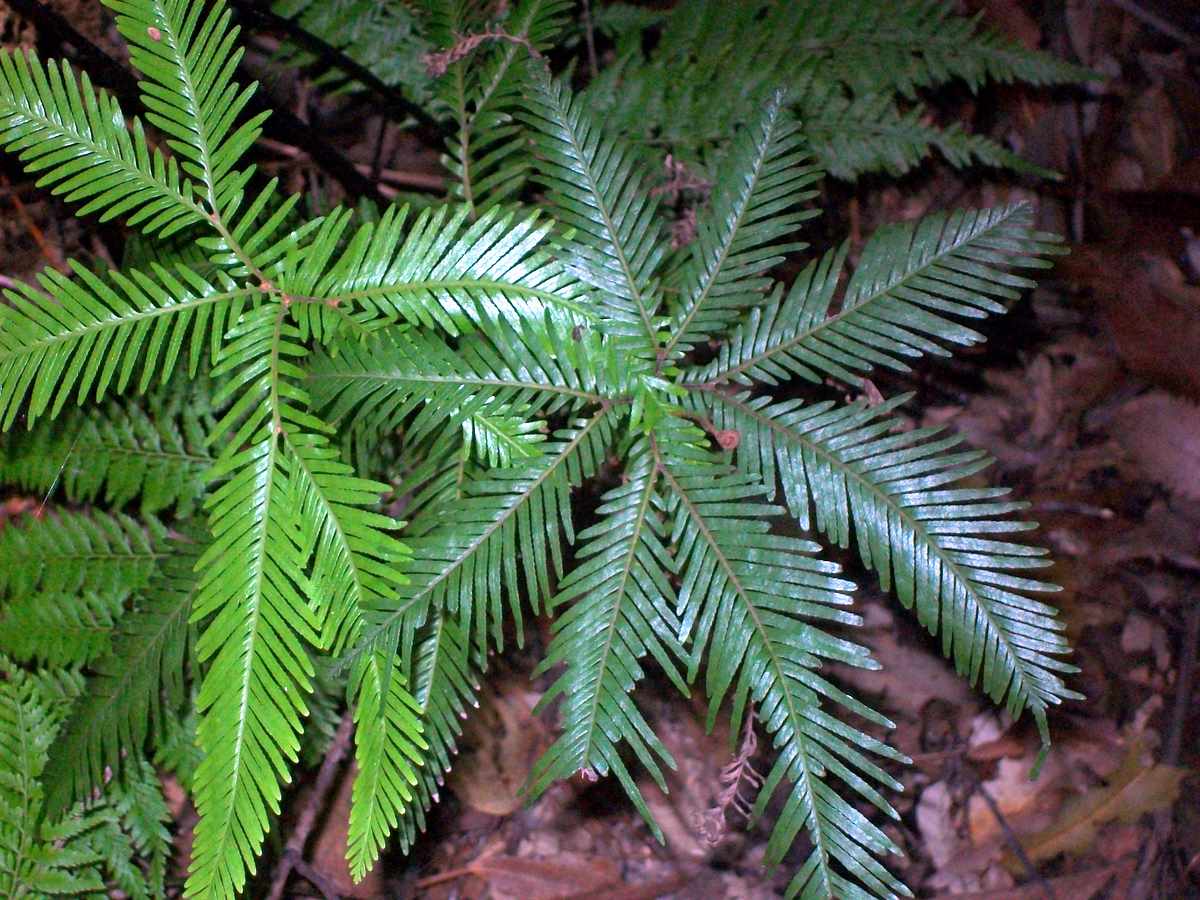
Sticherus is a genus of approximately 80–90 species of ferns in the family Gleicheniaceae (order Gleicheniales, class Polypodiopsida). The genus has a pantropical and Southern Hemisphere distribution, and its members are commonly called shield ferns in Australia and umbrella ferns in the United States.
The most distinctive feature of Sticherus is its repeatedly forking frond architecture. Fronds branch at least once, with each pair of lateral branches spreading outward to create a characteristic umbrella-like or tiered layer of foliage. Lateral axes are pinnately divided into oblong or linear pinnules that are typically undivided. The lamina may be glabrous or covered with stellate hairs or scales, and the undersides of pinnules are often glaucous (waxy blue-grey). Veins are free and usually forked once. The rhizome is long-creeping, wiry, and hairy.
Reproduction is by spores: sori are numerous, arranged in a single row on each side of the pinnule midvein, and typically contain 3–5 sporangia per sorus. In Australia, five species occur across Queensland, New South Wales, Victoria, and Tasmania.
Distribution
Sticherus is distributed throughout the tropics and Southern Hemisphere, with the greatest diversity in Central and South America and significant representation in Australasia and Asia. In Australia, five species occur in Queensland, New South Wales, Victoria, and Tasmania. The genus is absent from most temperate regions of the Northern Hemisphere.
Taxonomy Notes
Sticherus belongs to the family Gleicheniaceae, a lineage of ancient ferns (order Gleicheniales) often considered a grade of early-diverging leptosporangiate ferns. The genus is characterised by its regularly dichotomous frond branching, which distinguishes it from related genera such as Gleichenia and Dicranopteris.










