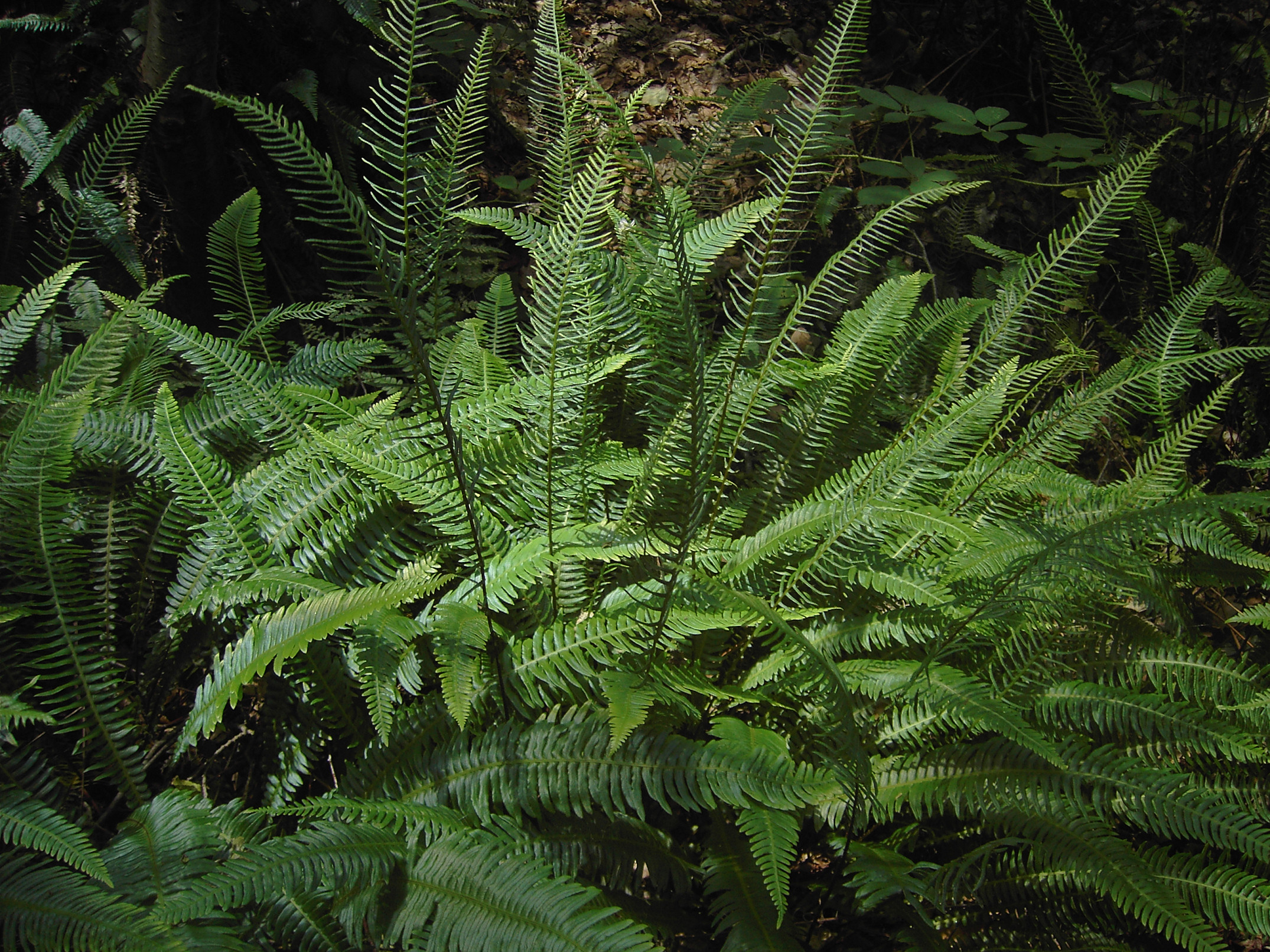
Struthiopteris is a small genus of ferns in the family Blechnaceae, subfamily Blechnoideae, within the order Polypodiales. Under the widely followed Pteridophyte Phylogeny Group classification of 2016 (PPG I), the genus contains five species, though the Checklist of Ferns and Lycophytes of the World redistributes three of those into the closely related genus Spicantopsis.
The most familiar member is Struthiopteris spicant (hard fern or deer fern), originally described by Carl Linnaeus in 1753 as Osmunda spicant and later long known as Blechnum spicant. Like other members of the family Blechnaceae, ferns in this genus are characterised by strongly dimorphic fronds: shorter, spreading sterile fronds with flat, wavy-margined leaflets (pinnae), and erect fertile fronds bearing much narrower pinnae lined on the underside with two thick rows of sori. This dimorphism — vegetative fronds for photosynthesis, specialised upright fronds for spore production — is a hallmark of the group.
Struthiopteris spicant is native to Europe, western Asia, northern Africa, and western North America, and is an evergreen, cold-hardy fern surviving temperatures as low as −20 °C. It has received the Royal Horticultural Society's Award of Garden Merit, reflecting its value as an ornamental garden plant. The genus name Struthiopteris derives from Greek, and the species epithet spicant is of uncertain Latin origin, possibly alluding to the plant's tufted or spiky habit.
Etymology
The generic name Struthiopteris is derived from Greek. The specific epithet of the best-known species, spicant, is of uncertain Latin origin — possibly referring to the tufted or spiky habit of the fertile fronds.
Distribution
The genus, represented most widely by Struthiopteris spicant, is native to Europe, western Asia, northern Africa, and western North America. The species is evergreen and cold-hardy, tolerating temperatures as low as −20 °C (−4 °F), and grows to approximately 0.5 m tall.
Ecology
Struthiopteris spicant is an evergreen fern adapted to cool, temperate climates, hardy to −20 °C. Its dimorphic frond strategy — separate sterile and fertile fronds — is characteristic of the genus within Blechnaceae.
Cultivation
Struthiopteris spicant (deer fern / hard fern) has been awarded the Royal Horticultural Society's Award of Garden Merit, reflecting its suitability as a garden plant in temperate regions. It is evergreen, frost-hardy to −20 °C, and grows to around 0.5 m.
Taxonomy Notes
Under the Pteridophyte Phylogeny Group classification (PPG I, 2016), Struthiopteris contains five species within the subfamily Blechnoideae of Blechnaceae. The Checklist of Ferns and Lycophytes of the World segregates three of those species into Spicantopsis. The type species, Struthiopteris spicant, was originally described by Linnaeus (1753) as Osmunda spicant and was long treated in Blechnum as Blechnum spicant.

