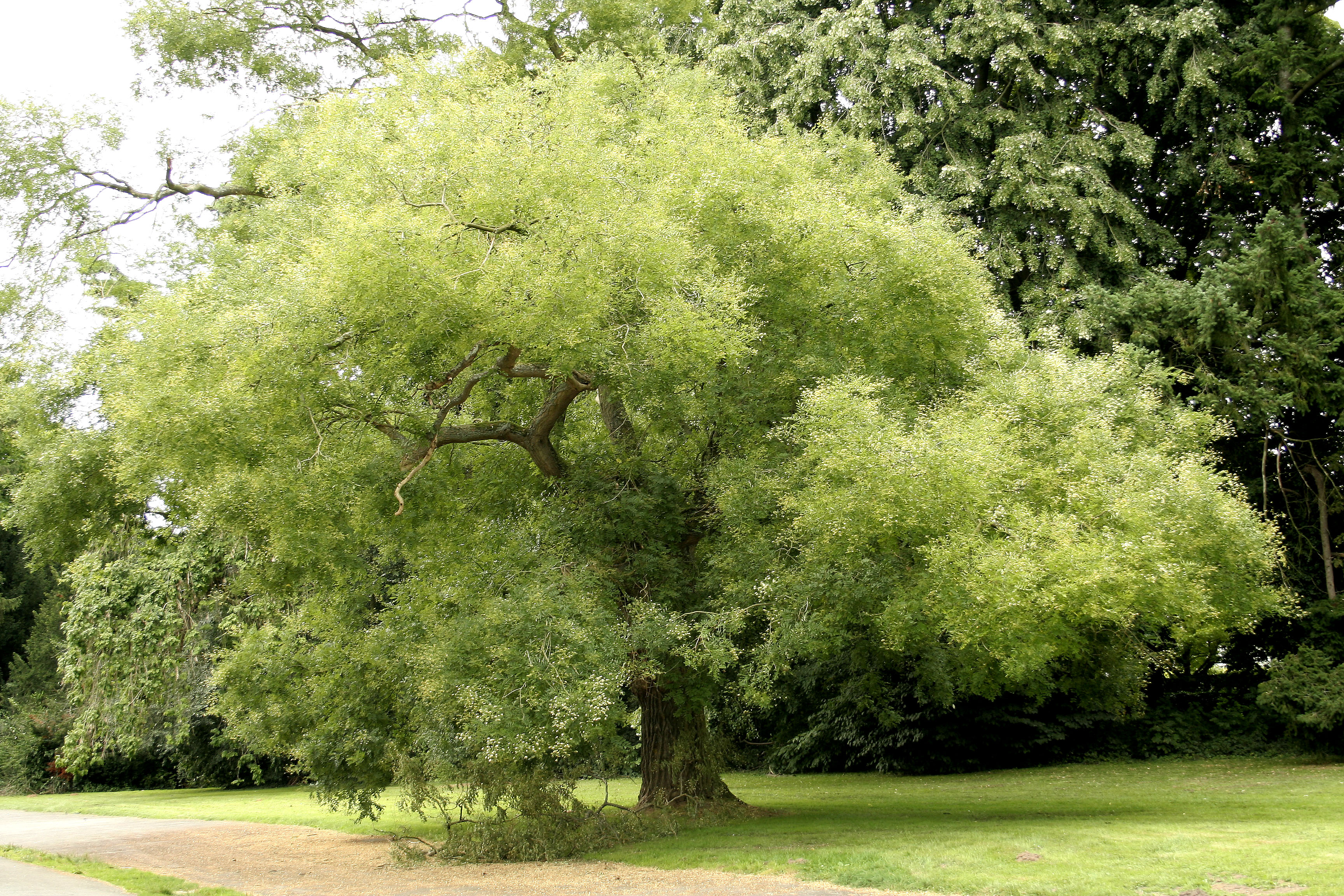
Styphnolobium is a genus of small trees and shrubs in the pea family Fabaceae, subfamily Faboideae, comprising around nine species native to China and the Americas — from the southern United States south to Colombia. The genus is commonly known as necklacepod.
Plants in this genus bear pinnate leaves with 9 to 21 leaflets and produce flowers in pendulous, axillary racemes that are reminiscent of those of the black locust (Robinia pseudoacacia). This axillary arrangement distinguishes Styphnolobium from the closely related genus Calia (mescalbeans), whose flowers are borne in terminal racemes, and whose leaves are evergreen rather than deciduous.
Styphnolobium was formerly classified within a broader interpretation of the genus Sophora, and many of its species still circulate under Sophora names in cultivation and trade. Molecular phylogenetic work led to its recognition as a distinct genus; it has since been placed in the unranked but monophyletic Cladrastis clade within Faboideae.
The best-known member is Styphnolobium japonicum (the Japanese pagoda tree or Chinese scholar tree), native to China and Korea, which is widely planted as an ornamental street and park tree across temperate regions of the world. It is also one of the 50 fundamental herbs in traditional Chinese medicine and is a popular subject in bonsai cultivation.
Etymology
The name Styphnolobium derives from the Greek styphno- (also stryphno-), meaning "sour" or "astringent," combined with lobion, meaning "pod." The name alludes to the astringent, sour taste of the pulp found in the fresh seed pods.
Distribution
Styphnolobium species are native to two disjunct regions: East Asia (primarily China) and the Americas, where the range extends from the southern United States south to Colombia. S. japonicum has been widely introduced as an ornamental tree throughout temperate regions worldwide.
Cultural Uses
Styphnolobium japonicum (Japanese pagoda tree, formerly Sophora japonica) is one of the 50 fundamental herbs in traditional Chinese medicine, where it has been used for centuries. The species is also widely cultivated for bonsai. A historically noted individual — the "Guilty Chinese Scholartree" in Beijing — was the tree on which Chongzhen, the last emperor of the Ming Dynasty, is recorded to have hanged himself.
Taxonomy Notes
Styphnolobium was formerly included within a broadly circumscribed Sophora, and many species are still encountered in literature and cultivation under that genus name (e.g., Sophora japonica for S. japonicum). Phylogenetic analysis separated it as a distinct genus; it is currently placed in the unranked, monophyletic Cladrastis clade within subfamily Faboideae of Fabaceae. GBIF recognises the genus as accepted (key 315185806) within Fabaceae.










