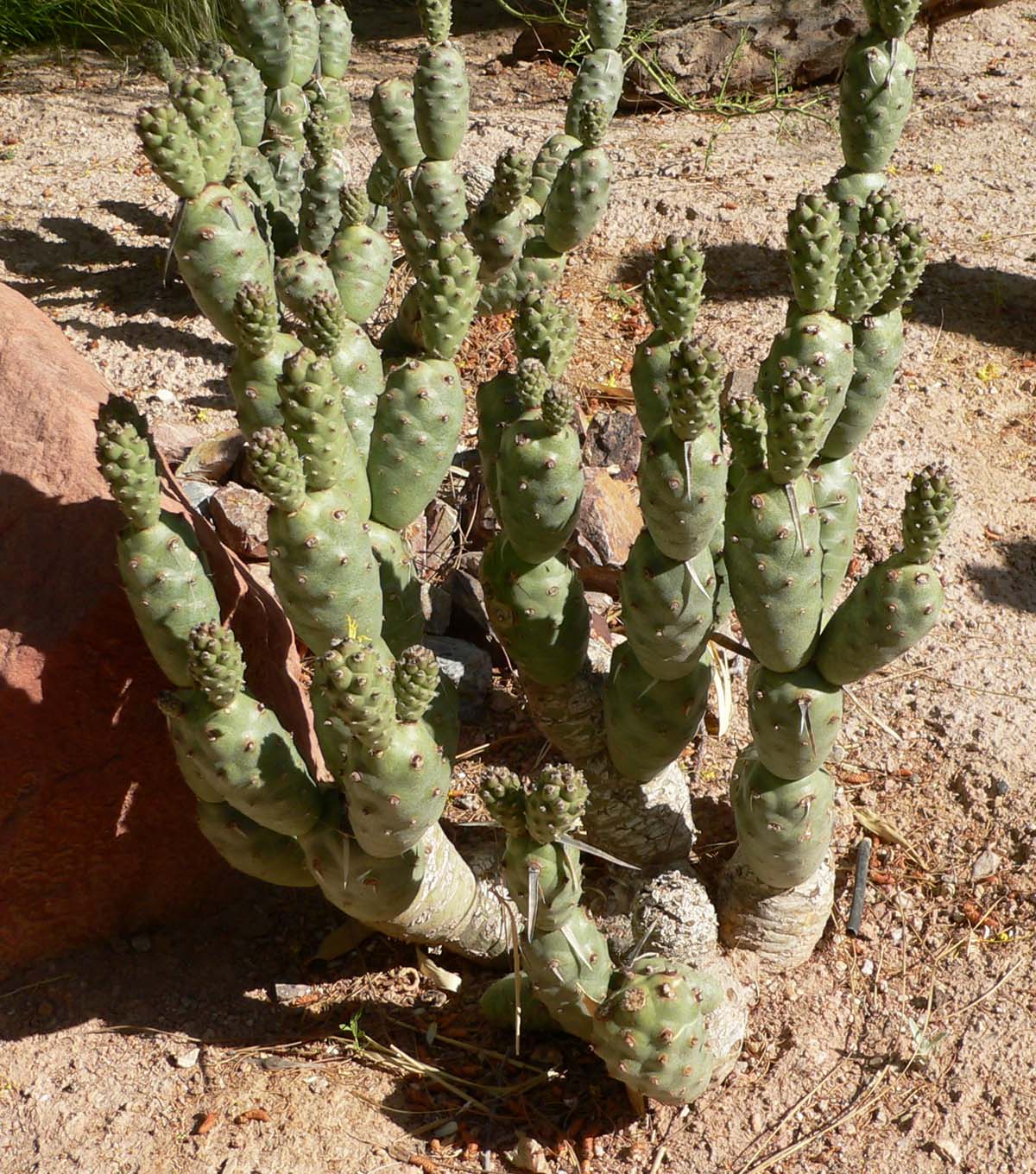
Tephrocactus is a small genus of cacti in the family Cactaceae, placed within the order Caryophyllales. The plants are native to Argentina, where they grow in the high Andean and Patagonian environments. The name derives from the Greek tephra ("ash"), a reference to the grayish or ashen coloration of the epidermis characteristic of many species in the genus.
Tephrocactus was described by the French botanist Charles Lemaire and published in Les Cactées in 1868, with Tephrocactus diademata (Lem.) Lem. as the type species. The genus was historically treated as a subgenus of Opuntia, and taxonomic circumscription has varied considerably; around 73 names have been proposed at species rank, of which approximately 15 are currently accepted.
Plants in this genus are low-growing, segmented cacti with cylindrical or globose stem joints that detach easily — an adaptation that aids dispersal. Spines vary considerably among species, from needle-like to papery and flattened, and are often numerous per areole. Members of the genus are cultivated by cactus enthusiasts for their distinctive growth habit and unusual spine forms.
Notable members include Tephrocactus alexanderi, Tephrocactus molinensis, Tephrocactus articulatus (the paper-spine cactus), and Tephrocactus weberi.
Etymology
The name Tephrocactus combines the Greek tephra ("ash") with cactus, referring to the characteristically ashen or gray coloration of the plants' epidermis. The genus was named by Charles Lemaire when he formally described it in Les Cactées (1868).
Distribution
Tephrocactus is endemic to Argentina, where species occur across Andean and Patagonian habitats.
Taxonomy Notes
Tephrocactus was described by Charles Lemaire and published in Les Cactées 88 (1868), with Tephrocactus diademata as the type species. The genus was long treated as a subgenus of Opuntia, and its circumscription has been disputed; approximately 73 names exist at species rank, with around 15 currently accepted. GBIF places the genus in family Cactaceae, order Caryophyllales.










