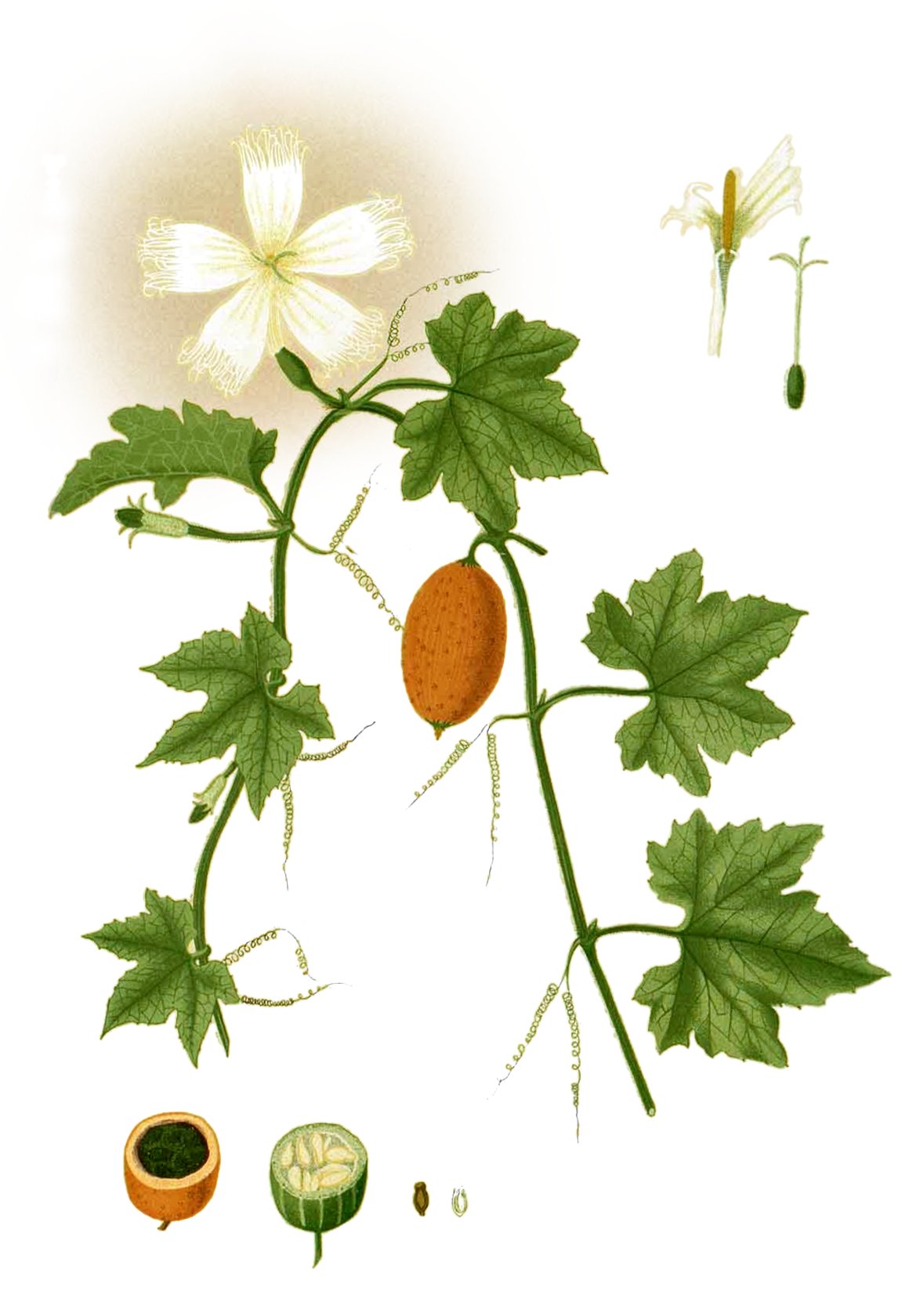
Trichosanthes is a genus of tropical and subtropical climbing vines in the cucumber family, Cucurbitaceae, placed in subfamily Cucurbitoideae and tribe Sicyoeae. Carl Linnaeus established the genus in 1753 in Species Plantarum, and the name has been an accepted botanical concept ever since. The GBIF taxonomic backbone currently recognises 197 descendant taxa within the genus, while regional portals such as SEINet catalogue around 24 species with herbarium representation. Common names in English collectively reference the group as the "snake gourds," a nod to the elongated, sometimes spectacularly long fruits that characterise several of its best-known members.
As a group, Trichosanthes species are tendril-bearing vines with broad leaves and fleshy fruits that have been put to use as vegetables across much of their range. Fruits vary in shape from compact and rounded to dramatically elongated and pointed, with the snake gourd (T. cucumerina) producing the most exaggerated form — mature fruits can reach about two metres in length and ten centimetres in thickness. The bright red, tomato-like pulp that surrounds the ripening seeds in many species has its own culinary tradition, used in cooking in much the same way tomatoes are.
The natural range of the genus spans South Asia, Southeast Asia, and China, where the vines clamber over other vegetation in warm, humid climates. The plants are warmth-loving — cultivation generally requires temperatures above about 25 °C, short day-lengths, rich and well-drained soil, and steady moisture through the growing season. Several species have been brought into cultivation for food and medicine: T. cucumerina is grown commercially for its edible fruits, T. dioica (pointed gourd or parwal) is a familiar South Asian vegetable, and T. kirilowii — known as gualou — is a staple of traditional Chinese medicine, where preparations of the fruit, peel, seed, and root are used in formulas said to break down and clear phlegm. Beyond the fruits, the young shoots, tendrils, and leaves of various Trichosanthes species are also eaten as cooked greens. Most species in the genus, however, remain little-known outside specialist botany, occupying forest and forest-edge habitats across tropical Asia and the western Pacific.
Taxonomy
Trichosanthes was established by Carl Linnaeus in Species Plantarum (1753, p. 1008) and is placed in family Cucurbitaceae, subfamily Cucurbitoideae, tribe Sicyoeae. GBIF treats the name as taxonomically accepted (nubKey 2874604) and lists 197 descendant taxa in its backbone; the SEINet portal documents about 24 species with herbarium records, indicating that species concepts are still being consolidated by different checklists.
Distribution
The genus is native to the tropical and subtropical Old World, with a range centred on South Asia, Southeast Asia, and China. SEINet additionally records occurrences within its Arizona–New Mexico node, reflecting the presence of Trichosanthes specimens (chiefly via cultivation and naturalisation of food species) in herbarium collections of the southwestern United States.
Cultivation
Trichosanthes vines are warm-climate plants. They need temperatures above roughly 25 °C, short day-lengths, rich and well-drained soil, and ample moisture during the growing season — conditions that mirror their tropical Asian origins. Outside their native climate they are typically grown as warm-season annuals or as glasshouse crops.
Propagation
Seed is typically sown indoors in warm conditions during early spring (around March in the Northern Hemisphere), which gives the seedlings the heat they need to germinate before being moved out once temperatures are reliably high.
Cultural Uses
Several Trichosanthes species are important food and medicinal plants. The young fruits are cooked and used in curries or prepared like green beans, while the bright red pulp surrounding the mature seeds is extracted and used in cooking in much the same way that tomatoes are. Leaves, shoots, and tendrils are also eaten as cooked greens. Two species in particular — T. cucumerina (snake/serpent gourd) and T. dioica (pointed gourd, parwal) — are grown commercially for their edible fruits, and T. kirilowii (gualou) underpins traditional Chinese medicinal preparations that are described as breaking down phlegm and aiding its removal. The fruit is also recorded as having anthelmintic, emetic, and purgative properties, the seeds are considered cooling, and plant peptides have been used as an abortifacient in traditional Chinese medicine.










