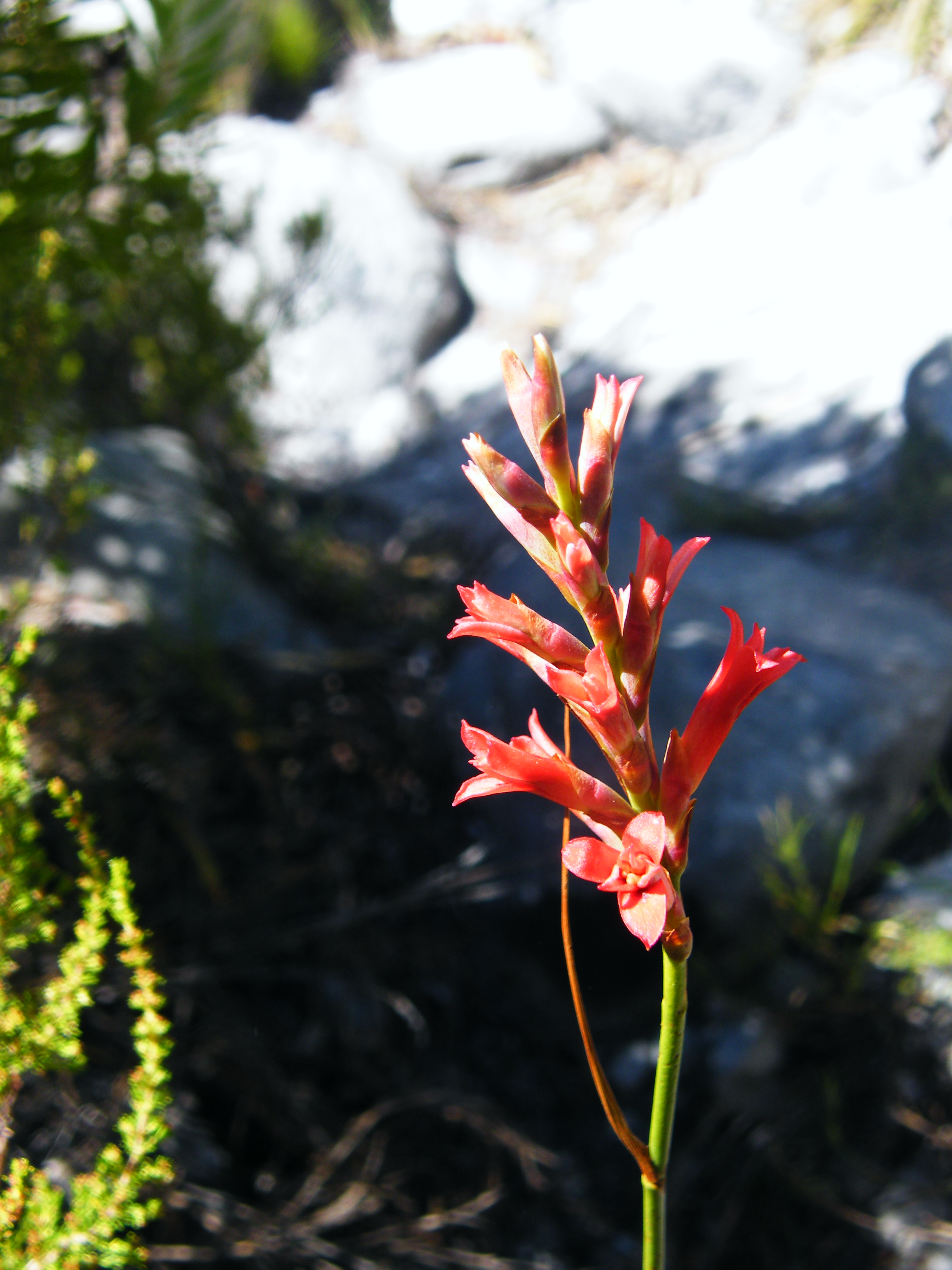
Tritoniopsis is a genus of approximately 23 species of flowering plants in the family Iridaceae, the iris family, within the order Asparagales. It was first described as a genus in 1926 and formally published by L. Bolus in South African Gardening in 1929. The genus is endemic to Cape Province in South Africa, where it represents one of many geophytic lineages adapted to the Cape Floristic Region.
As members of Iridaceae, Tritoniopsis plants are perennial herbs that grow from corms. The family is known for its showy, often brightly coloured flowers, and species in this genus typically bear tubular to funnel-shaped blooms arranged in spikes or branched inflorescences, with leaves that are sword-shaped or narrow and linear. The genus shares a close resemblance to the related genus Tritonia, with which it has been historically confused; its name directly reflects this similarity.
Etymology
The name Tritoniopsis combines the genus name Tritonia — a related South African iris-family genus — with the Greek suffix -opsis, meaning "resembling" or "look-alike." This reflects the close morphological similarity between the two genera that initially led to taxonomic confusion.
Distribution
Tritoniopsis is entirely endemic to Cape Province in South Africa, making it one of the many plant genera confined to the Cape Floristic Region, one of the world's most biodiverse and botanically significant areas.

