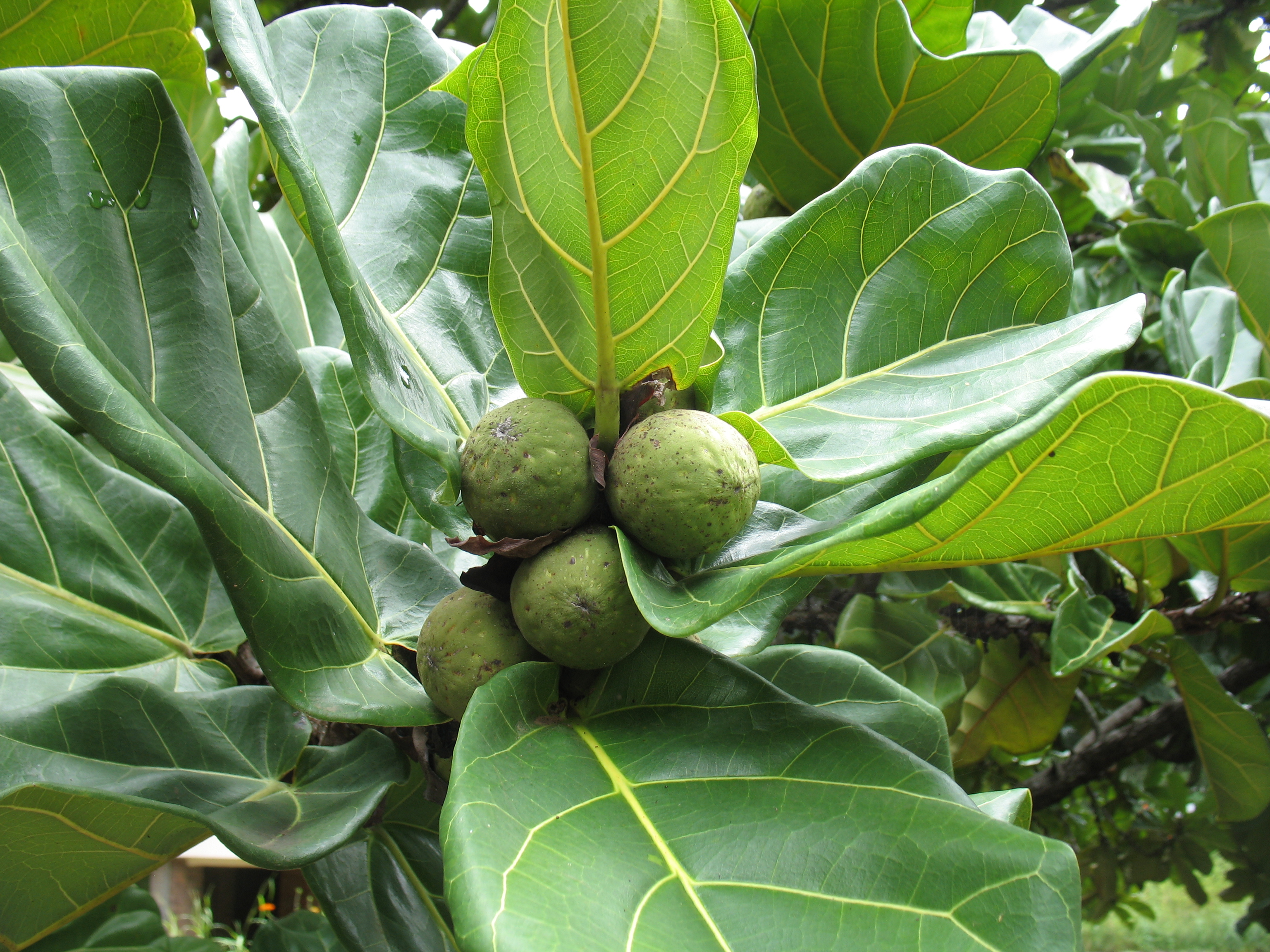
Uapaca is a genus of flowering trees and shrubs in the family Phyllanthaceae (order Malpighiales), comprising approximately 25 accepted species. It is the sole genus in the tribe Uapaceae and was first formally described in 1858. The genus is native to sub-Saharan Africa and Madagascar, with its center of diversity in the woodlands and forests of the African continent.
All members of the genus are dioecious, meaning male and female flowers are borne on separate individual plants. The plants are typically trees, with large, glossy leaves and small, inconspicuous flowers. Many species produce edible drupes — notably Uapaca kirkiana (sugar plum, mahobohobo), which bears spherical fruits 2–4 cm in diameter that ripen from green to yellow or brown and are valued as a wild food source across southern and central Africa. U. kirkiana grows to 5–13 m tall and is characteristic of miombo woodland ecosystems, where its presence often signals nutrient-poor, well-drained soils.
Other notable members include Uapaca guineensis of West Africa and Uapaca bojeri from Madagascar. The genus is placed in Phyllanthaceae alongside relatives such as Phyllanthus and Antidesma, forming part of the large and diverse order Malpighiales.
Etymology
The species epithet of the best-known member, Uapaca kirkiana, honors Sir John Kirk (1832–1922), Scottish physician, explorer, and naturalist who worked extensively in eastern Africa. The origin of the genus name Uapaca itself is not documented in the sources consulted.
Distribution
Uapaca is native to sub-Saharan Africa and Madagascar. The most widespread species, U. kirkiana, occurs across the miombo woodlands of Angola, the Democratic Republic of Congo, Zambia, Tanzania, Malawi, Mozambique, and Zimbabwe, typically in areas receiving over 600 mm of rainfall annually on well-drained sandy or gravelly soils.
Ecology
Several Uapaca species are characteristic components of African miombo woodland ecosystems. Uapaca kirkiana in particular is associated with nutrient-poor, well-drained soils, and its presence in the landscape is considered indicative of poor agricultural conditions. Trees in the genus are dioecious, requiring both male and female individuals for fruit production. Fruits are consumed by wildlife including monkeys, facilitating seed dispersal.
Cultural Uses
Uapaca kirkiana (locally known as mazhanje in Shona, masuku in Chichewa, and mahobohobo in other southern African languages) is one of the most popular wild fruits across southern and central Africa. The sweet yellow flesh of the ripe drupe is eaten fresh and has been compared in taste to pear or plum. It is a traditional food plant recognized for its potential to improve nutrition and food security in rural communities. Trees are commonly retained when agricultural land is cleared.










