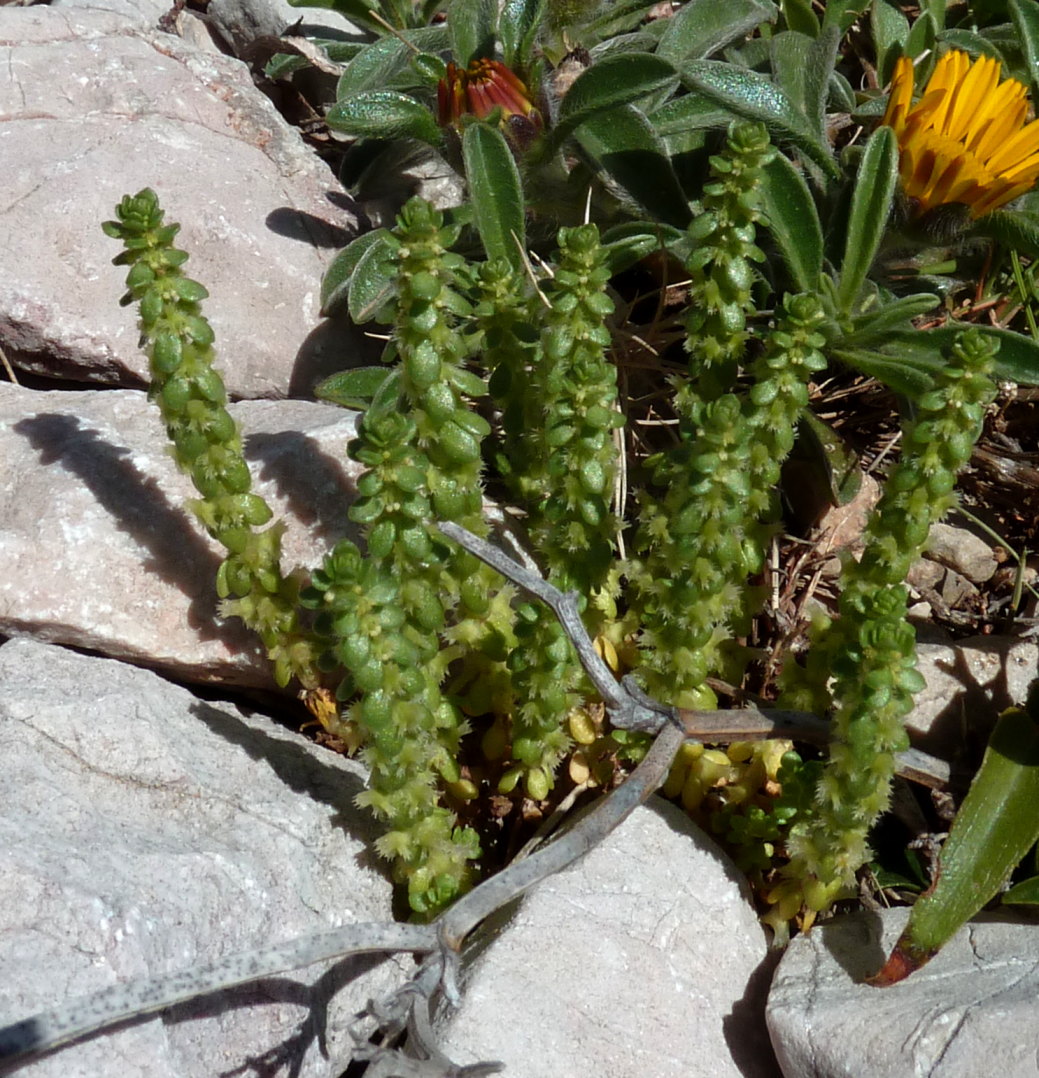
Valantia is a small genus of annual herbaceous flowering plants belonging to the family Rubiaceae (the madder or coffee family), within the order Gentianales. Plants in this genus are characterised by the sprawling or scrambling habit typical of many small rubiaceous annuals, with whorled leaves and tiny flowers — features shared with closely related genera such as Galium and Sherardia. The genus comprises a modest number of species (around five accepted taxa according to GBIF) distributed across a broad arc from Macaronesia and the Mediterranean basin eastward to western Asia and into northeastern tropical Africa. The two best-known species are Valantia muralis, a wall-dwelling annual found across the Mediterranean region, and Valantia hispida, which occurs across similar warm-temperate and semi-arid habitats. Like many members of Rubiaceae, species of Valantia grow in disturbed, rocky, or ruderal habitats, often colonising old walls, stony slopes, and dry grasslands.
Distribution
Valantia occurs from Macaronesia (the Atlantic island groups) and the Mediterranean basin eastward through western Asia, with outlying records in northeastern tropical Africa. Within this range, species favour warm-temperate, semi-arid, and rocky or disturbed habitats.
Taxonomy Notes
Valantia belongs to the family Rubiaceae (order Gentianales) and is closely allied to other small annual genera of the subfamily Rubioideae, including Galium and Sherardia. GBIF recognises the genus as accepted with approximately five descendant taxa; no authorship is recorded in the GBIF backbone for the genus name.










