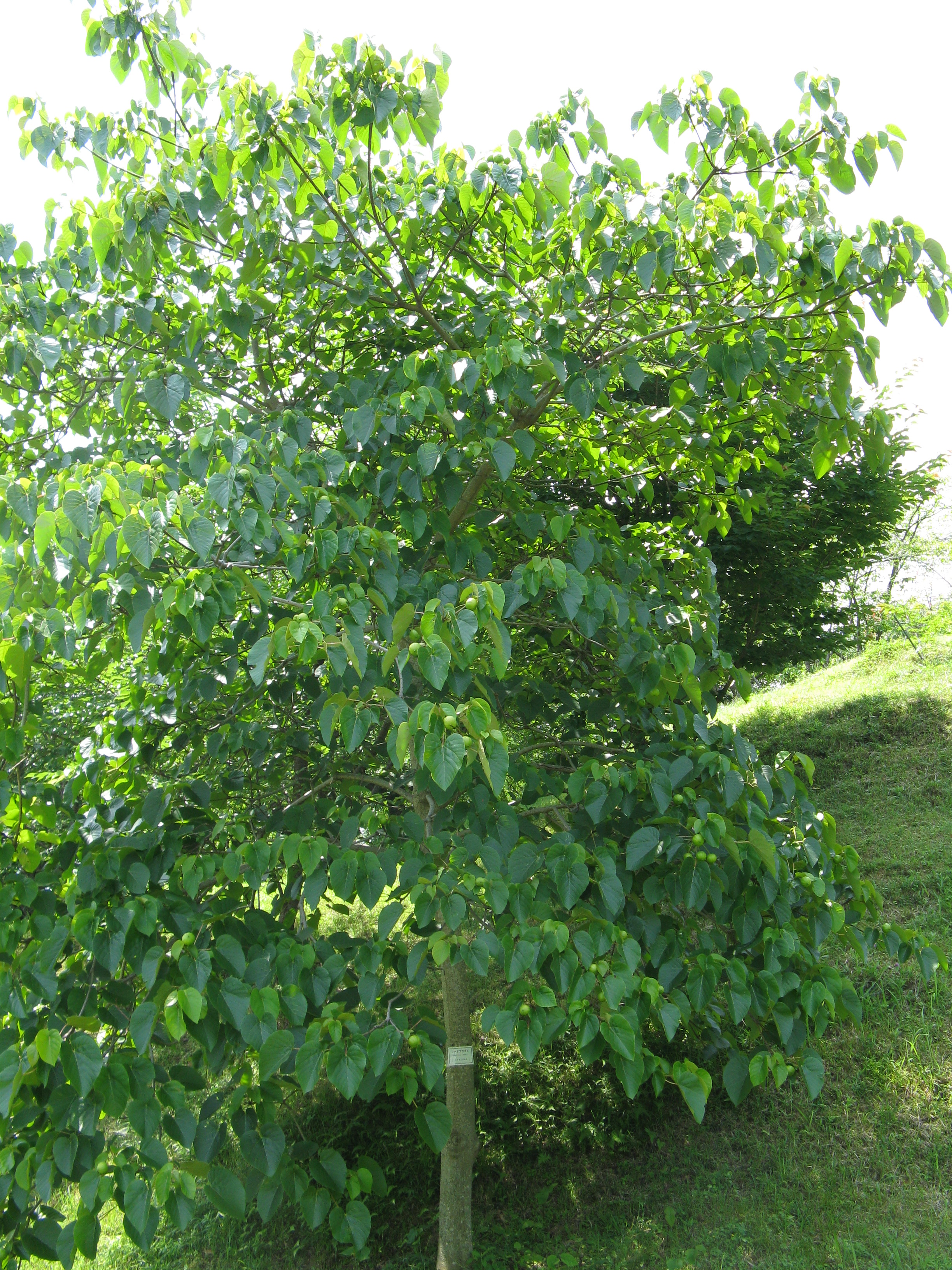
Vernicia is a small genus of shrubs and trees in the spurge family Euphorbiaceae, placed in the order Malpighiales. First described as a genus in 1790, it comprises three accepted species native to East and Southeast Asia, ranging across China, Japan, India, and Indochina. Plants grow to 20 metres tall and bear alternate, broad leaves that may be entire or palmately lobed; depending on the species, leaves are deciduous or evergreen. Flowers are either monoecious or dioecious. The species have historically been treated within the closely related genus Aleurites, and the two genera share a similar tropical to subtropical distribution. Vernicia fordii (tung tree) is the most economically important member, cultivated for tung oil pressed from its seeds and used widely in wood finishing, paints, and varnishes.
Etymology
The genus name Vernicia derives from the Latin vernix (varnish), reflecting the use of tung oil pressed from its seeds as a traditional varnishing and finishing agent.
Distribution
Vernicia is native to East and Southeast Asia, with its range spanning China, Japan, India, and Indochina. Species occur in subtropical to warm-temperate forests and have been widely cultivated outside their native range, particularly Vernicia fordii in the southern United States and other tung-oil-producing regions.
Cultural Uses
Vernicia fordii (tung tree) has been cultivated for centuries across East Asia as the primary source of tung oil, a fast-drying oil extracted by pressing the seeds. Tung oil has been used traditionally in China for waterproofing wood, paper, and fabrics, and was later adopted globally in paints, varnishes, linoleum, and printing inks. The oil is highly valued for its rapid polymerisation and durable finish.
History
Vernicia was first formally described as a distinct genus in 1790. Its species were long included in Aleurites and the two genera are still sometimes treated as congeneric. Vernicia fordii was introduced to the United States in the late nineteenth century and was commercially cultivated in the Southeast as a domestic tung oil source through much of the twentieth century.










