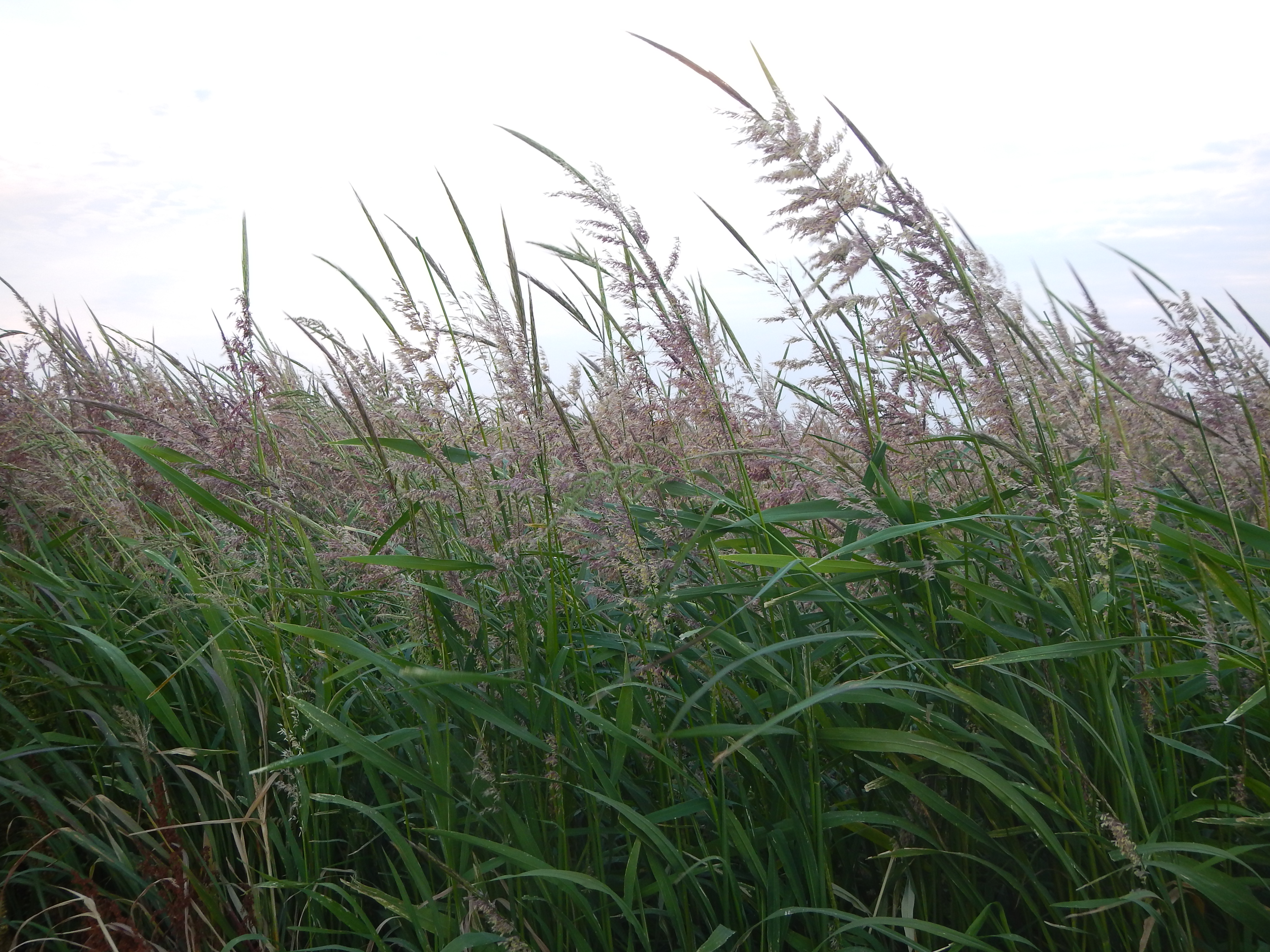
Zizania is a small genus of four aquatic grasses in the family Poaceae (order Poales), collectively known as wild rice. The genus is placed in the tribe Oryzeae alongside domesticated rice (Oryza sativa and Oryza glaberrima), to which wild rice is closely related but distinct. Genomic research has identified a whole-genome duplication event after Zizania diverged from Oryza, contributing to differences between the two lineages.
The plants are tall, emergent aquatics that grow in shallow water in small lakes and slow-flowing streams; typically only the flowering head rises above the water surface. Wild-rice grains have a distinctive chewy outer sheath surrounding a tender inner grain with a mildly vegetal flavour and are notably high in protein, dietary fibre, and B vitamins compared with most other cereal grains.
The genus comprises four species. Three are native to North America: Z. palustris (northern wild rice), an annual of the Great Lakes region and Canadian Boreal Forest; Z. aquatica (southern wild rice), an annual found along the Atlantic and Gulf coasts of the United States and the Saint Lawrence River; and Z. texana (Texas wild rice), a critically imperilled perennial restricted to a short stretch of the San Marcos River in Texas. The fourth species, Z. latifolia (Manchurian wild rice), is a perennial native to China where its swollen, fungus-infected stems are eaten as a vegetable known as jiāobái or water bamboo.
Wild rice has been a culturally and economically vital food for numerous Indigenous peoples of North America—particularly the Ojibwe, who call it manoomin ("good berry")—for at least 2,000 years. Commercial cultivation of Z. palustris began in Minnesota in 1951 and the grain is now grown in paddy fields in California, Minnesota, Saskatchewan, Hungary, and Australia.
Distribution
Three species of Zizania are native to North America: Z. palustris spans the Great Lakes region and the Boreal Forest zones of Canada and the northern United States; Z. aquatica occurs along the Atlantic and Gulf coasts and the Saint Lawrence River; and Z. texana is endemic to a short reach of the San Marcos River in central Texas. Z. latifolia is native to China but has been accidentally introduced to New Zealand, where it is considered invasive.
Ecology
Wild rice grows in shallow water in small lakes and slow-flowing streams, forming stands where the flowering panicle typically extends above the water surface. The grain is an important food source for dabbling ducks and other aquatic wildlife. Zizania texana is critically constrained by its pollen dispersal range of only about 76 cm, making reproduction dependent on dense local populations. The Asian species Z. latifolia is routinely infected by the smut fungus Ustilago esculenta, which prevents flowering and causes stem swelling; this infection is passed asexually from parent to offspring plants in cultivation.
Cultural Uses
Wild rice holds deep cultural and spiritual significance for many Indigenous peoples of North America, especially the Ojibwe, who call it manoomin ("good berry") and consider it sacred. Traditional harvest involves paddling a canoe through wild rice stands and bending the ripe heads with wooden knockers to thresh grain into the boat—a practice governed by tribal and state law. Zizania latifolia has been cultivated in China for centuries: its smut-infected stems are eaten as the vegetable jiāobái (茭白), also known as water bamboo or makomodake in Japan, and its use as a grain has largely disappeared in its native range.
Conservation
Zizania texana (Texas wild rice) is in danger of extinction due to pollution and habitat loss within its extremely limited range on the San Marcos River; its short pollen-dispersal distance makes isolated populations non-reproducing. Zizania latifolia has nearly disappeared from the wild in China, though it persists in cultivation. Z. latifolia is considered an invasive species in New Zealand, where it was accidentally introduced. Importation of Z. latifolia vegetable stems into the United States is prohibited to protect North American species from the associated smut fungus Ustilago esculenta.
History
Radiocarbon dating of charred wild rice seeds at archaeological sites in Minnesota confirms Indigenous human use of Zizania for at least 2,050 years, with pollen evidence suggesting harvestable populations existed 3,600 years ago. The crop was central to the Anishinaabe migration story and the economies of many Great Lakes tribes through the fur-trade era. Commercial paddy cultivation of Z. palustris was pioneered in Minnesota by James and Gerald Godward starting in 1951; wild rice is now Minnesota's official state grain and is commercially produced in California, Saskatchewan, Hungary, and Australia.

