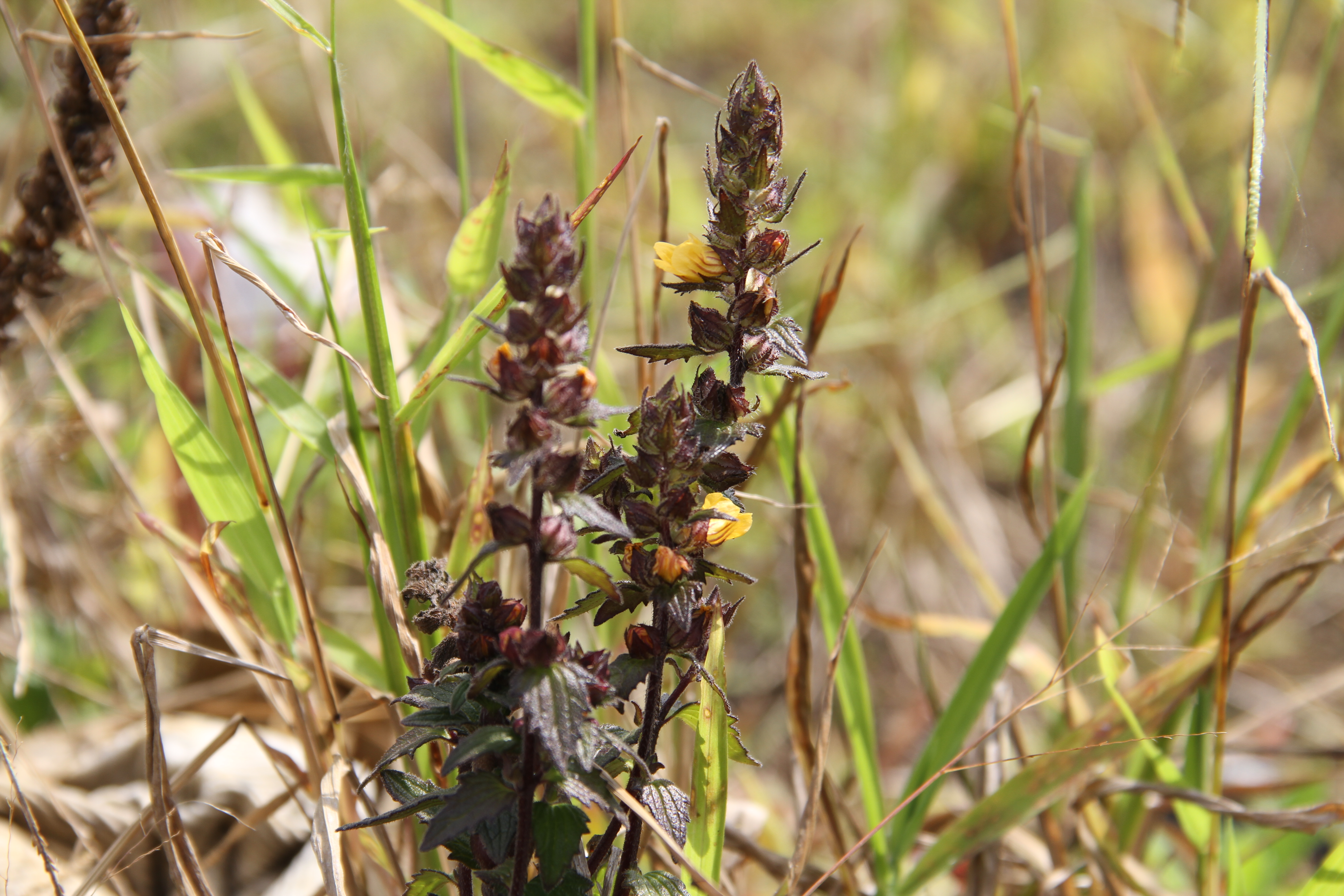
Alectra is a genus of flowering plants in the family Orobanchaceae, the broomrape family. The genus comprises hemiparasitic species — plants that attach to the roots of host plants to obtain water and nutrients while retaining some photosynthetic capacity of their own. Members of Alectra are found across tropical and southern Africa, including Madagascar, and extend into tropical and subtropical Asia.
The genus belongs to the tribe Buchnereae within Orobanchaceae, a family notable for including many parasitic and hemiparasitic plants. Alectra was described by Carl Peter Thunberg and encompasses roughly 30 species, several of which — such as Alectra sessiliflora and Alectra vogelii — are considered agricultural pests in sub-Saharan Africa, parasitising cereal and legume crops. Alectra sessiliflora, the witchweed or yellow witchweed, is one of the most widespread and ecologically significant members of the genus.
Distribution
Alectra species occur across tropical and southern Africa, including Madagascar, and extend into tropical and subtropical Asia. Several species are widespread in sub-Saharan grasslands and savanna, where they parasitise the roots of grasses, cereals, and legumes.
Ecology
As hemiparasites, Alectra species attach to the roots of host plants via haustoria, extracting water and mineral nutrients while maintaining their own green leaves for photosynthesis. Several species, notably Alectra vogelii and Alectra sessiliflora, are significant root parasites of sorghum, cowpea, and other staple crops in sub-Saharan Africa, where they can cause severe yield losses.
Taxonomy Notes
Alectra is placed in the family Orobanchaceae (broomrape family) within the kingdom Plantae. GBIF recognises 4 accepted species in the backbone; the Wikipedia species list enumerates approximately 30 species. The species Alectra pedicularioides Baker from Madagascar was reclassified as Pseudomelasma pedicularioides (Baker) Eb.Fisch. in 1996.










