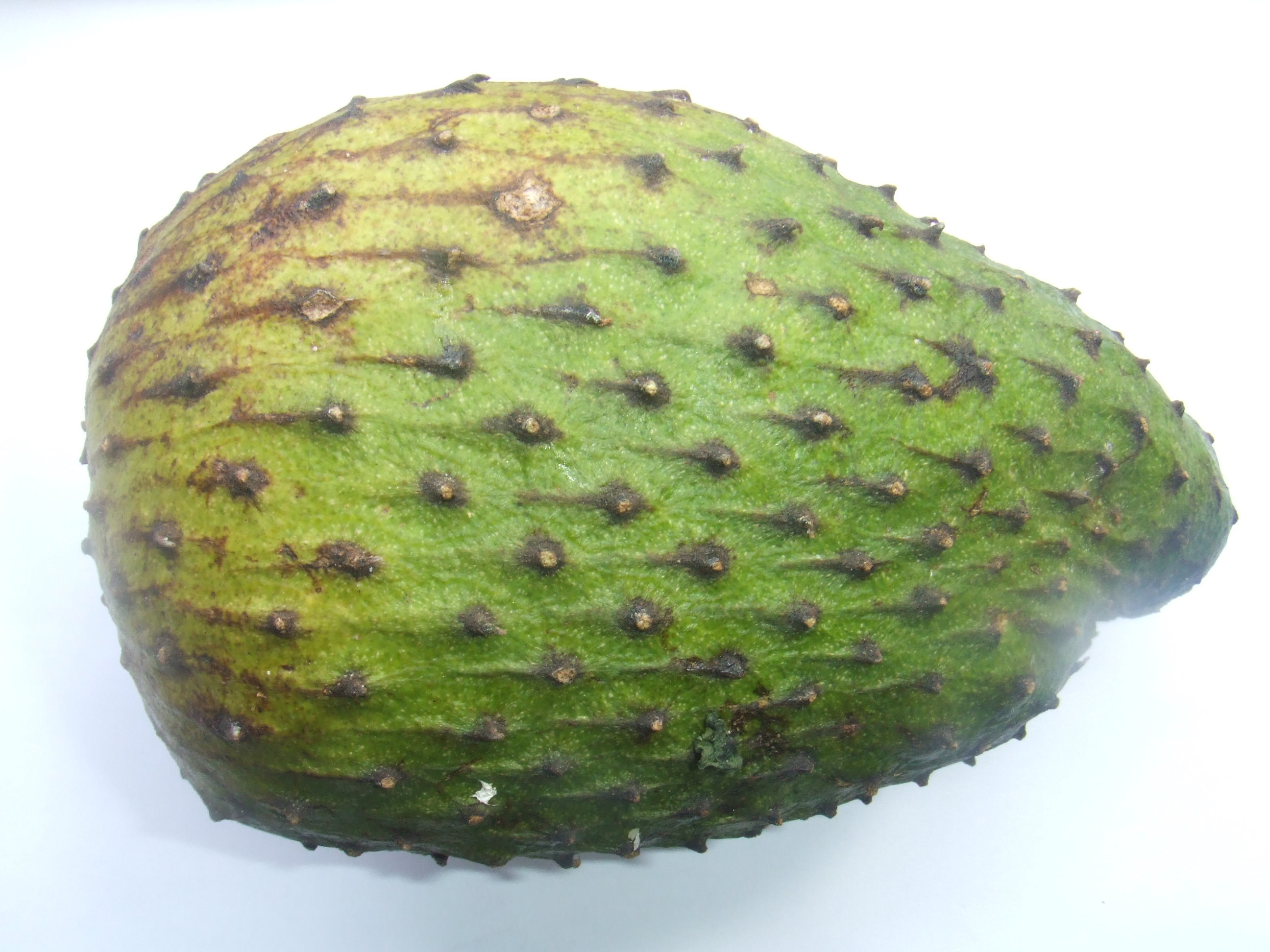
Annona is a large genus of flowering trees and shrubs in the family Annonaceae, order Magnoliales, comprising approximately 169 accepted species. Described by Carl Linnaeus in 1753 in his Species Plantarum, the genus takes its name from "anón," a Hispaniolan Taíno word for the fruit — one of the few plant genus names with a clear indigenous Caribbean etymology.
Members of Annona are predominantly evergreen or semi-deciduous tropical trees and shrubs, native to the Neotropical and Afrotropical regions. They typically grow 6–20 metres tall with taproots. Leaves may be leathery or thin, smooth or hairy. The flowers are distinctive: six to eight fleshy petals arranged in two whorls surround numerous stamens and pistils. Pollination is carried out primarily by Dynastid scarab beetles, which are generalist pollinators across the genus.
The fruits are among the most economically important products of the genus. Each flower produces a single fleshy, ovate to spherical fruit that is technically an aggregate — composed of many fused individual fruitlets (syncarps) around a central core. The flesh is typically sweet and aromatic. Seeds have tough coats, and the seed kernels are toxic and should not be consumed.
Seven species and one hybrid are commercially cultivated for their edible fruit, including soursop (A. muricata), sugar apple (A. squamosa), cherimoya (A. cherimola), and custard apple (A. reticulata). The hybrid atemoya (A. atemoya), a cross between cherimoya and sugar apple, is also widely grown. Annona species are cultivated across tropical and subtropical zones including Central America, the Caribbean, India, the Philippines, parts of the Andes, southern Italy, and Florida.
Etymology
The genus name Annona derives from "anón," a word in the Taíno language of Hispaniola (present-day Haiti and the Dominican Republic), referring to the fruit. Linnaeus formalized the name in 1753 in Species Plantarum (p. 537). It is one of the few major plant genus names traceable directly to an indigenous Caribbean language.
Distribution
Annona species are native primarily to the Neotropical region — Central and South America, the Caribbean — with a secondary Afrotropical presence. The genus is cultivated far beyond its native range, with commercial and domestic plantings established in Cuba, Jamaica, Central America, India, the Philippines, Calabria in southern Italy, parts of the Andes, and subtropical Florida. Individual species vary in their altitude and temperature tolerances; highland species such as cherimoya differ markedly in their range from lowland species such as soursop.
Ecology
Pollination across the genus is performed predominantly by Dynastid scarab beetles, which function as generalist pollinators within Annona. The flowers' enclosed, fleshy petal structure is adapted to this beetle-pollination syndrome, trapping insects temporarily to ensure pollen transfer. Annona species provide agroforestry ecosystem services — they support wildlife habitat and some species have documented pest-management properties. Most species grow in warm tropical and subtropical lowland to montane forests.
Cultivation
Annona trees grow best where annual daytime temperatures range from 24–28°C, though most species tolerate a range of 12–32°C. They are suited to hardiness zones 8–12 depending on species. Full sun is required; the genus does not tolerate shade. Established trees are moderately drought-tolerant. Annona species are adaptable to a range of soil types — sandy, loamy, or clay — but prefer well-drained sandy loam with a pH of 5.5–6.5. Mature trees typically yield 23–34 kg of fruit annually; under commercial management, yields of 5–20 tonnes per hectare are reported.
Propagation
Annona species are propagated by seed, semi-ripe cuttings, or grafting. Seed germination typically occurs within approximately 4 weeks under suitable conditions. Grafting is preferred for commercial cultivation to maintain cultivar characteristics and reduce juvenile period.
Cultural Uses
Several Annona species are among the most prized tropical fruits in the world. Soursop (A. muricata) is widely consumed fresh and processed into juices, ice creams, and beverages throughout Latin America and the Caribbean. Sugar apple (A. squamosa) and cherimoya (A. cherimola) are eaten raw for their sweet, creamy flesh, which contains approximately 18% sugar. Custard apple (A. reticulata) is similarly eaten fresh. The fruits are economically important in local and regional markets across tropical Asia, Latin America, and parts of Africa. Some species are also used in traditional medicine and integrated into agroforestry systems.
Taxonomy
Annona L. was formally described by Linnaeus in 1753 and is placed in the family Annonaceae, order Magnoliales, alongside closely related genera such as Asimina (pawpaw) and Rollinia. The genus belongs to subfamily Annonoideae, tribe Annoneae. GBIF records 248 descendant taxa (including synonyms), of which approximately 169 are accepted species as of 2021. The genus is the largest in Annonaceae. Some treatments have split or synonymized species within Annona — notably, Rollinia was formerly recognized separately but has been subsumed into Annona in recent phylogenetic treatments.










