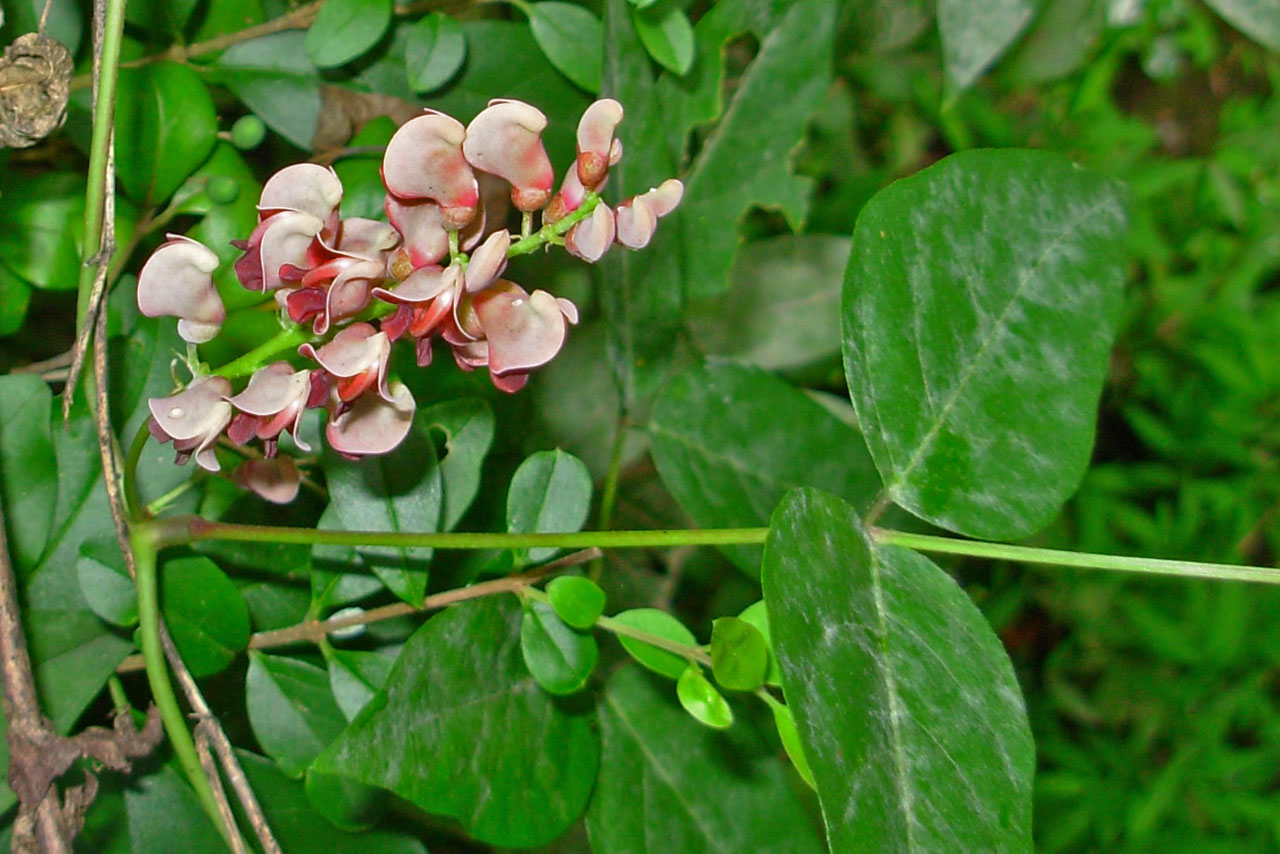
Apios is a small genus of perennial climbing herbs and scandent shrubs in the legume family Fabaceae (subfamily Faboideae, order Fabales). The genus contains approximately seven accepted species, distributed across two widely separated regions: eastern North America and eastern to southeastern Asia.
Plants in the genus produce twining, herbaceous to semi-woody stems and bear pinnate leaves. They are best known for their fleshy, tuberous roots, which in some species are arranged in a string-like chain along a rhizome — a characteristic that gives the genus part of its common appeal as both a wild food and a cultivated crop. The tuberous roots of several species, most notably Apios americana, have been eaten by Indigenous peoples of North America for thousands of years and were also adopted by early European colonists.
The genus occupies a disjunct geographic range typical of certain plant lineages with ancient connections between North America and Asia: North American species occur from eastern Canada south through the eastern and central United States, while Asian species are found from the Himalayas through Indochina, China, Korea, and Japan. This distribution spans approximately 20° to 50° north latitude.
Apios priceana, the Price's groundnut, is a rare species endemic to a handful of counties in the east-central United States and is considered a species of conservation concern. Apios fortunei, native to China, Korea, and Japan, is cultivated in parts of East Asia for its edible tubers.
Etymology
The genus name Apios derives from the ancient Greek word for "pear" (apios), an allusion to the pear-shaped tubers produced by several species. The common English name "groundnut" refers to the subterranean, nut-like tubers that characterize the genus.
Distribution
Apios has a disjunct distribution spanning eastern North America — from eastern Canada south through the eastern and central United States — and eastern Asia, from the Himalayas through Indochina, China, Korea, and Japan, between approximately 20° and 50° north latitude.
Ecology
Species of Apios are climbing, typically scrambling over surrounding vegetation in woodland edges, thickets, and stream margins. As members of Fabaceae, they are capable of nitrogen fixation through root nodule symbioses with rhizobial bacteria, contributing to soil fertility in the habitats they occupy.
Cultural Uses
The tuberous roots of Apios americana (American groundnut or hopniss) were a staple food of numerous Indigenous peoples of eastern North America long before European contact. Early colonial accounts record that Pilgrims relied on the tubers during periods of food scarcity. The tubers are high in protein relative to many root vegetables and can be eaten boiled, roasted, or dried.










