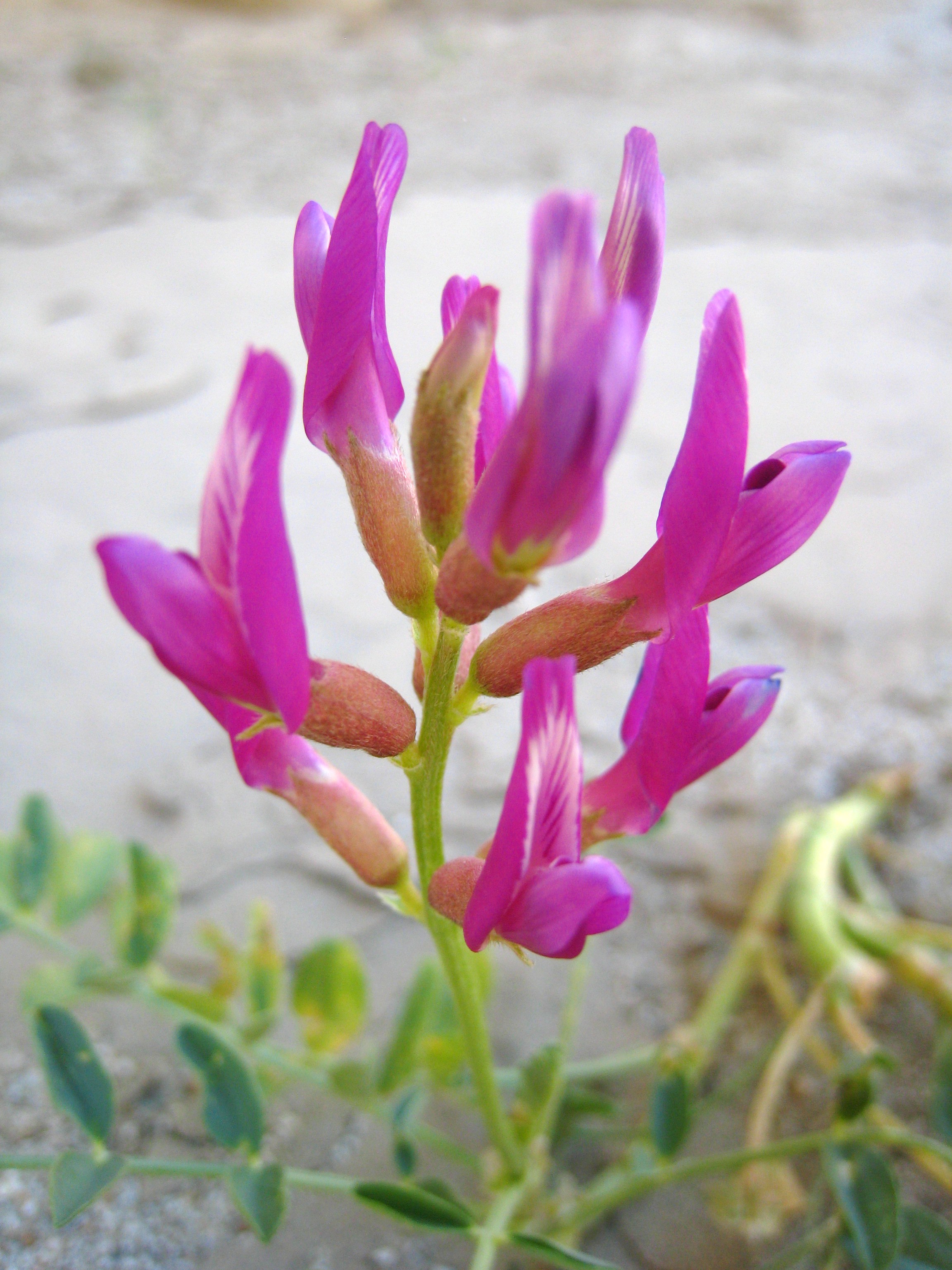
Astragalus L., commonly called milkvetch, is the largest genus of flowering plants in terms of described species, comprising more than 3,000 species of annual and perennial herbs and small shrubs. It belongs to the family Fabaceae (subfamily Faboideae, tribe Galegeae) and was formally described by Carl Linnaeus in 1753 in Species Plantarum.
Plants in this genus typically bear pinnately compound leaves and produce flowers in axillary racemes. The calyx is tubular or bell-shaped, and the petals follow the classic legume arrangement of banner, wings, and keel. Flower color spans white, yellow, pink, purple, and bluish-purple depending on species. Fruits are highly variable pods, usually dehiscent. The genus encompasses a wide range of growth forms and life spans, from diminutive alpine cushion plants to larger shrubby perennials.
Astragalus is native to temperate regions of the Northern Hemisphere, with by far the greatest species diversity concentrated in southwestern and central Asia, the Middle East, and western North America. In North America, the genus is especially diverse in the Sonoran Desert, the Colorado Plateau, and montane forest regions of the Southwest. In Switzerland alone, 23 species are documented ranging from lowland meadows to alpine zones.
The genus name derives from an ancient Greek term historically applied to this group of plants, associated with beliefs about positive effects on goat milk production. In English, species are most often called milkvetches, a name shared by the genus as a whole.
Etymology
The genus name Astragalus is derived from an ancient Greek word that was already applied to this group of plants in classical antiquity. The association is linked to a belief that species in the group had a beneficial effect on goat milk production. The English common name "milkvetch" reflects the same tradition. Linnaeus adopted the name when formally describing the genus in his Species Plantarum of 1753.
Distribution
Astragalus is native to temperate regions of the Northern Hemisphere, with the center of diversity in southwestern and central Asia and the Middle East, extending through the Mediterranean basin and into North America. In North America the genus is widespread, with exceptional richness in the arid Southwest — the Sonoran Desert, the Colorado Plateau, and the montane forest regions of New Mexico and Arizona. In Europe, Switzerland hosts 23 species ranging from lowland habitats (including A. danicus and A. australis) to high-alpine zones (including A. frigidus and A. depressus).
Taxonomy
Astragalus L. was established by Carl Linnaeus in Species Plantarum (1753, p. 755). It is placed in the family Fabaceae, subfamily Faboideae, tribe Galegeae. The genus holds the distinction of being the largest genus of vascular plants by number of described species — over 3,000 accepted species, with GBIF recording approximately 4,400 described taxa (including synonyms and infraspecific names) under this genus. The type species is Astragalus onobrychis, though this designation is noted as disputed. Species counts vary by authority and circumscription.
Ecology
Astragalus species occupy diverse habitats across temperate and arid regions, from lowland meadows and desert flats to high-alpine cushion communities. The genus is an important larval food plant for certain Lepidoptera, notably case-bearing moths in the genus Coleophora, some of which are host-specific to individual Astragalus species.
Several North American species are selenium hyperaccumulators, concentrating this element from the soil to levels toxic to livestock and humans. Certain species produce the alkaloid swainsonine, which causes neurological poisoning (locoweed syndrome) in grazing animals. These toxic properties are significant drivers of range management considerations in the western United States.
Cultivation
A handful of Astragalus species are cultivated as ornamentals, valued for their attractive racemes. Astragalus alpinus produces bluish-purple flowers and suits rock gardens and alpine plantings; Astragalus hypoglottis bears purple flowers; Astragalus lotoides is also noted as a garden subject. Most species are hardy perennials suited to well-drained soils in temperate climates, consistent with their natural habitats in open grasslands and scrub.
Cultural Uses
Astragalus has a long history of use in traditional medicine, especially in East Asia. Astragalus mongholicus is the botanical source of huang qi (黄芪/黃芪), one of the most widely used herbs in traditional Chinese medicine, employed over centuries for purported immune-supporting, tonic, and lactation-promoting effects. Root extracts contain saponins and isoflavone flavonoids. However, there is no high-quality clinical evidence demonstrating efficacy or safety for any specific medical indication.
In livestock contexts, some North American Astragalus species have historically been recognized as range hazards: swainsonine-containing "locoweeds" are implicated in poisoning of cattle, horses, and sheep across the western United States.
Conservation
In Switzerland, several Astragalus species have been formally assessed on the National Red List (2016) and Regional Red List (2019), indicating that populations of certain native species are considered threatened or of conservation concern at national or regional scale. The genus as a whole contains a substantial number of range-restricted endemics in its centers of diversity — central Asia, Turkey, and the southwestern United States — making it a significant genus in regional plant conservation planning.










