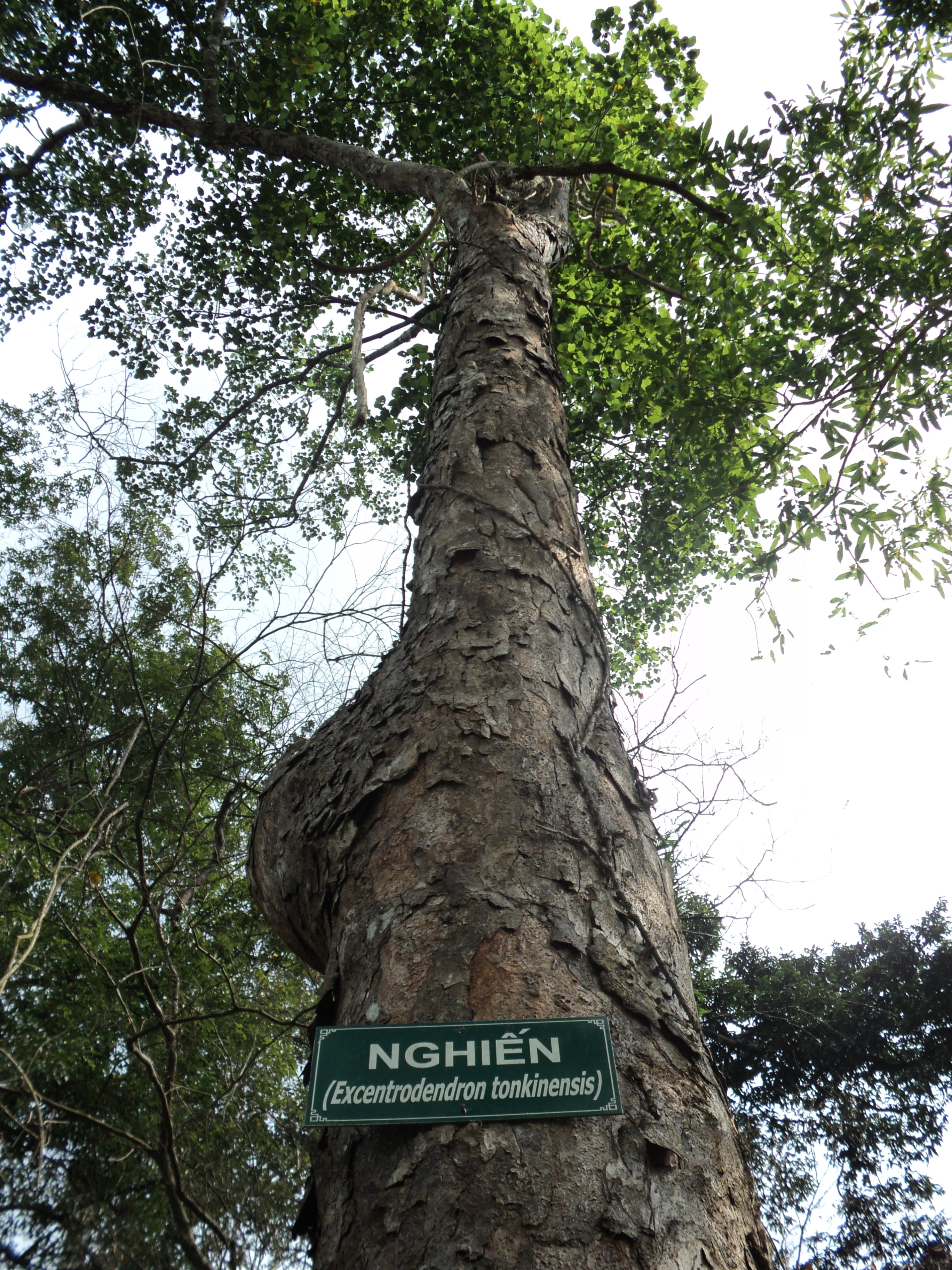
Burretiodendron is a small genus of trees in the family Malvaceae (order Malvales), placed by the Angiosperm Phylogeny Group within an expanded Malvaceae that absorbs the traditional family Tiliaceae, under which the genus was long classified. The genus was described by Alfred Rehder.
Members of the genus are deciduous or semi-evergreen trees characterised by heart-shaped (cordate) leaves and winged capsule fruits. The genus is native to subtropical and tropical Asia, with species distributed across southern China (particularly Guangxi and Yunnan provinces), Vietnam, Myanmar, and Thailand.
The taxonomic boundaries of Burretiodendron have shifted over time. The genus incorporates species formerly placed in the related genus Pentace, and the name Parapentace Gagnep. has been treated as a possible synonym of Burretiodendron rather than Pentace. One well-known species, Burretiodendron tonkinense, has as a synonym Burretiodendron hsienmu, a timber tree valued in southern China and Vietnam.
Distribution
Burretiodendron is native to tropical and subtropical Asia. Its species range across southern China (Guangxi, Yunnan), northern Vietnam, Myanmar, and Thailand, including the Mergui Archipelago.
Taxonomy Notes
Traditionally classified in Tiliaceae, Burretiodendron is now placed in the expanded Malvaceae under the APG system (order Malvales). The genus absorbs species formerly assigned to Pentace, and Parapentace Gagnep. is considered a possible synonym. Burretiodendron hsienmu is treated as a synonym of B. tonkinense.










