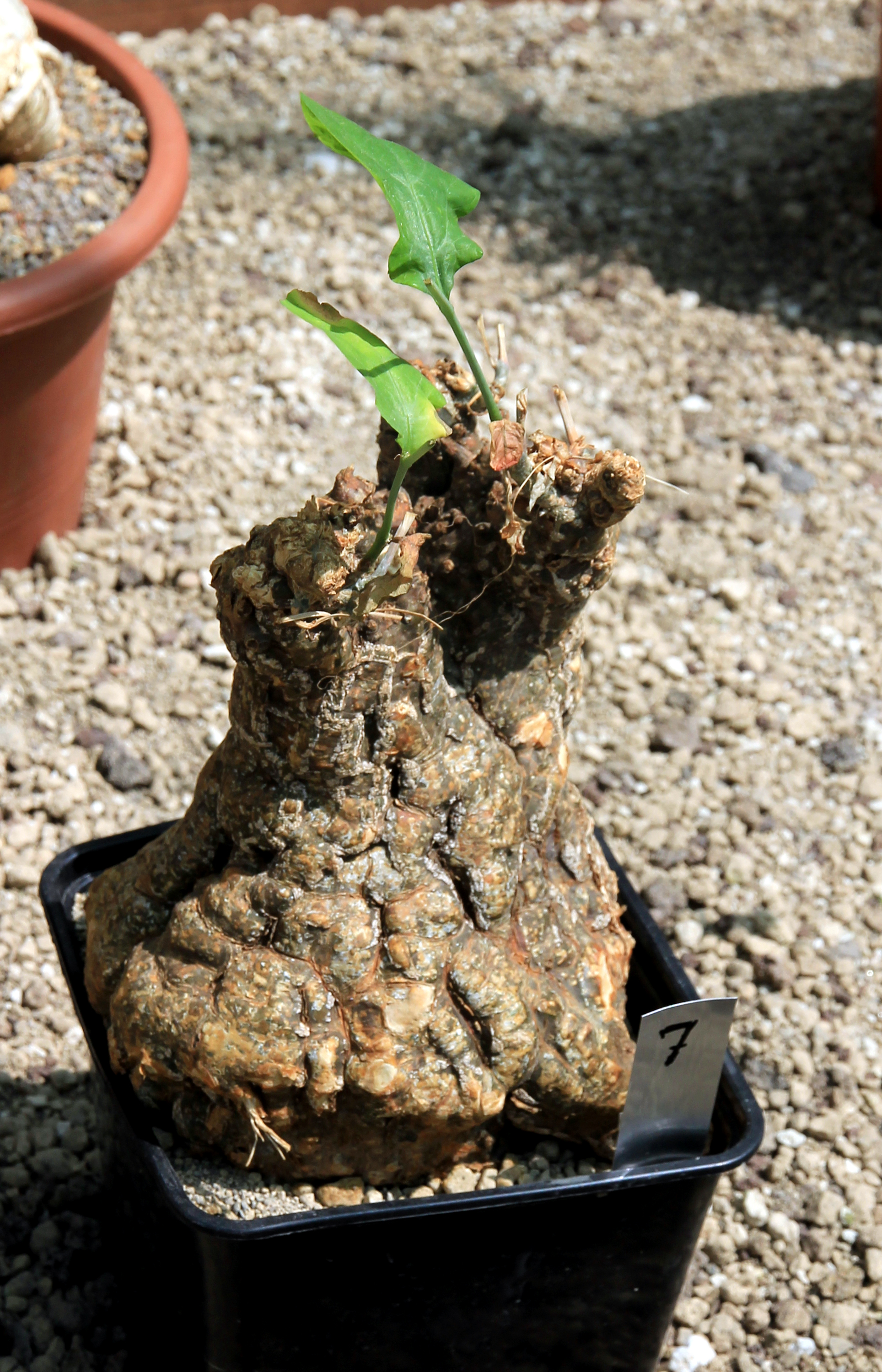
Cephalopentandra is a monotypic genus of flowering plants in the cucumber family (Cucurbitaceae, order Cucurbitales), native to northeastern tropical Africa. It was described by the Italian botanist Emilio Chiovenda and published in Flora Somala in 1929. The genus contains a single species, Cephalopentandra ecirrhosa, a caudiciform geophyte that forms a succulent, water-storing caudex — an adaptation to its arid native range spanning Somalia, Ethiopia, Kenya, and Uganda. The genus name translates from Greek as "head-five-anther," a reference to the structure of the flowers.
Etymology
The genus name Cephalopentandra is derived from Greek roots: kephalē (head), pente (five), and anēr/andros (man, anther). The name describes the flower structure, specifically the arrangement of five stamens clustered at the head of the flower. The name was given by Emilio Chiovenda when he described the genus in 1929.
Distribution
Cephalopentandra is endemic to northeastern tropical Africa. Its natural range includes Somalia, Ethiopia, Kenya, and Uganda. The genus grows in arid and semi-arid regions where its sole species, Cephalopentandra ecirrhosa, survives seasonal drought as a caudiciform geophyte, retreating underground during dry periods and resprouting from its tuberous caudex when rains return.
Taxonomy
Cephalopentandra is a monotypic genus in the family Cucurbitaceae (order Cucurbitales), containing the single species Cephalopentandra ecirrhosa (Cogn.) C.Jeffrey. The genus was first described by the Italian botanist Emilio Chiovenda and published in Flora Somala (volume 1, page 187) in 1929. The species was originally described under a different genus by Célestin Alfred Cogniaux and later transferred to Cephalopentandra by Charles Jeffrey.










