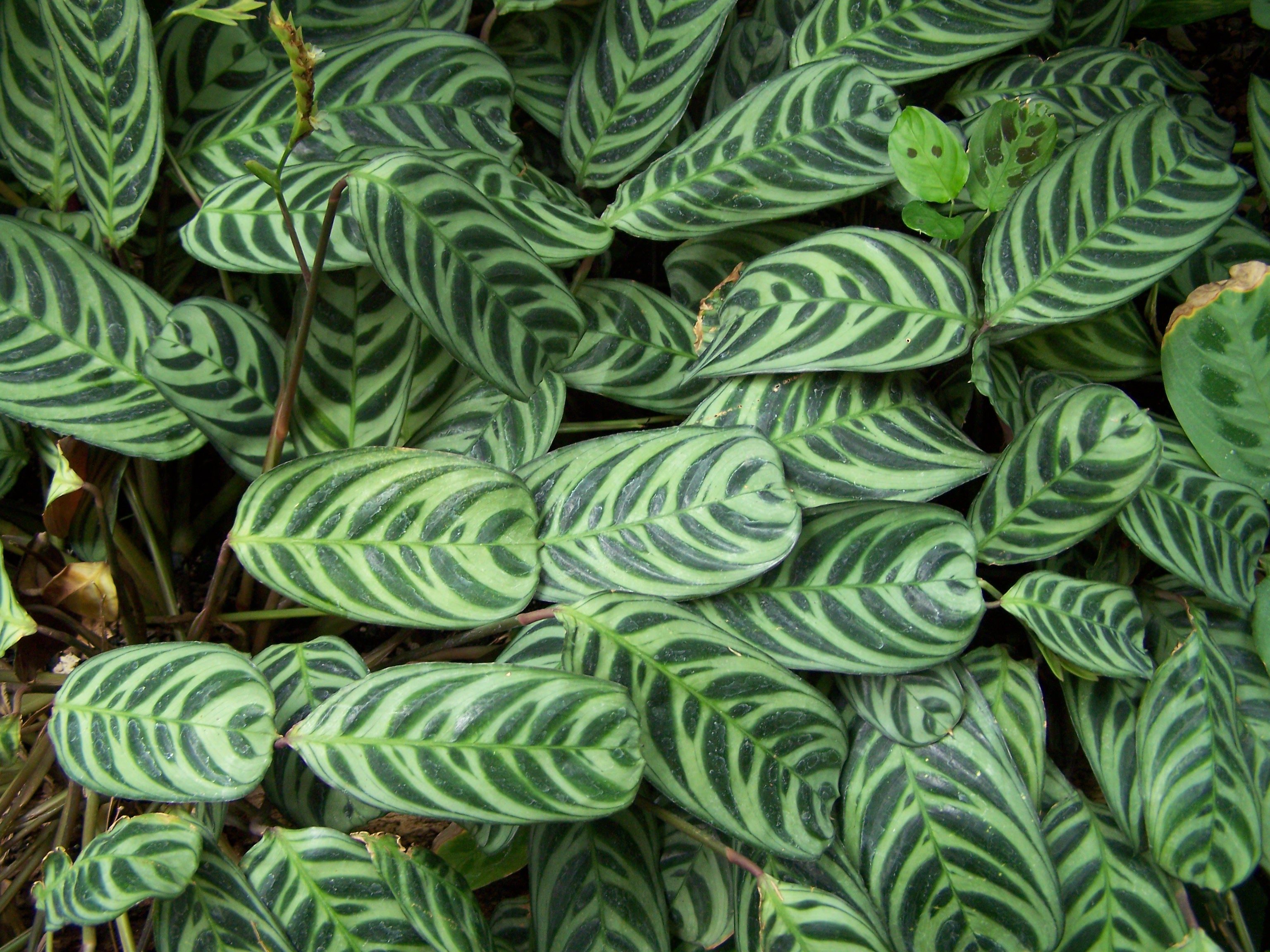
Ctenanthe is a genus of evergreen perennial flowering plants belonging to the family Marantaceae, within the order Zingiberales — a monocot order that also includes gingers, bananas, and heliconias. The genus was formally described by the German botanist August Wilhelm Eichler in 1884, in the Abhandlungen der Königlichen Akademie der Wissenschaften zu Berlin.
Native primarily to Brazil and more broadly to Central and South America, ctenanthes inhabit tropical and subtropical forest understories, where they are adapted to filtered light and humid conditions. They are frost tender, requiring a minimum temperature of around 13 °C (55 °F), which limits outdoor cultivation to tropical and warm-subtropical climates.
Plants in this genus are grown chiefly for their ornamental foliage, which is frequently variegated with striking patterns of silver, cream, or yellow markings on lance-shaped to oval leaves, often with contrasting maroon or purple undersides. Several species and cultivars have received the Royal Horticultural Society's Award of Garden Merit, including Ctenanthe lubbersiana (bamburanta), Ctenanthe oppenheimiana 'Tricolor' (known as the never-never plant), and Ctenanthe amabilis. Ctenanthe burle-marxii, named in honor of the Brazilian landscape architect Roberto Burle Marx, is among the most widely cultivated species.
Etymology
The genus name Ctenanthe was coined by the German botanist August Wilhelm Eichler when he formally described the genus in 1884. The name derives from Greek kteis (κτείς), meaning "comb," and anthos (ἄνθος), meaning "flower," referring to the comb-like arrangement of the bracts associated with the flowers.
Distribution
Ctenanthe is native primarily to Brazil, with the genus's range extending through Central and South America. Species inhabit humid tropical and subtropical forest understories throughout this region.
Cultivation
Ctenanthes require a frost-free environment with a minimum temperature of 13 °C (55 °F). They thrive in indirect or filtered light, high humidity, and consistently moist but well-drained soil — conditions that mirror their native forest-floor habitat. Several species and cultivars have received the Royal Horticultural Society's Award of Garden Merit, indicating reliable ornamental performance in cultivation.










