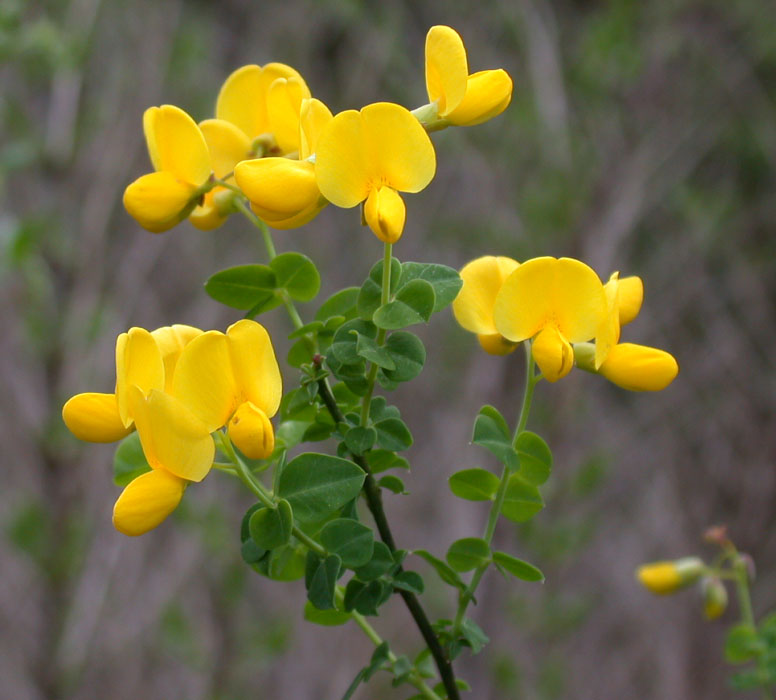
Cytisophyllum is a monotypic genus of flowering shrub in the legume family, Fabaceae (subfamily Faboideae), order Fabales. It contains a single accepted species, Cytisophyllum sessilifolium, which is native to eastern Spain, southern France, and Italy, and has become naturalized in parts of Germany, Sweden, Ukraine, and Crimea.
The genus was described by Otto Lang, with the name published in Flora, volume 26, page 770 (1843), segregating this species from the large, closely related genus Cytisus. Reflecting that history, taxonomic databases list Cytisus as a heterotypic synonym at the genus level and record Phyllocytisus as an additional synonymous genus name once applied to the same plant — both artifacts of the species having been shuffled among related broom genera in the pea family before settling into its own monotypic segregate.
As the only member of its genus, Cytisophyllum is defined entirely by the characteristics of C. sessilifolium: a shrub in the Faboideae, the papilionoid (pea-flowered) subfamily of Fabaceae that also includes brooms, gorses, and true clovers.
Distribution
Native to eastern Spain, southern France, and Italy. It has also been recorded as introduced/naturalized in Germany, Sweden, Ukraine, and Crimea.
Taxonomy Notes
Cytisophyllum is monotypic, containing only Cytisophyllum sessilifolium. The genus was published by Otto Lang in Flora 26: 770 (1843), segregating the species from Cytisus; GBIF's backbone accordingly lists Cytisus as a heterotypic synonym and Phyllocytisus as an additional synonymous genus name for the same taxon.










