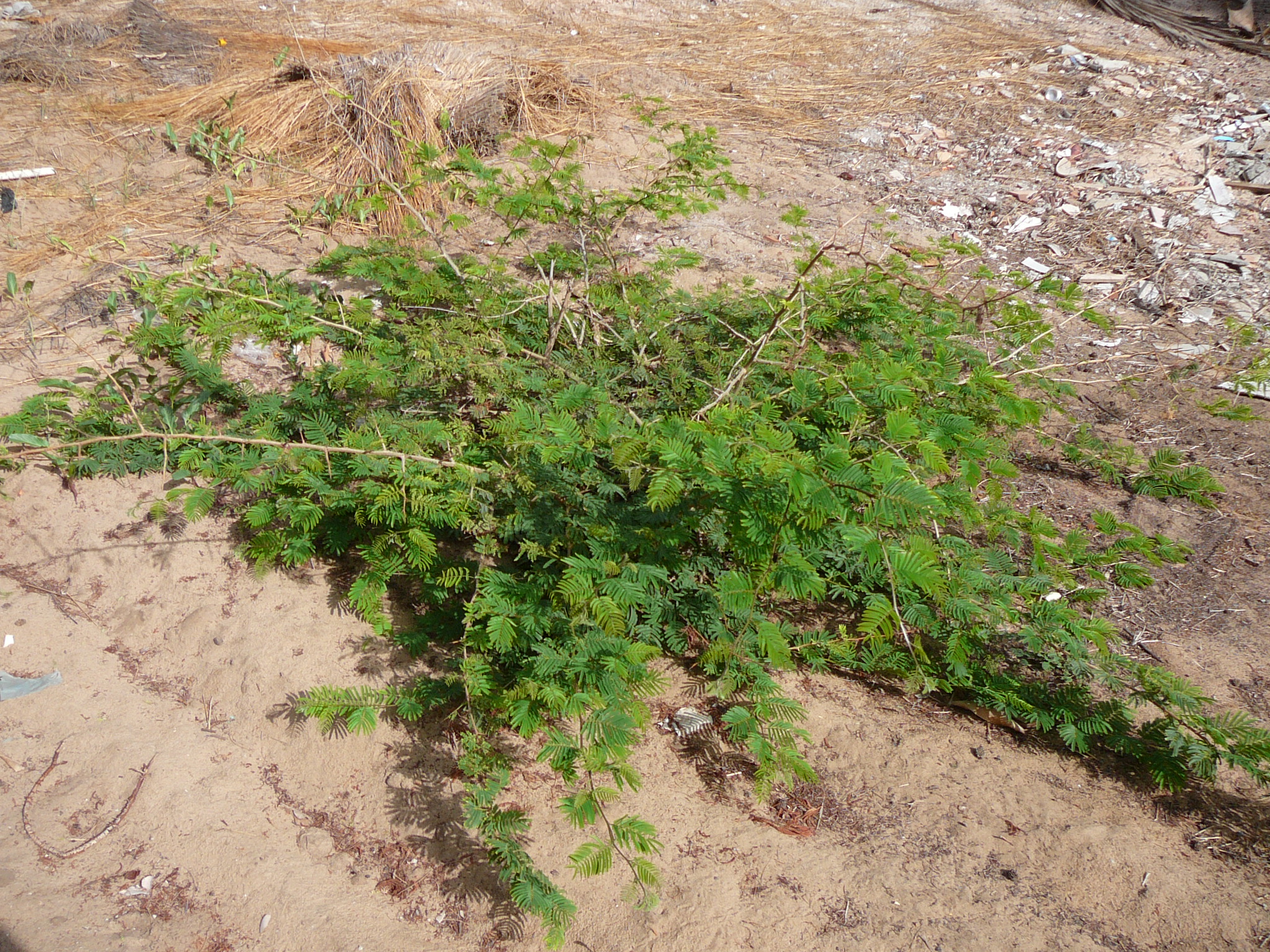
Dichrostachys is a genus of flowering plants in the pea and bean family, Fabaceae (order Fabales), comprising around 16 accepted species. It was formally described by Robert Wight and George Arnott Walker Arnott, building on an earlier description by Alphonse de Candolle, and published in the Prodromus Florae Indicae Orientalis in 1834.
The genus is native to the Old World, occurring naturally from Africa across to Australasia, with a centre of diversity in Madagascar, where several of the recognized species are endemic.
Members of Dichrostachys bear bi-pinnately compound leaves that resemble those of the related genus Acacia, reflecting their shared placement within the legume family. A key distinguishing feature separates the two genera, however: where Acacia thorns are modified stipules, the thorns of Dichrostachys are hardened branchlets.
The genus name is a compound of Greek roots — dis ("two"), chroos ("colour") and stachys ("grain ear" or "spike") — chosen to describe the plants' distinctive bi-coloured flower spikes, in which the upper and lower portions of each inflorescence differ in colour.
Etymology
The name Dichrostachys combines the Greek dis ("two"), chroos ("colour") and stachys ("spike"), describing the genus's characteristic bi-coloured inflorescences.
Distribution
Dichrostachys is native to the Old World, ranging from Africa to Australasia, with a centre of diversity in Madagascar.
Taxonomy Notes
Dichrostachys (A.DC.) Wight & Arn. is placed in the legume family Fabaceae, order Fabales, and was published in the Prodromus Florae Indicae Orientalis (1834). Around 16 species are currently accepted; the genus is distinguished from the related, superficially similar Acacia by its thorns, which are hardened branchlets rather than modified stipules.










