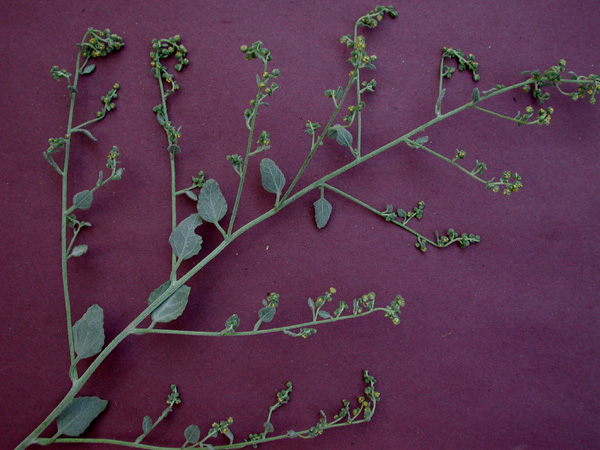
Dicoria is a small genus of flowering plants in the daisy family (Asteraceae), placed in tribe Heliantheae within order Asterales. It was described by John Torrey and Asa Gray, with the name published in 1848 in William Emory's report on the U.S.–Mexico boundary survey. The genus carries the common name "twinbugs."
The genus is native to arid parts of the southwestern United States and northwestern Mexico. Of its species, Dicoria argentea and Dicoria calliptera are restricted to Sonora in northwestern Mexico, while Dicoria canescens has the broadest distribution, ranging across the Baja California and Sonora regions of Mexico and through California, Nevada, Arizona, Utah, New Mexico, and Colorado in the United States — largely desert and dryland habitats typical of this part of North America.
Distribution
Dicoria is native to the southwestern United States and northwestern Mexico. Two of its three species, D. argentea and D. calliptera, are restricted to Sonora, Mexico, while D. canescens ranges more widely across Baja California and Sonora in Mexico and California, Nevada, Arizona, Utah, New Mexico, and Colorado in the United States.
Taxonomy Notes
Dicoria was described by Torrey and A. Gray, published in 1848 in Emory's boundary-survey report. It belongs to family Asteraceae, tribe Heliantheae, order Asterales, and is known by the common name "twinbugs."










