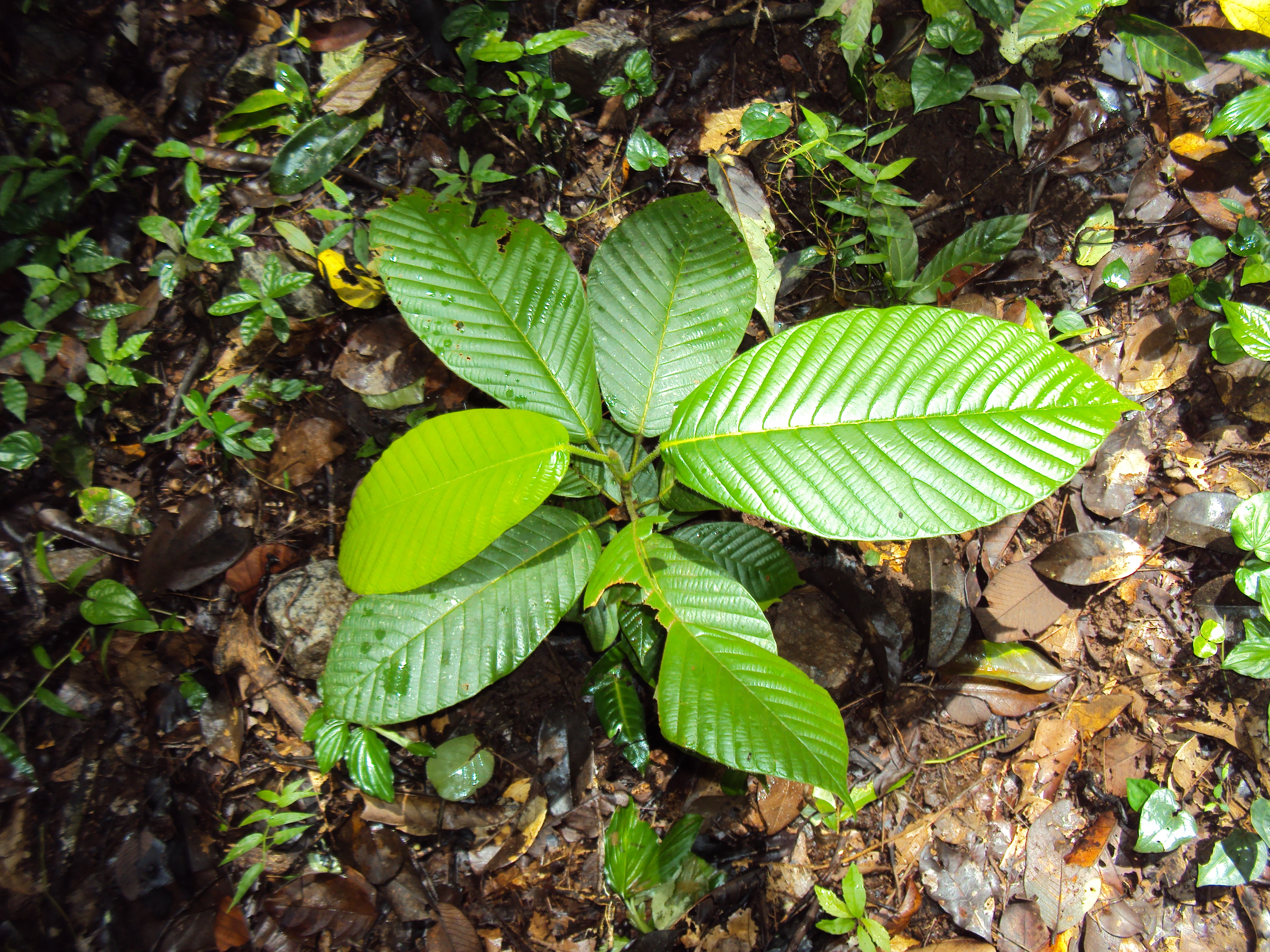
Dipterocarpus is a genus of large tropical trees and the type genus of the family Dipterocarpaceae, placed in the order Malvales. With approximately 70 accepted species, it is the third-largest and most species-rich genus in Dipterocarpaceae, a family of about 695 species that dominates the lowland rainforests of Southeast Asia.
Species in this genus are among the defining components of dipterocarp forests — some of the tallest and most species-rich tropical forests on Earth. Individual trees frequently reach 40–70 metres in height, forming the emergent canopy layer above the main forest. They are distributed across South Asia and Southeast Asia, from Sri Lanka and India eastward to the Philippines, with the greatest concentration of species and endemism on Borneo (Brunei, Sabah, and Sarawak).
The genus is most readily identified by its characteristic two-winged fruits, a feature encoded in its Greek name: di (two), pteron (wing), karpos (fruit). Flowers are typically large and fragrant, and the bark of many species exudes aromatic resins. Trees of the valvate group within subfamily Dipterocarpoideae — which includes Dipterocarpus — bear valvate sepals in fruit, possess solitary vessels and scattered resin canals, and have a basic chromosome number of x = 11.
Dipterocarpus has a significant economic history. The bark yields abundant resinous oils traded under the names gurjun oil, kanyin oil, wood oil, and Keruing oil. The wood, especially that of D. turbinatus (gurjan) in the Andaman Islands, is a major commercial timber heavily used in plywood production. The genus also has traditional applications in herbal medicine across its native range, though this use is far less documented than its timber value.
The fossil record of the genus extends to the latest Cretaceous (Maastrichtian) Intertrappean Beds of India, making it among the oldest documented genera in Dipterocarpaceae. Biogeographic evidence suggests the family originated in Gondwana, with ancestral lineages carried northward on the Indian Plate before spreading across Southeast Asia.
Etymology
The name Dipterocarpus derives from the Greek words di ("two"), pteron ("wing"), and karpos ("fruit"), referring to the characteristic two-winged fruits borne by trees of this genus. The same etymology applies to the family name Dipterocarpaceae, of which Dipterocarpus is the type genus.
Distribution
Dipterocarpus ranges across South Asia and Southeast Asia, from Sri Lanka and India through Indochina, the Malay Peninsula, and island Southeast Asia to the Philippines. The greatest diversity and highest rate of endemism occur on Borneo, where northern Borneo (Brunei, Sabah, and Sarawak) is considered the richest area in the world for dipterocarp species. Species grow primarily in lowland tropical rainforest from sea level to approximately 1300 m elevation, occurring in lowland dipterocarp forest, riparian fringe, limestone hills, and coastal hill habitats.
Ecology
Trees of this genus are large canopy emergents and a keystone component of dipterocarp forests, which they have dominated in Borneo for millions of years. They occur as either evergreen or deciduous species depending on local conditions. The bark produces aromatic resins that have ecological roles in defence and attract specialist arthropods; 52-million-year-old amber from Gujarat identified as Dipterocarpaceae resin contains fossilized arthropods. The genus interacts closely with the broader lowland forest ecosystem of Southeast Asia, where dipterocarps collectively form the structural and ecological foundation.
Conservation
Many species of Dipterocarpus are threatened, with nearly all species in Borneo considered imperiled. Primary threats include overcutting, extensive illegal logging, and large-scale habitat conversion. Climate-change modelling projects a 16–27% reduction in suitable habitat across the genus's range; current land-cover loss has already reduced species distributions by approximately 67% relative to potential range. Upward elevational shifts in distribution are projected as lowland habitats change. The genus's keystone role in Southeast Asian forests means its decline has cascading consequences for entire forest ecosystems.
Cultural Uses
Dipterocarpus trees have been exploited for timber and resin across their range for centuries. The bark yields thick aromatic oils — marketed as gurjun oil, kanyin oil, wood oil, and Keruing oil — used in varnishes, lamps, and as a wood preservative. D. turbinatus, known as gurjan, is one of the most commercially important timber species in the Andaman Islands, where its wood is a primary material for plywood production. The genus also has documented but less widely recorded uses in traditional herbal medicine throughout South and Southeast Asia.
History
The oldest known fossil attributable to Dipterocarpus — and to the family Dipterocarpaceae as a whole — comes from the latest Cretaceous (Maastrichtian) Intertrappean Beds of India. Biogeographic and molecular evidence suggests the ancestral dipterocarps originated in the southern supercontinent Gondwana, with the lineage carried northward on the Indian Plate before India's collision with Asia enabled spread across Southeast Asia. Fossil pollen from Myanmar dates to the upper Oligocene, with diversity and abundance increasing through the mid-Miocene. Chemical traces of dipterocarp resins have been identified in Eocene deposits of India.
Taxonomy Notes
Dipterocarpus is the type genus of Dipterocarpaceae and is placed within the subfamily Dipterocarpoideae, tribe Dipterocarpeae (the "valvate group"). Genera in this group — including Anisoptera, Cotylelobium, Dipterocarpus, Stemonoporus, Upuna, Vateria, Vateriopsis, and Vatica — are distinguished by valvate (not imbricate) sepals in fruit, solitary vessels, scattered resin canals in the wood, and a basic chromosome number of x = 11. GBIF places the genus in order Malvales, class Magnoliopsida, recognizing 58 accepted descendant taxa.










