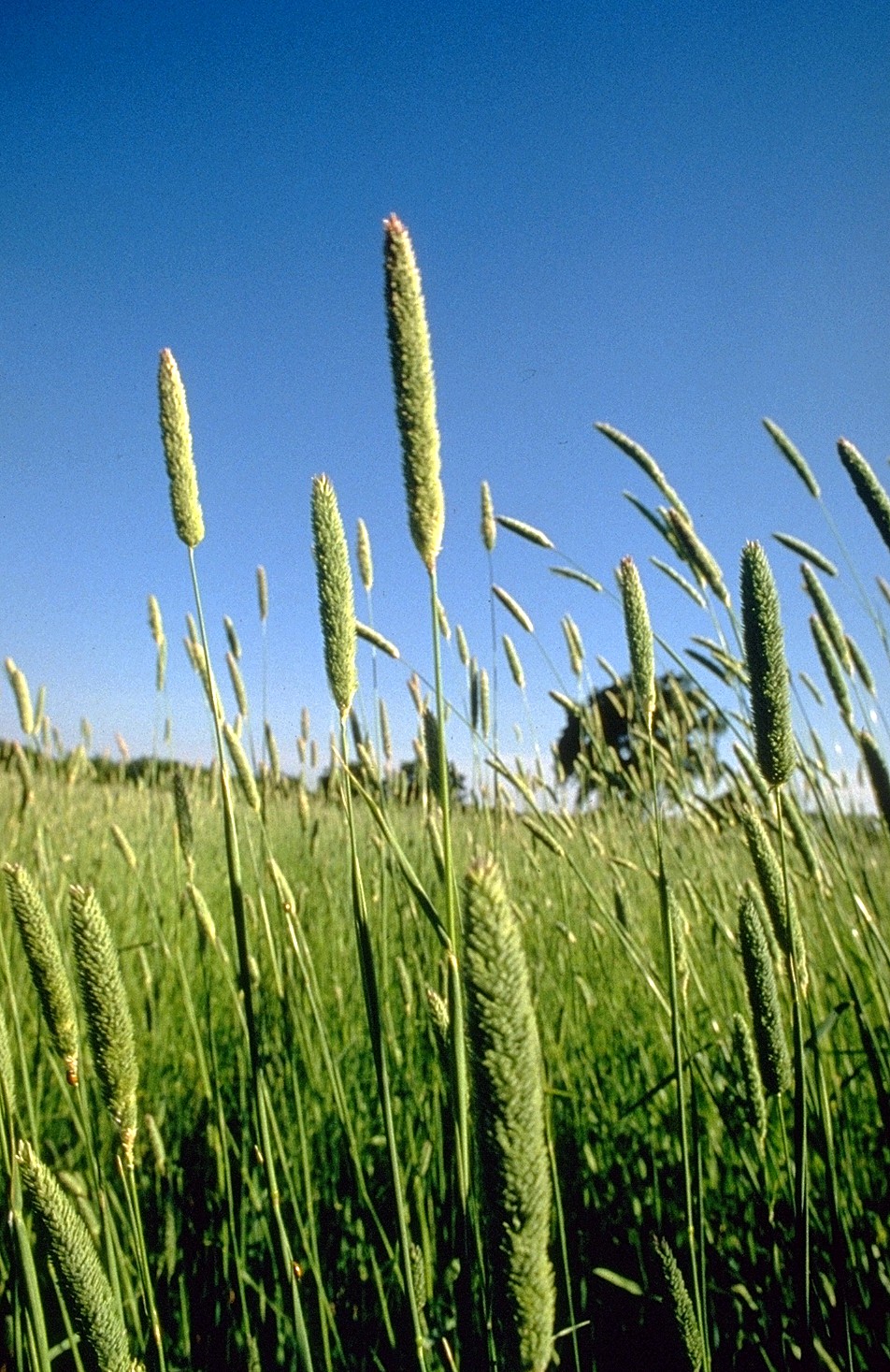
Phalaris L. is a genus of annual and perennial grasses in the family Poaceae (subfamily Pooideae, tribe Poeae), comprising approximately 15–22 accepted species. First described by Linnaeus in Species Plantarum (1753), the genus bears the common collective name "canary-grasses," reflecting the widespread use of its seeds in the birdseed trade.
Members of Phalaris are found across all continents except Antarctica, occupying an exceptionally wide range of habitats — from wetlands, riverbanks, and shallow water to dry open ground, roadsides, and disturbed areas. Some species occur below sea level; others grow at considerable elevation. This ecological breadth is reflected in the genus's global distribution spanning Europe, the Mediterranean basin, Asia, the Americas, and beyond.
The genus includes both modest annual species and vigorous perennial grasses. Annual species such as P. canariensis (canary grass) and P. minor (lesser canary grass) typically grow to around 1 m, while the perennial P. arundinacea (reed canarygrass) can reach 1.5 m and spread aggressively through rhizomes, forming dense stands in wet habitats. The ornamental variety P. arundinacea var. picta (gardener's garters) is widely grown for its white-striped foliage.
Several Phalaris species contain notable alkaloid compounds. Gramine is toxic primarily to sheep and can cause brain, organ, and central nervous system damage. P. arundinacea, P. aquatica, and P. brachystachys also contain tryptamines including DMT, 5-MeO-DMT, and bufotenin; concentrations fluctuate seasonally and rise after drought or regrowth following grazing or cutting.
Economically, the genus is most important through P. canariensis, the primary source of canary seed for the cage-bird trade. P. arundinacea is valued as a high-yielding fodder grass (8–20 tonnes dry matter per hectare annually), has been trialled as a bioenergy crop, and is used in constructed wetland reed-bed systems for grey water treatment. Historically, its leaves have been woven into hats and mats.
Taxonomy
Phalaris L. was established by Carl Linnaeus in Species Plantarum (1753, p. 54) and is currently accepted as a genus within the family Poaceae (grasses), subfamily Pooideae, tribe Poeae. The genus key in GBIF is 2703277. GBIF records 58 descendant taxa in total, of which 16 are currently accepted species; a further 20 names carry doubtful status.
Several generic names have been placed in synonymy with Phalaris over the years: Baldingera G.Gaertn., B.Mey. & Scherb. (1799), Digraphis Trin. (1820), Endallex Raf. (1830), Phalaridantha St.-Lag. (1889), Phalaroides Wolf (1781), and Typhoides Moench (1794). These reflect historical attempts to segregate portions of the genus, particularly the reed canarygrasses previously placed in Digraphis or Phalaridantha. Modern molecular and morphological treatments consolidate all of these under Phalaris sensu lato.
Distribution
Phalaris species are distributed across all continents except Antarctica. The center of diversity lies in the Mediterranean basin, where species such as P. canariensis, P. minor, P. brachystachys, and P. coerulescens are native to dry open habitats from southern Europe and North Africa (Spain, Algeria, Egypt, Libya) north to Estonia. P. arundinacea has one of the widest ranges of any grass in the genus, occurring across most of Europe (excluding the Mediterranean fringe), western, northern, and eastern Asia, and North America. Several species have naturalized far beyond their native ranges owing to deliberate introduction as fodder grasses or via the bird-seed trade.
Within Europe, P. arundinacea and P. canariensis are the species most commonly recorded. In North America, introduced populations of P. arundinacea have become established across a broad latitudinal range corresponding to USDA hardiness zones 4–9.
Ecology
Phalaris species occupy a wide ecological spectrum. Annual species favor disturbed ground, arable margins, and dry open habitats; the perennial P. arundinacea is characteristic of wet places, riverbanks, pond margins, and shallow water, where its rhizomatous growth habit allows it to form dense, impenetrable stands that exclude other vegetation. Two species — P. arundinacea and P. aquatica — are recognized as occasional invasive plants in wetland ecosystems, where their aggressive spread can reduce native plant diversity.
A chemically distinctive feature of the genus is the presence of alkaloids in multiple species. Gramine, an indole alkaloid, occurs in several Phalaris species and is toxic primarily to livestock, particularly sheep, causing brain damage, organ damage, central nervous system impairment, and potentially death. P. arundinacea, P. aquatica, and P. brachystachys additionally contain tryptamine alkaloids — DMT, 5-MeO-DMT, and bufotenin (5-OH-DMT). Alkaloid concentrations are not constant: they fluctuate seasonally and increase significantly following drought stress or during regrowth after mowing or grazing.
Cultivation
The easiest species to cultivate is the annual P. canariensis, which tolerates a wide range of soil types (sandy, loamy, or clay) at neutral to slightly alkaline pH, and grows well in both dry and moist conditions in full sun. The perennial P. arundinacea and its ornamental variety picta are also straightforward, succeeding in ordinary soils from pH 4.5 to 8.2 and hardy to −20°C (USDA zones 4–9). Both prefer moist to wet conditions, though P. arundinacea in particular must be managed carefully in garden contexts: its running rhizomes form dense mats and it can become invasive, especially in damp sites. Regular mowing or physical barriers are recommended to contain spread during establishment.
Propagation
Annual species such as P. canariensis are raised from seed sown directly in situ in spring. Perennial species such as P. arundinacea can also be raised from seed sown in spring, but are more commonly propagated by division of established clumps in spring, which is faster and preserves cultivar characteristics (important for the variegated ornamental variety picta).
Cultural Uses
The most economically significant use of the genus is the seed of P. canariensis as birdseed — it is the primary grain in canary food mixes and is traded globally under the name "canary seed." The seeds are also edible for humans when cooked, and can be ground into flour for cakes and puddings; young leaves of P. canariensis are likewise edible when cooked.
P. arundinacea has multiple utilitarian applications: it is one of the highest-yielding fodder grasses available (8–20 tonnes dry matter per hectare per year), has been evaluated as a bioenergy/biomass crop in Ireland, and its leaves have been woven into hats and mats. It is also used in constructed reed-bed wetland systems for grey water treatment and phytoremediation. Several Phalaris species, including ornamental varieties, appear in dried flower arrangements.










