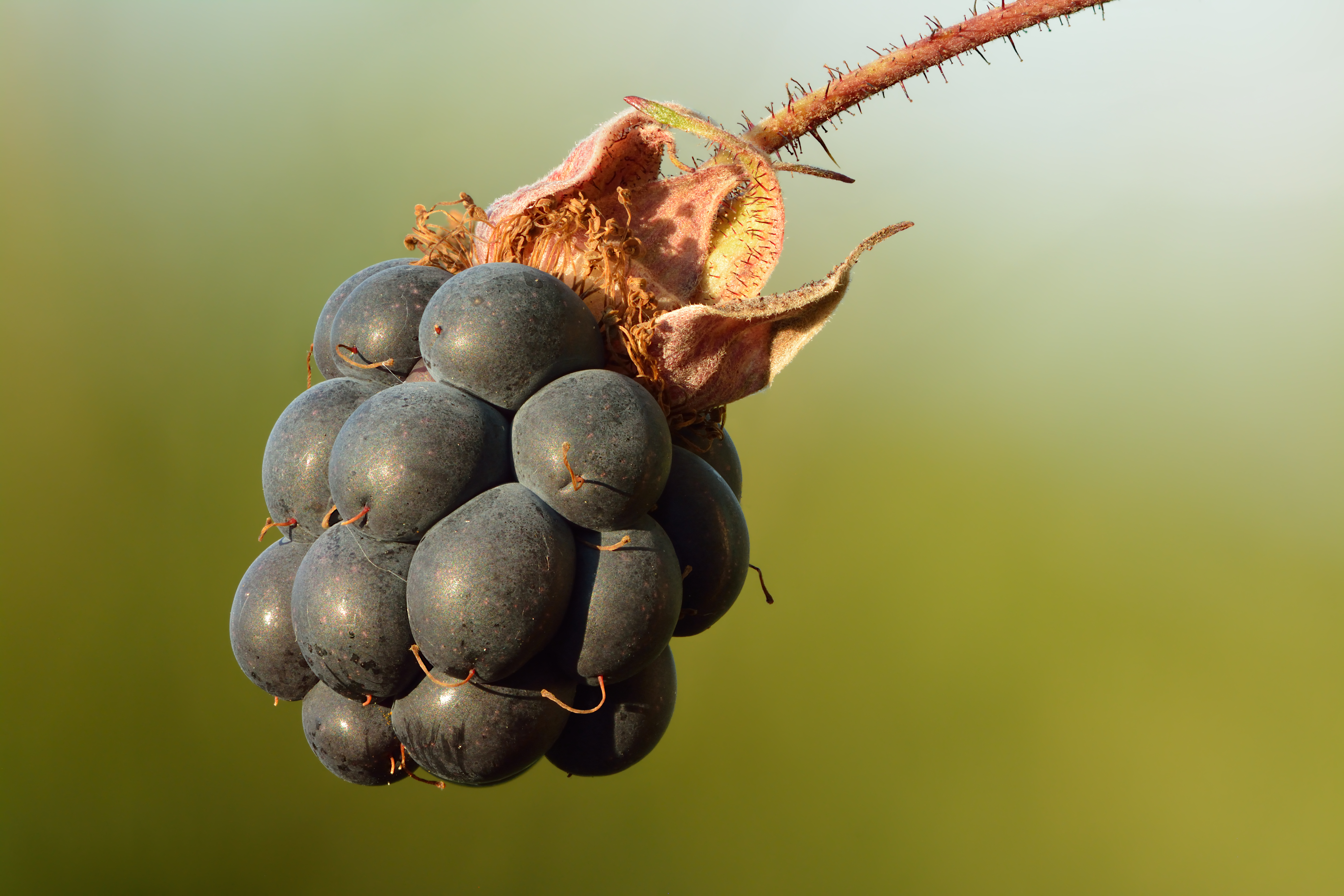
Rubus L. is a large and diverse genus of flowering shrubs and scrambling canes in the family Rosaceae, order Rosales. It encompasses hundreds of species — estimates range from 250 to over 1,000 — and includes the familiar raspberries, blackberries, dewberries, and cloudberries, as well as numerous hybrid cultivars such as the loganberry, boysenberry, marionberry, and tayberry. The genus is recognized by its woody, often prickly stems, compound leaves, and characteristic aggregate fruits composed of many small drupelets.
Plants are found on every continent except Antarctica, with the centre of diversity believed to lie in North America, from where the group expanded into Eurasia, South America, and Oceania during the Miocene. Stems are typically biennial: in the first year a vegetative cane (primocane) is produced; in the second year it flowers and fruits (floricane) before dying back, while the rootstock persists perennially. Arching canes root readily where their tips contact soil, allowing vigorous vegetative spread.
The genus is organized into 13 subgenera, with taxonomy complicated by widespread polyploidy — approximately 60–70% of species are polyploid — and frequent hybridization, making species delimitation difficult, particularly in Europe where complex apomictic microspecies are grouped into aggregate species such as Rubus fruticosus aggr. Carl Linnaeus formally described the genus in 1753, with R. fruticosus L. as the type species; subsequent systematic work by Wilhelm Olbers Focke (1910–1914) established the subgeneric framework still broadly used today.
Etymology
The genus name Rubus is Latin for "blackberry" and is derived from ruber, the Latin word for "red," a reference to the red fruit of many species. The English vernacular name "bramble" traces back to Old English bræmbel, itself a variant of bræmel, the term used by Anglo-Saxon speakers for thorny shrubs of this type.
Distribution
Rubus is one of the most broadly distributed plant genera, occurring on every continent except Antarctica. The genus likely originated in North America and expanded into Eurasia, South America, and Oceania during the Miocene. In Europe, the genus is particularly diverse and taxonomically complex, with Switzerland alone hosting more than 90 recorded taxa including R. idaeus, R. caesius, R. saxatilis, and the broad R. fruticosus aggregate. In North America, both native species (such as R. idaeus, R. occidentalis, and R. ursinus) and introduced species (most notably R. armeniacus, the Himalayan blackberry) are well represented. The genus spans a wide range of climates and elevations, from arctic and alpine zones (cloudberry, R. chamaemorus) to temperate lowlands.
Ecology
Rubus species grow as shrubs or scrambling canes with arching stems that often root at their tips when they contact soil, facilitating vegetative spread and forming dense thickets. Stems are biennial: first-year primocanes are vegetative; second-year floricanes bear flowers and fruit before dying. Most species are hermaphroditic, and the fruit is an aggregate of drupelets. Native Rubus species are important components of woodland edges and disturbed habitats, providing food for a wide range of wildlife including songbirds and small mammals. Flowers attract pollinators, and dead, hollow canes offer nesting cavities for native solitary bees. Some introduced species (notably R. armeniacus) have become invasive outside their native range, forming impenetrable thickets that suppress native vegetation.
Cultivation
Rubus species and cultivars are widely grown for their edible fruits. Plants prefer a sunny position (at least 6 hours of direct sunlight) in well-drained, acidic soil (pH below 6.0), though they tolerate clay, loam, and sandy soils with good organic matter content. In garden and commercial settings, cane fruits are typically trained on supporting wires or canes to keep fruiting laterals accessible. Notable hybrid cultivars bred from Rubus species include the loganberry (raspberry × blackberry), boysenberry, marionberry, and tayberry. Common disease problems include anthracnose, powdery mildew, and root rot; pests include Japanese beetles and cane borers.
Cultural Uses
The fruits of Rubus species have been gathered and consumed by humans across the genus's entire range. Raspberries (R. idaeus), blackberries (R. fruticosus aggregate), black raspberries (R. occidentalis), cloudberries (R. chamaemorus), and dewberries are eaten fresh and processed into jams, preserves, juices, wines, and confections. The fruit also yields a purple to dull blue natural dye, and various Rubus species have a long history of use in traditional medicine across many cultures.
History
Fossil evidence places Rubus in North America at least 34 million years ago, with specimens recovered from the Eocene-aged Florissant Formation of Colorado. Molecular and biogeographic data suggest the genus originated in North America and spread into Eurasia, South America, and Oceania during the Miocene. Linnaeus formally described the genus in Species Plantarum (1753), and systematic revision by Wilhelm Olbers Focke between 1910 and 1914 organized the genus into subgenera that form the basis of current classifications.
Taxonomy
Rubus belongs to the family Rosaceae, order Rosales, subfamily Rosoideae, placed in the tribe Rubeae — a monotypic tribe containing only this genus. Linnaeus described the genus in 1753; the type species is Rubus fruticosus L. Modern treatments recognize 13 subgenera, the largest of which (subgenus Rubus) is subdivided into 12 sections. Species delimitation within the genus is notoriously difficult: estimates of the total number of species range from 250 to over 1,000, reflecting widespread polyploidy (approximately 60–70% of species) and frequent hybridization and apomixis. In Europe especially, complex microspecies are typically grouped into aggregate species such as Rubus fruticosus aggr., with over 90 segregate taxa recorded for Switzerland alone. GBIF records roughly 7,700 descendant taxa across all ranks for the genus. The subgeneric framework was substantially developed by German botanist Wilhelm Olbers Focke in his 1910–1914 revision.
Propagation
Rubus can be propagated by several methods. Seed requires cold stratification — either sow fresh seed in autumn in a cold frame, or stratify stored seed at approximately 3°C for one month before spring sowing. Semi-ripe cuttings can be taken in July or August and rooted in a cold frame. Tip-layering, where a cane tip is buried shallowly in moist soil in July, is a particularly reliable and widely used method; rooted layers are detached and transplanted in autumn. Division of established clumps in early spring or just before leaf-fall in autumn is also practical for many species.










