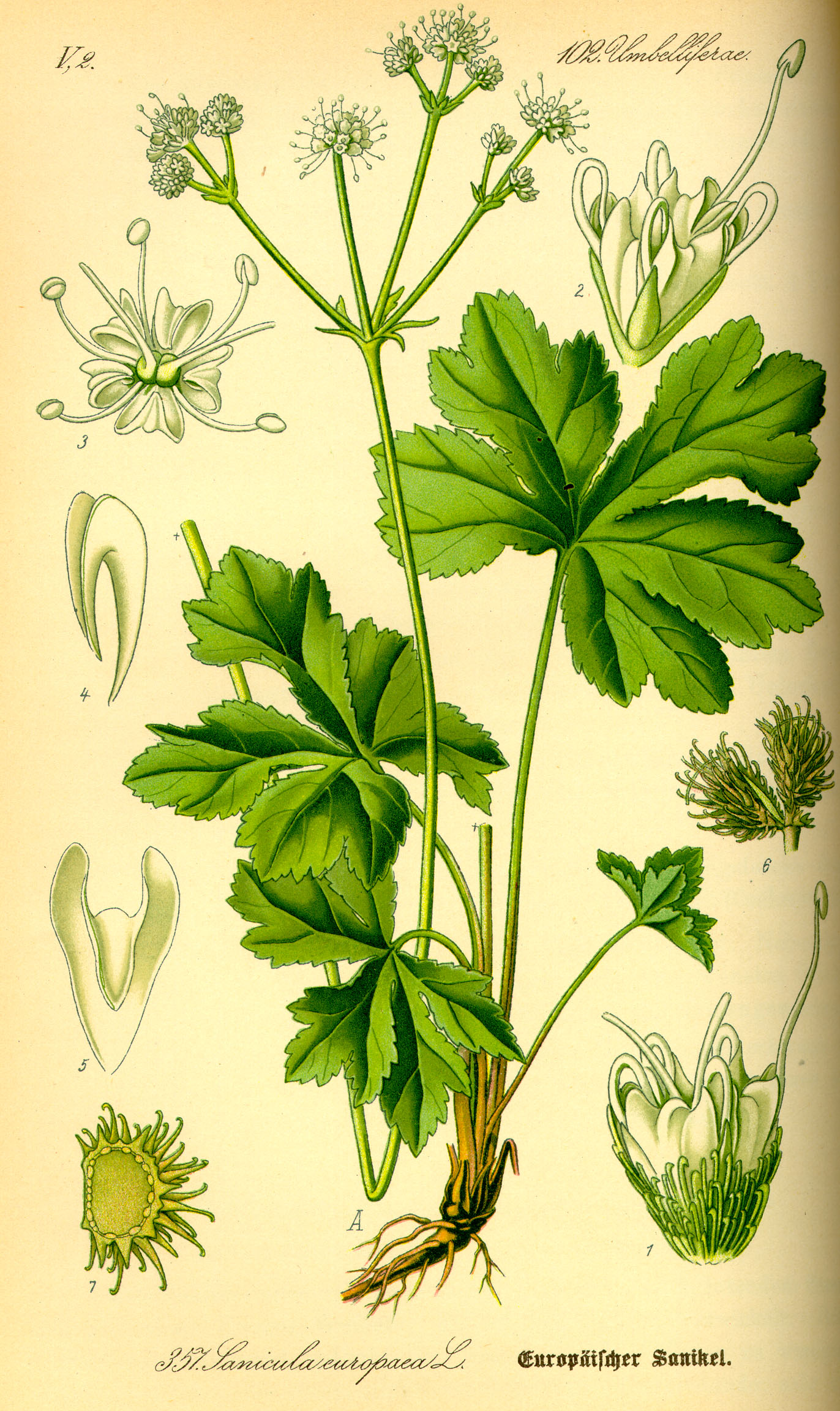
Sanicula is a genus of flowering plants in the carrot family (Apiaceae), placed in subfamily Apioideae and tribe Saniculeae. It was established by Linnaeus in Species Plantarum in 1753, with the European species Sanicula europaea as its best-known representative. Plants of the World Online currently accepts 49 species in the genus, while the Global Biodiversity Information Facility lists 43 accepted child taxa and Wikipedia summarises the total as "about 45"; this slight variation reflects ongoing revision of regional treatments rather than a settled count.
The genus has a remarkably broad — effectively cosmopolitan — range. Sanicles occur across North America, South America, Europe, Africa and Asia, from arctic-influenced temperate zones to tropical mountains, with a notable radiation in the Hawaiian Islands. North America alone is home to at least twenty-two species. Common English names include "sanicle" and "black snakeroot," both of which point back to the herbal reputation of the plants.
Members of the genus are mostly perennial (occasionally biennial) herbs of woodland understoreys and shaded openings. They share the family signature of small flowers gathered into compound umbels, but Sanicula umbels are characteristically tight and head-like rather than broadly spreading. Their fruits are small schizocarps covered in hooked bristles, which attach readily to fur and clothing and disperse the seeds by epizoochory. Foliage is typically palmately or pedately divided, on slender stems rising from a basal rosette.
The genus name itself records the plants' medicinal history: Sanicula derives from Latin sanus, "healthy," in reference to the long-standing European use of S. europaea as a wound-healing herb. Traditional herbalists used powdered roots and leaf poultices — the latter containing allantoin — to treat bruises, swellings and other complaints, although several species also contain saponins and are not considered safe for casual use. Where they are grown in gardens, sanicles do best in moderately fertile, well-drained loamy or calcareous soils in partial shade, mimicking the woodland conditions they occupy in the wild.
Etymology
The genus name Sanicula comes from Latin sanus, meaning "healthy," and refers to the long traditional use of Sanicula europaea in European folk medicine as a wound-healing herb. The English common names "sanicle" and "black snakeroot" likewise reflect the medicinal reputation of the group.
Distribution
Sanicula has a cosmopolitan distribution, with native species in North America, South America, Europe, Africa and Asia and a notable Hawaiian radiation. POWO records the genus as extinct in Sri Lanka. North America hosts at least twenty-two species, while in Switzerland the genus is represented by the single species Sanicula europaea. In eastern North America, sanicles range from New Hampshire south to Florida and west to Texas and Nebraska.
Ecology
Sanicles are characteristic plants of shaded woodland and forest-edge habitats. Sources describe them growing in dry woods, openings, woods and thickets, typically on loamy or calcareous soils. Their bur-like, hook-covered fruits attach to passing animals and human clothing, making epizoochory the genus's principal seed-dispersal strategy.
Cultivation
Where grown ornamentally, sanicles succeed in moderately fertile, well-drained soil in sun or partial shade. They strongly dislike poor, thin soils and prefer loamy or calcareous conditions, mirroring the woodland understory they inhabit in the wild. Garden plants are typically biennial to short-lived perennial, reach about one metre in height, and flower from May to July.
Propagation
Sanicula seed germinates more reliably after cold stratification. Autumn sowing, or early-spring sowing of stored seed, works well, ideally into woodland soil beneath trees. Established clumps may also be divided in spring; smaller divisions benefit from a cold frame before being planted out in late spring or summer.
Cultural uses
Sanicula europaea gave the genus its name through its long use as a healing herb in European folk medicine. Traditional applications include powdered roots used as a heart remedy and to influence menstruation (including as an abortifacient), and leaf poultices applied to bruises and swellings; the leaves contain allantoin, a compound still used in modern wound-care preparations. Some species, however, contain saponins, which limits their suitability for casual herbal use.
History
The genus was formally described by Carl Linnaeus in Species Plantarum in 1753, with Sanicula europaea — a long-used European medicinal herb — as the type species.
Taxonomy notes
Sanicula L. is a genus in the family Apiaceae (Umbelliferae), placed in subfamily Apioideae and tribe Saniculeae of order Apiales. The genus was established by Linnaeus in Species Plantarum in 1753 and is treated as accepted by both GBIF and Plants of the World Online, with seven genus-level synonyms recognised by POWO. Species counts vary slightly between authorities: POWO accepts 49 species, GBIF lists 43 accepted child taxa in its checklist, and the Wikipedia summary gives "about 45." All sources agree on the genus's circumscription within Apiaceae.

