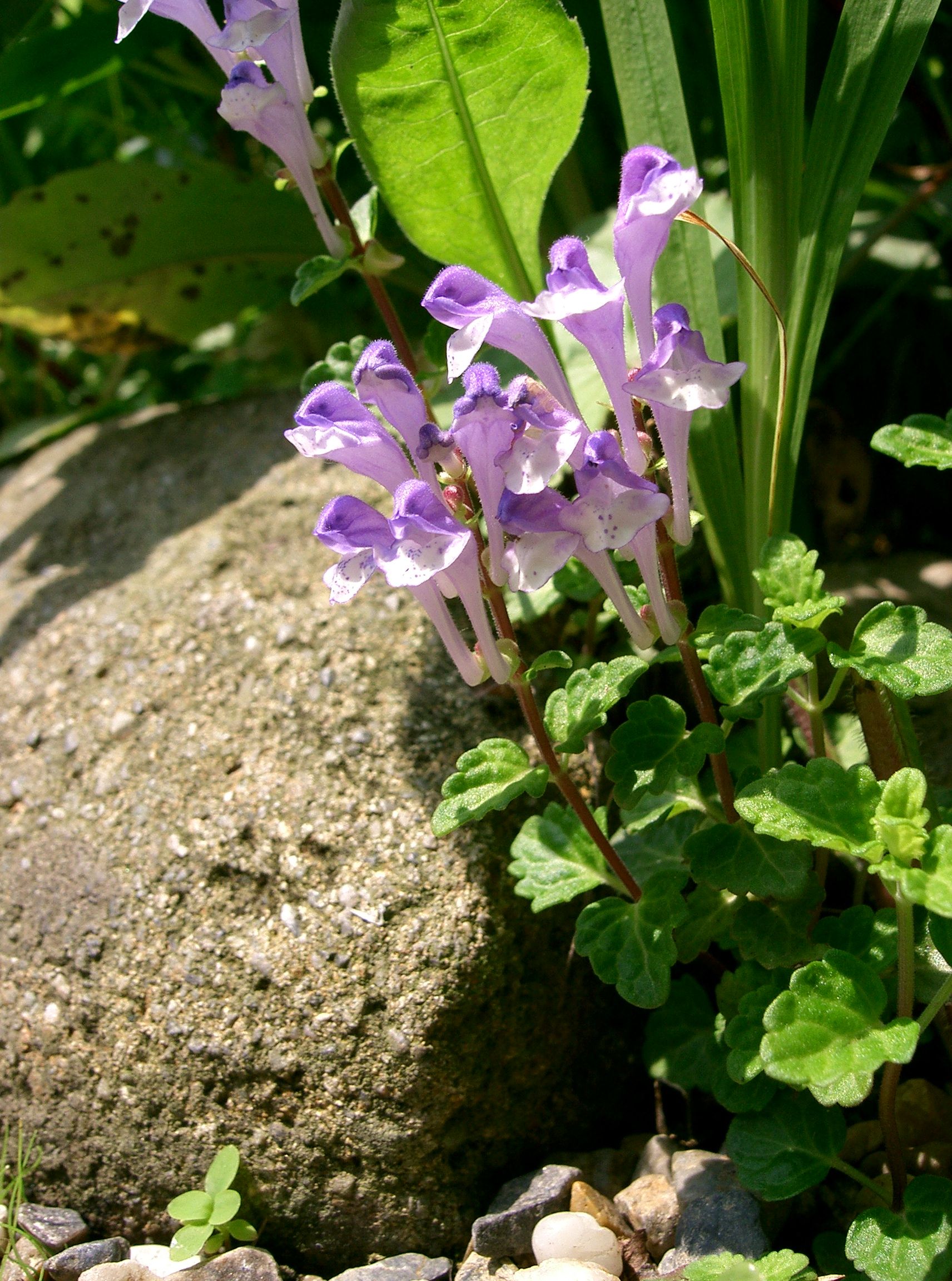
Scutellaria, commonly known as skullcaps, is a large genus of flowering plants in the mint family (Lamiaceae), subfamily Scutellarioideae. Described by Carl Linnaeus in 1753, the genus encompasses an estimated 300 to 470 species distributed across nearly all temperate regions of the world, giving it a broadly subcosmopolitan range. A handful of species also occur in aquatic or subtropical habitats.
Plants in the genus are typically annual or perennial herbs reaching 5 to 100 cm in height, though some members are subshrubs. The stems are characteristically four-angled — a common feature of the mint family — and bear simple, opposite leaves that are often serrated. Flowers are bilabiate (two-lipped) and appear in shades of blue, purple, or occasionally red, typically blooming from summer through fall. The fruit is a set of small nutlets enclosed in brown capsule-like structures. The most reliable diagnostic feature of the genus is a distinctive shield-shaped protuberance, or hump, on the upper lip of the persistent calyx after the flower drops.
Foliage is bitter-tasting, which confers natural resistance to deer and rabbit browsing. The plants are generally low-maintenance and of medium growth rate. Many species naturalize readily and provide reliable pollinator support through their long bloom season.
Etymology
The genus name Scutellaria comes from the Latin scutella, meaning "a small dish, tray, or platter." This refers to the distinctive shield-shaped or lid-like protuberance that develops on the calyx of the flower — a feature that is both diagnostic for the genus and visually distinctive. The English common name "skullcap" draws on a different visual analogy: the shape of the calyx hood was likened to the small, close-fitting helmets worn by soldiers and monks in medieval Europe.
Distribution
The genus Scutellaria has a subcosmopolitan distribution, occurring on nearly every continent with a concentration in temperate regions of the Northern Hemisphere. Members of the genus are native across North America, Europe, and Asia, including extensive representation in China, Japan, Korea, and Mongolia for certain species such as S. baicalensis. In Europe, species are recorded from Switzerland (S. alpina, S. altissima, S. galericulata, S. hastifolia, S. minor) and across the broader continent. In North America, the genus spans USDA hardiness zones 3a to 9b, covering coastal plains, piedmont, and montane habitats. Ecological niches range from marshy pond margins and moist fertile soils to sandy, rocky slopes and dry grasslands at elevations up to 2,000 m.
Taxonomy
Scutellaria L. was formally described by Carl Linnaeus in Species Plantarum (2: 598) in 1753 (IPNI LSID: urn:lsid:ipni.org:names:30003498-2), with a second entry in Genera Plantarum ed. 5 (1754). It is placed in the family Lamiaceae, order Lamiales, class Magnoliopsida. The genus is recognized as the type genus of subfamily Scutellarioideae. GBIF records 751 descendant taxa under this genus backbone entry (usage key 2926730). Accepted species counts in the broader literature range from approximately 300 to 470, reflecting ongoing taxonomic revision and varying species concepts. Info Flora recognizes five species in Switzerland (S. alpina, S. altissima, S. galericulata, S. hastifolia, S. minor), illustrating the genus's representation across Europe.
Ecology
Skullcaps are adapted to a wide range of growing conditions depending on the species. Many prefer moist, fertile soils and are found along ponds and in marshy areas, though drought-tolerant species such as Scutellaria incana thrive in drier situations once established. Most tolerate soils ranging from sandy to clay-loam and perform best in full sun to partial shade. The bitter-tasting foliage makes the plants resistant to browsing by deer and rabbits. Flowers attract a range of pollinators, and skullcaps naturalize readily in suitable habitats, making them useful in native plantings and wildlife gardens.
Cultivation
Skullcaps are generally low-maintenance garden perennials suited to USDA hardiness zones 3a through 9b. They perform well in full sun to partial shade (receiving at least two hours of direct light per day) and tolerate a broad range of soil types including clay, loam, and sand, provided drainage is adequate. Species adapted to pond margins and marshy conditions prefer consistently moist soil, while others are drought-tolerant after establishment. Plants typically occupy a spread of 12 inches to 3 feet depending on species. Growth rate is medium, maintenance requirements are low, and the genus is well suited to borders, naturalized areas, and pollinator gardens. For species such as S. baicalensis, cultivation is most successful in light, well-drained soils with a mildly acid to basic pH and tolerance for semi-shade.
Propagation
The primary propagation methods for Scutellaria are division and seed. Division is typically performed in spring before new growth begins and is the most reliable way to maintain cultivar characteristics. Seeds can be sown outdoors in late spring or started indoors in early spring and transplanted after the risk of frost has passed. The genus also spreads naturally via rhizomes, which contributes to its tendency to naturalize in favorable conditions.
Cultural Uses
Several species of Scutellaria have a significant history of medicinal use in both Eastern and Western traditions. Scutellaria baicalensis (Baikal skullcap, Huang-Qin) is one of the 50 fundamental herbs of traditional Chinese medicine. Its roots — harvested from plants three to four years old — are used to treat conditions including dysentery, diarrhea, jaundice, hepatitis, urinary tract infections, and hypertension. The medicinal activity is attributed primarily to root flavonoids, including baicalin, wogonin, wogonoside, apigenin, oroxylin A, and scutellarein, which are reported to have anti-inflammatory and antiallergenic properties. Young leaves of S. baicalensis have been cooked as a vegetable and the whole plant dried as a tea substitute.
In Western herbalism, Scutellaria lateriflora (blue or Virginian skullcap) was used as early as 1773 to treat rabies-associated hysteria and hydrophobia. It has since become a popular anxiolytic herb and commands significant market value as a dried herb. Both species carry cautions: liver toxicity (hepatotoxicity) has been reported with some preparations, and effects during pregnancy are not established.
Conservation
No species of Scutellaria are listed in the IUCN Global Invasive Species Database, indicating the genus is not recognized as ecologically invasive. However, Scutellaria baicalensis has been noted as subject to overexploitation of wild populations due to high demand in the traditional Chinese medicine trade.










