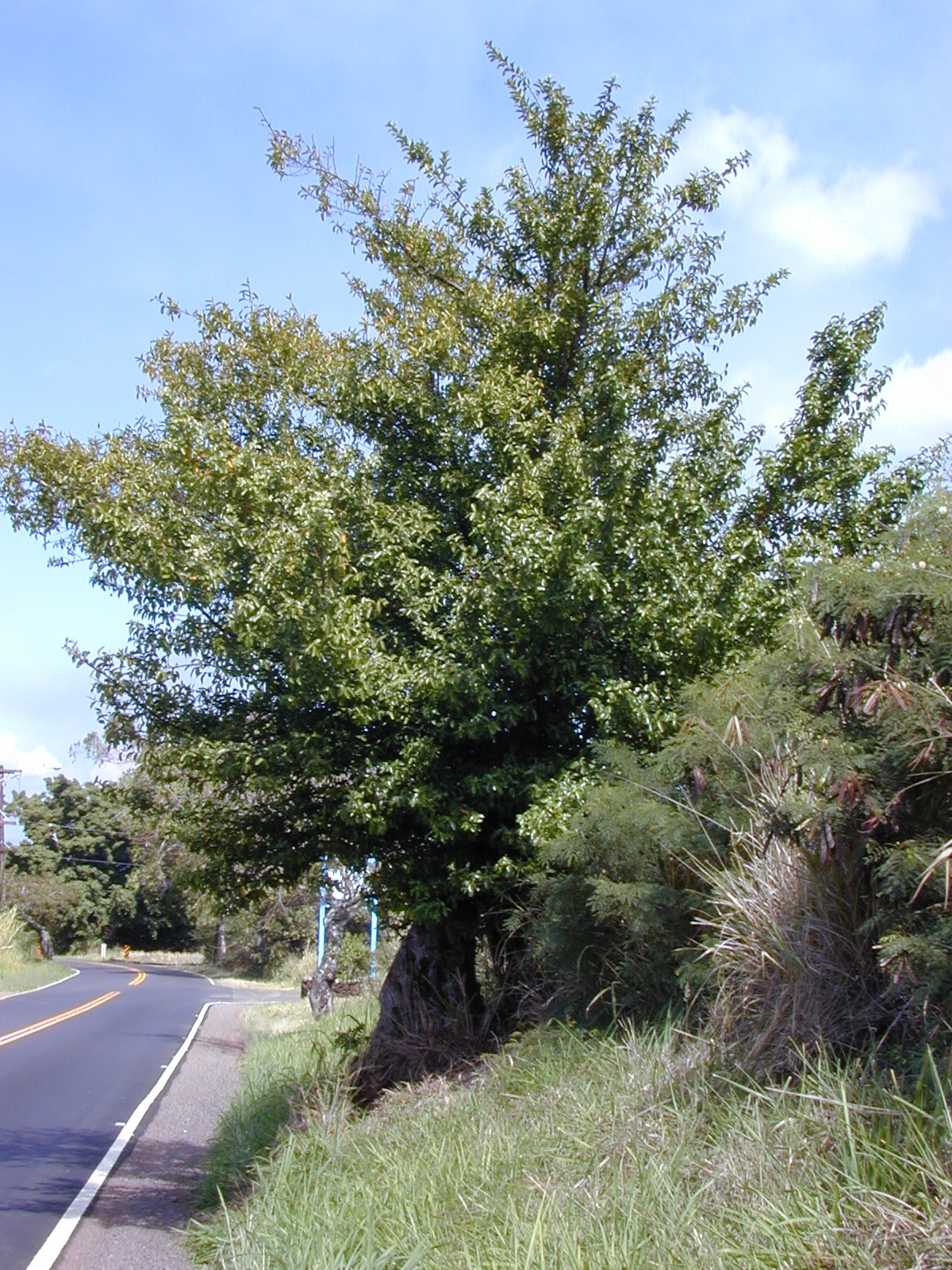
Sideroxylon L. is a genus of trees in the family Sapotaceae, order Ericales, collectively known as bully trees. Described by Linnaeus in 1753 and published in Species Plantarum (Sp. Pl.: 193), the genus is one of the larger within Sapotaceae, comprising roughly 83 accepted species by current botanical consensus. The genus name is derived from the Greek words sideros (σιδηρος, "iron") and xylon (ξύλον, "wood"), a direct allusion to the exceptional hardness and density of the timber produced by these trees.
Members of Sideroxylon are woody trees distributed broadly across tropical and subtropical regions: the Americas (North, Central, and South America), Africa, Madagascar, southern Asia, and various oceanic islands including the Mascarenes and the Caribbean. Several species are characteristic of subtropical and warm-temperate forests. In North America, species such as gum bully (S. lanuginosum) and buckthorn bully (S. lycioides) occupy scrubby woodland edges and hammock communities. On the island of Mauritius, the tambalacoque (S. grandiflorum) achieved notoriety through the once-popular — though now disputed — hypothesis that its seeds required passage through the gut of the extinct dodo for germination. In South Africa, Sideroxylon inerme (white milkwood) stands as the sole native representative; individual trees of exceptional age have been granted national monument status, reflecting both cultural and ecological significance.
Ecologically, bully trees support specialized invertebrate communities. The foliage of various North American species serves as larval food for the bumelia webworm moth and other Lepidoptera. The genus has accumulated a substantial body of synonymy — names formerly applied to these plants include Bumelia, Argania, and several others — and taxonomic revisions have moved some former members into genera such as Micropholis, Planchonella, and Pouteria.
Etymology
The generic name Sideroxylon is formed from two Ancient Greek elements: sideros (σιδηρος), meaning "iron", and xylon (ξύλον), meaning "wood". The compound epithet thus translates as "ironwood", referring to the notably hard, dense timber characteristic of trees in this genus.
Distribution
Sideroxylon species are distributed primarily across tropical and subtropical regions of the Americas (North America, the Caribbean, Central America, and South America), Africa, Madagascar, southern Asia, and oceanic islands including the Mascarenes (Réunion, Mauritius). In North America, species such as S. lanuginosum (gum bully) and S. lycioides (buckthorn bully) occupy subtropical habitats. African representation includes species in West and Central Africa (S. adolfi-friderici, S. bequaertii) as well as the South African S. inerme (white milkwood). Indian Ocean island endemics are well represented (e.g., S. borbonicum, S. boutonianum, S. betsimisarakum from the Mascarenes and Madagascar). Southeast Asian species extend to the Philippines, Moluccas, and Australia.
Ecology
Bully trees fill canopy and sub-canopy roles in subtropical and tropical forests. Several North American species are associated with hammock woodlands, coastal scrub, and sandy pinelands. The foliage of bully trees supports specialist Lepidoptera: the bumelia webworm moth (Atteva aurea) is among the species that use them as larval hosts. The tambalacoque (S. grandiflorum) of Mauritius became a subject of ecological debate when it was proposed — and later contested — that its hard-coated seeds required scarification by the dodo's gizzard to germinate; subsequent studies have shown other large birds and mechanical methods can serve the same purpose.
Conservation
Sideroxylon inerme (white milkwood) trees in South Africa have been granted status as national monuments in recognition of their exceptional age and cultural significance. The genus as a whole occupies a range of conservation contexts: island endemics in the Mascarenes and Caribbean are often of conservation concern given small range sizes, while mainland species vary from locally common to rare.
Taxonomy
Sideroxylon L. was formally described by Carl Linnaeus in 1753 (Sp. Pl.: 193), with S. inerme as the type species. The genus sits in family Sapotaceae, order Ericales, class Magnoliopsida. GBIF (usage key 2886817) places it within Tracheophyta. The genus has accumulated extensive synonymy: prior names applied to subsets of these species include Bumelia Sw., Argania Roem. & Schult., and several others. Taxonomic revisions have reassigned some former members to Micropholis, Planchonella, and Pouteria. The vernacular name "Bumelia" persists in some horticultural and regional sources as a holdover from earlier classification. GBIF records approximately 206 descendant taxa under the accepted genus concept, encompassing accepted species, synonyms, and infraspecific taxa; Wikipedia cites approximately 83 currently accepted species.










