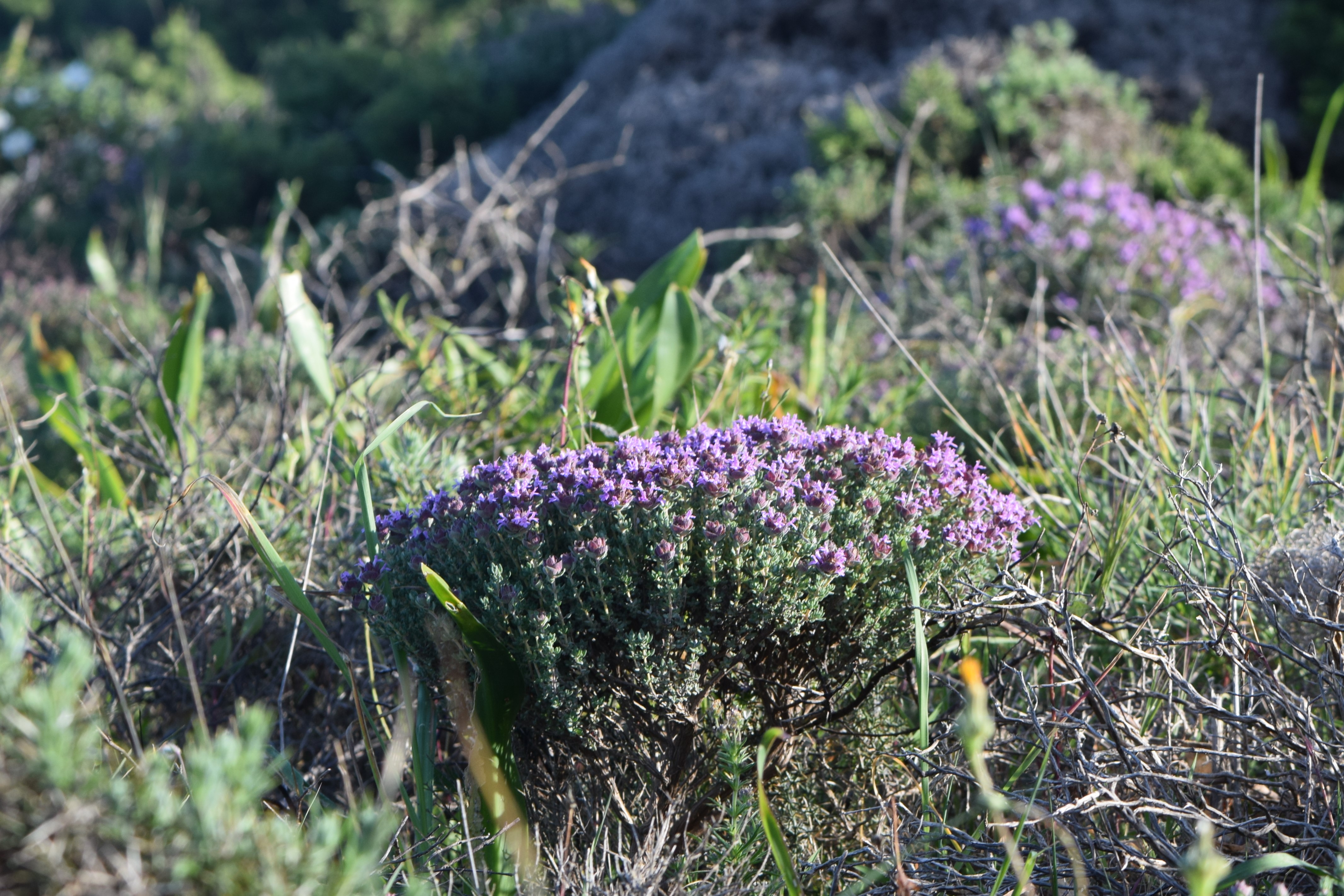
Thymus — commonly known as thyme — is a genus of approximately 350 species of aromatic perennial herbs and subshrubs in the mint family Lamiaceae, first formally published by Linnaeus in Species Plantarum (1753). Plants are typically low-growing, reaching up to 40 cm in height, with narrow wiry woody stems clothed in small, oppositely arranged, evergreen leaves measuring 4–20 mm. Flowers are tiny and tubular, appearing in shades of white, pink, or purple, and are highly attractive to bees, butterflies, and other pollinators.
The genus is native to temperate Europe, the Mediterranean basin, North Africa, and Asia, extending east to Korea and with notable diversity in Iran. It has been widely cultivated and introduced across North America and beyond. Leaves and flowering tops contain essential oils — principally thymol and carvacrol — that give the genus its characteristic fragrance and underpin its long history in culinary, medicinal, and household use. Species vary considerably in habit and scent, offering flavors from lemon and caraway to nutmeg and orange.
Thyme is one of the most economically important genera in Lamiaceae. Thymus vulgaris (common thyme) is the foremost culinary species and the type species of the genus. Other widely grown species include T. serpyllum (creeping thyme), valued as a drought-tolerant groundcover, and T. praecox, used as a lawn substitute. The genus is low-maintenance in cultivation, preferring full sun, excellent drainage, and neutral to alkaline soils, performing reliably in USDA zones 5a–9b.
Etymology
The genus name Thymus derives from Greek, the same root that gives the English word "thyme." The genus was formally named by Linnaeus in 1753.
Distribution
Thymus is native to temperate Europe, the Mediterranean region, North Africa, and Asia as far east as Korea. The centre of diversity lies in the Mediterranean basin and the Middle East, with Iran particularly rich in species owing to its varied climate and topography. In Switzerland alone, InfoFlora lists 11 species and subspecies, including T. alpestris, T. kosteleckyanus, T. longicaulis, T. praecox, T. pulegioides, T. serpyllum, and T. vulgaris. NCSU notes the native range also extends to Greenland and Northeast Tropical Africa. The genus has been widely introduced across North America and other regions through cultivation.
Ecology
Thyme species are plants of open, sunny, well-drained habitats — rocky hillsides, dry grasslands, cliff ledges, and stony disturbed ground. They are intolerant of waterlogged or poorly drained soils. Once established, plants show strong drought tolerance. The small tubular flowers are highly attractive to bees and butterflies, making the genus a significant pollinator resource. Thymus is also a larval food plant for several Lepidoptera: the moth Chionodes distinctella feeds on it, as do several Coleophora case-bearers that are effectively restricted to Thymus as a host. Most species tolerate very alkaline soils, and the genus exhibits deer and rabbit resistance under cultivation.
Cultivation
Thyme performs best in full sun (minimum 6 hours daily) in light, well-drained, sandy or rocky soils with neutral to alkaline pH. It is intolerant of wet soils and poor drainage. Established plants are drought-tolerant and require minimal irrigation. USDA hardiness range is zones 5a–9b. Plants are low-maintenance but benefit from light trimming when stems become leggy; older plants may need replacement every few years. The genus is widely used in herb gardens, as edging, in rockeries, and as a groundcover or lawn substitute (particularly T. serpyllum and T. praecox). Leaf colours range from green to silver-grey depending on species.
Propagation
Thymus can be propagated by stem cuttings, division, or seed. Half-ripe or greenwood cuttings taken in late spring to early summer root readily. Division of established clumps is suitable in spring or autumn. Seed germination is possible but erratic in some species; seeds are best started in a cold frame in spring. Cuttings and division reliably preserve cultivar characteristics, making vegetative propagation preferred for named forms.
Cultural Uses
Thyme has one of the longest records of human use among culinary herbs. Its principal use is culinary: T. vulgaris leaves and flowering tops flavour soups, stews, meat and vegetable dishes, and form part of the classic French bouquet garni. The genus is concentrated in Mediterranean cooking but cultivated globally. The essential oils thymol and carvacrol have been exploited medicinally for treating respiratory conditions — bronchitis, coughs, colds, and chest infections — as well as for digestive complaints. Korean traditional medicine uses T. quinquecostatus against cancer and hepatic disease. Thyme has also long served in perfumery and as a component of antiseptic and deodorant preparations. In medieval European culture, thyme carried symbolic weight as an emblem of bravery, strength, and courage. The essential oil, with an average yield around 0.6%, continues to be used commercially in the fragrance and food industries.
Taxonomy
Thymus L. was described by Linnaeus in Species Plantarum (1753) and is placed in the family Lamiaceae, order Lamiales. The type species is Thymus vulgaris. The genus comprises approximately 350 accepted species (GBIF records 723 total descendant taxa including infraspecific names). The most widely used infrageneric classification is that of Jalas, who recognised eight sections: Micantes, Mastichina, Piperella, Teucrioides, Pseudothymbra, Thymus, Hyphodromi, and Serpyllum, broadly reflecting geographic and morphological groupings. The names Serpyllum and Mastichina have historically been treated as synonyms or segregate genera but are now subsumed within Thymus. Cultivar registration is managed by Margaret Easter, appointed International Cultivar Registration Authority in 2007.










