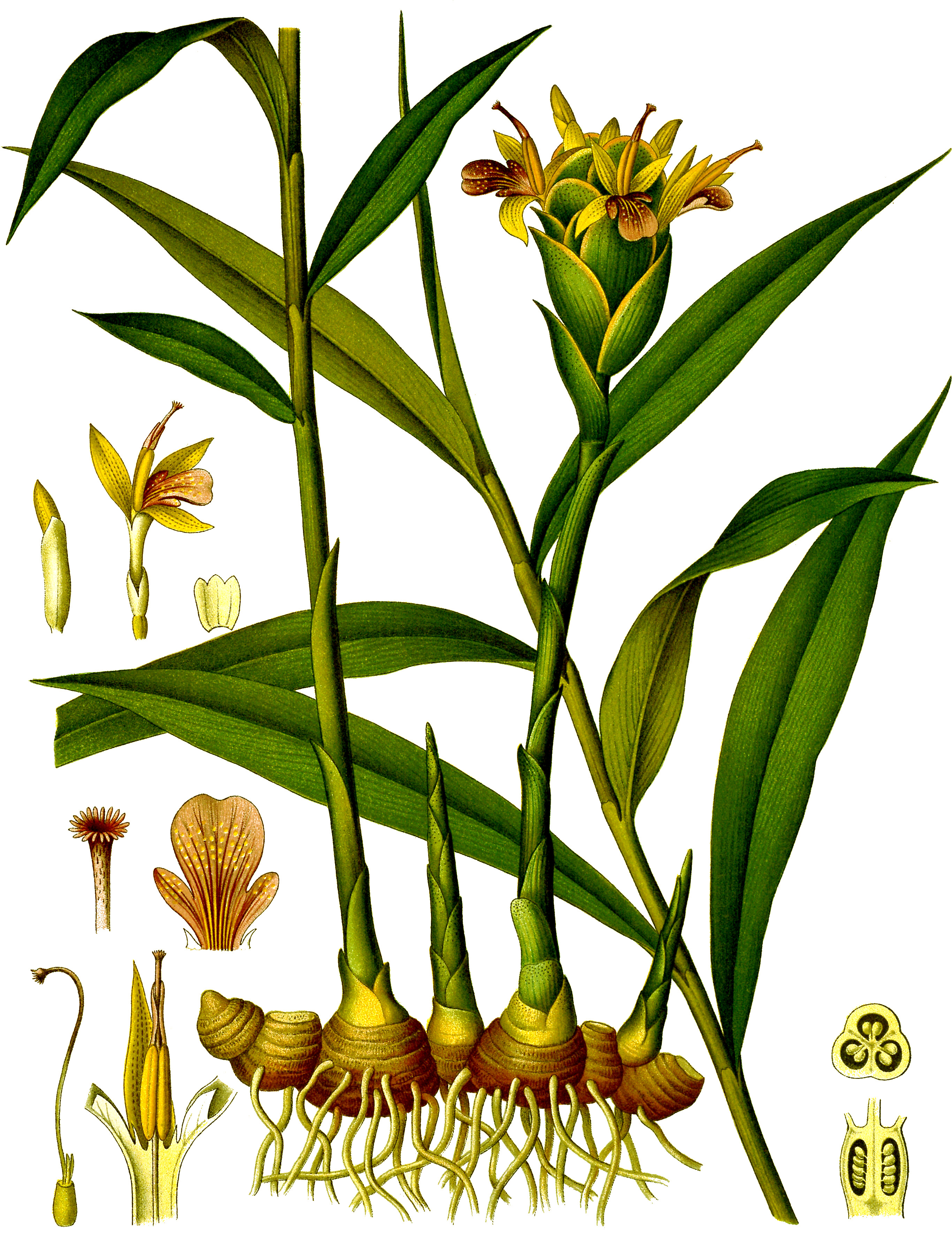
Zingiber is a large genus of rhizomatous flowering plants in the family Zingiberaceae, placed in the order Zingiberales. The genus encompasses the true gingers — approximately 212 accepted species, according to Plants of the World Online (as of January 2026) — and is distributed across tropical and subtropical Asia, from China and the Indian subcontinent through Southeast Asia (with a particular concentration in Thailand) to New Guinea.
Plants in the genus are herbaceous perennials that grow from aromatic, fleshy rhizomes. The rhizome is the primary economic organ for many species, though stem bases, shoots, and flowers are also used depending on the species. The genus was described by Philip Miller and published in the fourth edition of The Gardeners Dictionary in 1754.
The best-known member is Zingiber officinale, the common ginger, whose rhizome is the widely traded spice used fresh, dried, powdered, or preserved as crystallized ginger. Zingiber mioga (myoga) is another cultivated species, valued particularly for its edible flower buds and tender shoot bases in East Asian cuisine. While other economically important spices such as cardamom and turmeric belong to the broader Zingiberaceae family, they belong to different genera and are not true gingers.
Etymology
The genus name Zingiber is derived from Latin, which borrowed it from the Tamil word for the first described species, Zingiber officinale — the common ginger. The original Latin spelling used by Miller was Zinziber; the current spelling Zingiber is conserved under the Melbourne International Code of Nomenclature.
Distribution
Zingiber is native to tropical and subtropical Asia, with its center of diversity in Southeast Asia, particularly Thailand. The genus also occurs across China, the Indian subcontinent, and New Guinea. Most species grow in humid, forested habitats in lowland to montane regions throughout this range.
Cultivation
Zingiber officinale, the economically dominant species, is cultivated across tropical regions worldwide for its rhizome, used as a spice and in traditional medicine. Rhizomes are propagated vegetatively; the plant requires warm temperatures, high humidity, and well-drained, fertile soil. Zingiber mioga is grown in East Asia for its shoots and flower buds. Many ornamental species in the genus are also cultivated in tropical and subtropical gardens for their showy inflorescences.
Cultural Uses
The rhizome of Zingiber officinale is one of the most widely traded spices in the world, used fresh, dried and powdered, candied (crystallized ginger), or as a flavoring in beverages. It has a long history of use in culinary traditions across South Asia, East Asia, and Southeast Asia, as well as in European cooking since the medieval period. Zingiber mioga (myoga) is used in Japanese cuisine for its flower buds and young shoots.










