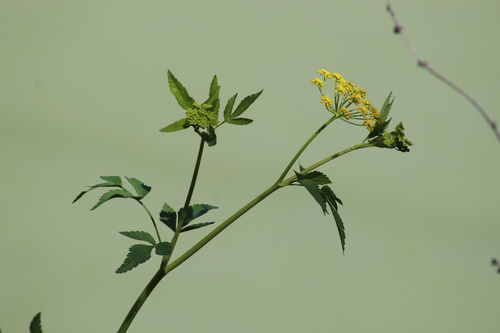
Zizia is a small genus of flowering plants in the carrot family, Apiaceae, placed within the order Apiales. The genus contains three accepted species, all native to North America. Like most members of the Apiaceae, Zizia plants bear their flowers in compound umbels — clusters of small blooms arranged on stalks that radiate from a common point, themselves forming a larger umbrella-shaped inflorescence. The most well-known member is Zizia aurea, commonly called golden alexanders, a perennial wildflower valued in native-plant gardens for its bright yellow spring flowers and value to pollinators. Zizia aptera (heartleaf alexanders) and Zizia trifoliata (meadow alexanders) round out the genus. The genus was named in honor of Johann Baptist Ziz (1779–1829), a German botanist from the Rhineland.
Etymology
The genus name Zizia honors Johann Baptist Ziz (1779–1829), a German botanist from the Rhineland region. The name was established as a tribute to his contributions to botany.
Distribution
Zizia is native to North America. The three species in the genus occur across a range of temperate habitats on the continent, with Zizia aurea being particularly widespread in meadows and open woodlands.
Ecology
As members of the Apiaceae, Zizia species produce open, accessible compound umbel flowers that are highly attractive to a wide variety of native bees, flies, and other pollinators. Zizia aurea in particular is noted as an important early-season nectar source in North American meadows and prairies.
Cultivation
Zizia species, especially Zizia aurea (golden alexanders), are cultivated in native-plant and pollinator gardens across temperate North America. They are valued for early spring bloom, adaptability to moist or average soils, and strong ecological value as pollinator plants.










