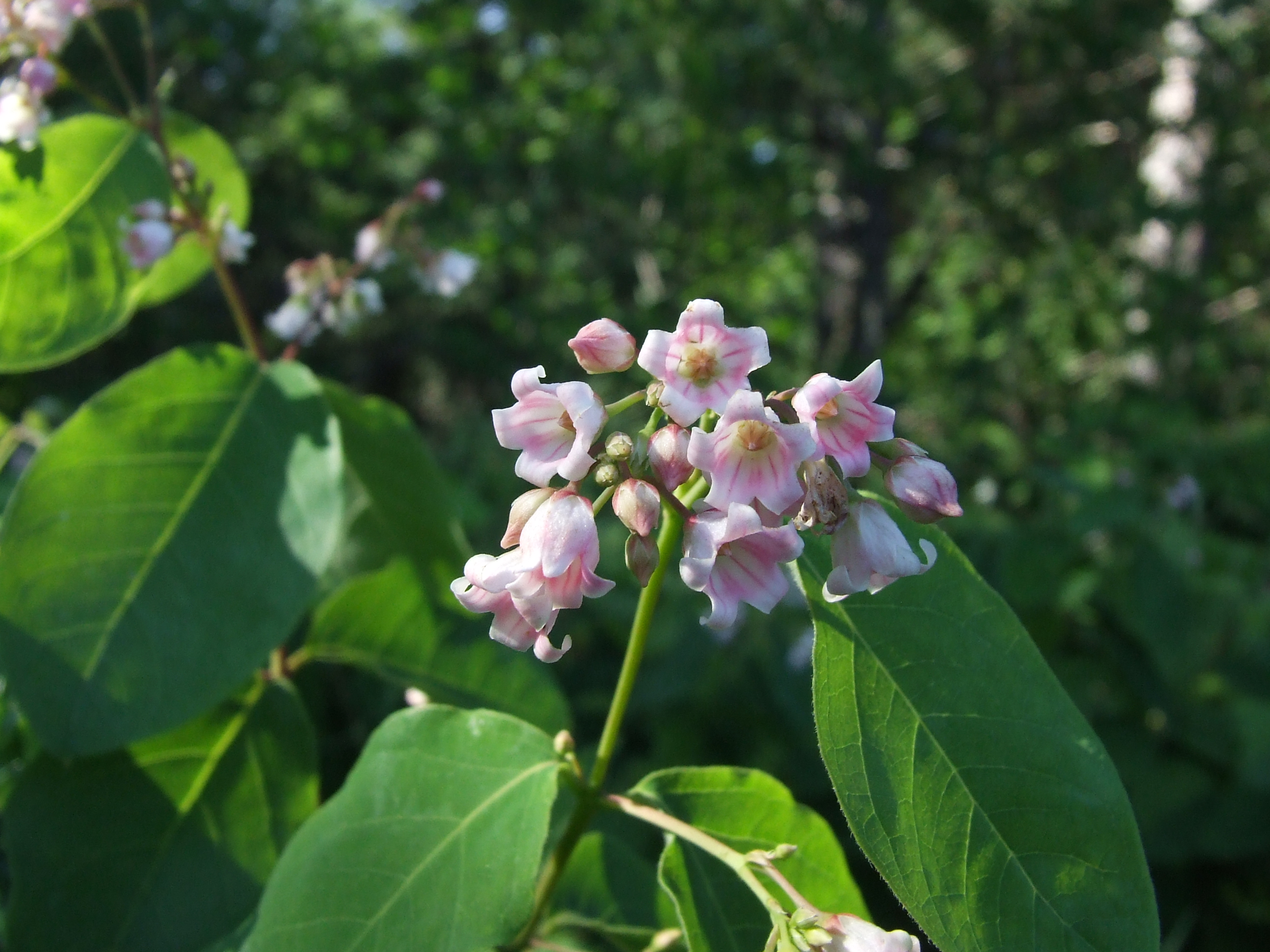
Apocynum, commonly known as dogbane or Indian hemp, is a small genus of flowering plants in the family Apocynaceae (order Gentianales). The genus comprises only five currently recognised species and one hybrid, though nearly 300 names have been proposed historically. Apocynum species are perennial herbs characterised by their milky latex sap, opposite leaves, and small bell-shaped flowers borne in terminal or axillary clusters.
The genus is native to North America (where most species occur), temperate Asia, and the margins of southeastern Europe. Plants contain cymarin, a cardiotonic glycoside formerly used in medicine to treat cardiac arrhythmia. All parts of the plant are considered toxic to mammals, a property reflected in the genus name — from the Ancient Greek ἀπόκυνον, meaning "away from dogs," a reference to the related dogbane Cionura erecta that was historically used to poison dogs.
Despite their toxicity to vertebrates, Apocynum species are important larval food plants for certain Lepidoptera, including the queen butterfly and the mouse moth. Apocynum cannabinum (Indian hemp) was valued by many Native American peoples as a source of strong bast fiber, used to make cordage, nets, and cloth. Apocynum venetum (known in Chinese as 羅布麻, luóbù má) is cultivated in parts of China and Central Asia and has long been used as a herbal tea.
Etymology
The genus name Apocynum derives from the Ancient Greek ἀπόκυνον, composed of ἀπο- (apo-, "away from") and κύων (kyōn, "dog"). It refers to the related plant dogbane (Cionura erecta), which was historically used to poison dogs. The common names "dogbane" and "Indian hemp" reflect, respectively, this toxic reputation and the use of A. cannabinum fiber by Native American peoples.
Distribution
Apocynum species are native to the temperate Northern Hemisphere: most occur in Canada, the United States, and northern Mexico, while A. venetum extends across southeastern Europe into Central and East Asia (Kazakhstan, Kyrgyzstan, Tajikistan, Mongolia, China), and A. pictum is found in China, Mongolia, and Central Asia.
Ecology
Apocynum species serve as larval host plants for several Lepidoptera, including the queen butterfly (Danaus gilippus) and the mouse moth (Amphipyra tragopoginis). The milky latex and cardiac glycosides present throughout the plant deter most herbivores, making the specialist insects that do feed on them notable for sequestering these compounds for their own defence.
Cultural Uses
Apocynum cannabinum (Indian hemp) was widely used by Native American peoples as a source of strong bast fiber for making cordage, nets, and woven textiles. Apocynum venetum has been used in China and Central Asia as an herbal tea (known as 羅布麻 luóbù má). Historically, cymarin extracted from dogbane was used in Western medicine as a cardiotonic agent for treating cardiac arrhythmia, though this use has been discontinued.










