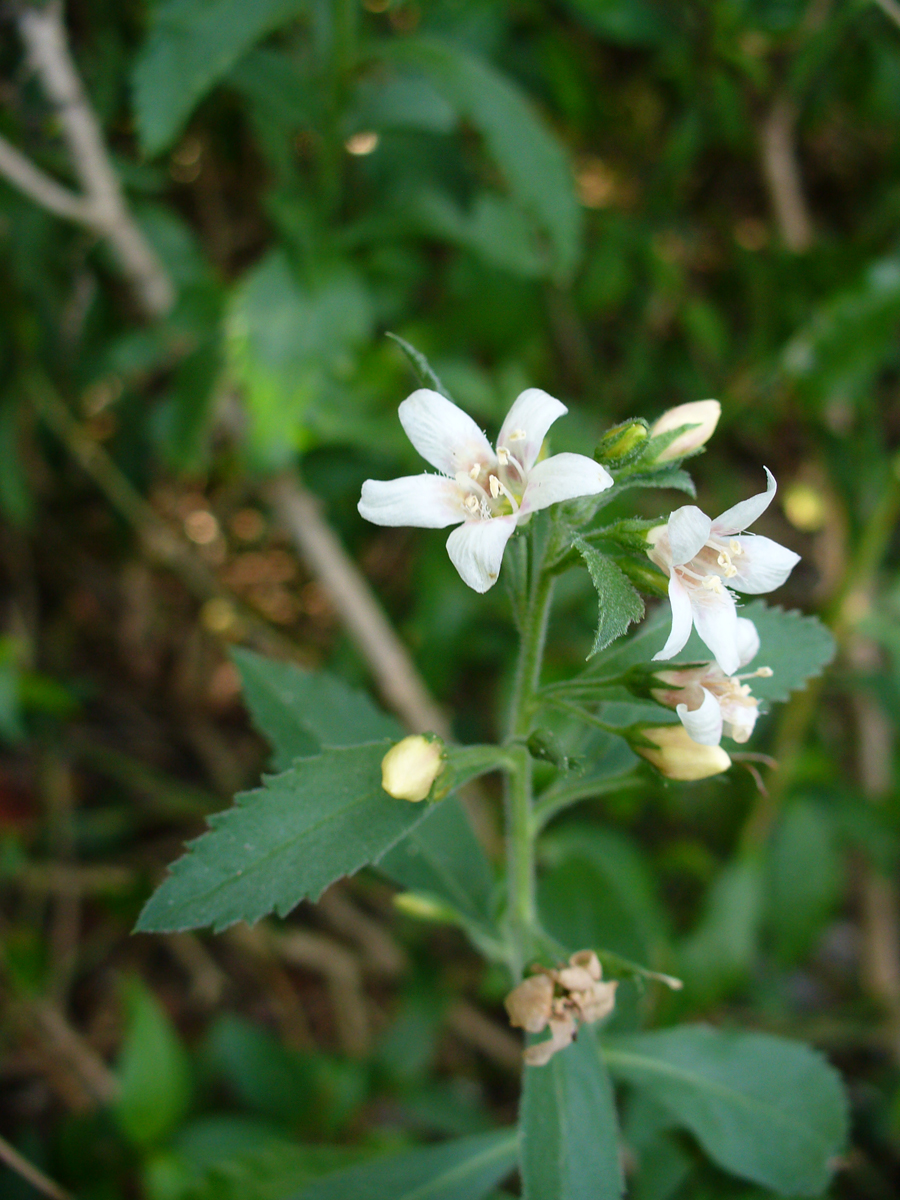
Capraria is a genus of flowering plants in the family Scrophulariaceae (order Lamiales), though it has also been classified under Gratiolaceae, Plantaginaceae, or Veronicaceae by various authorities. It includes seven accepted species of shrubs or subshrubs native to the tropical Americas. The plants are found from Mexico through Central America and the Caribbean, extending into northern South America and as far south as northern Argentina. Species in this genus include Goatweed (Capraria biflora) and Tamaulipan tea (Capraria mexicana), both of which have traditional herbal uses. The genus name derives from the Latin caprarius ("pertaining to goats"), as goats are among the few herbivores that browse on these plants.
Etymology
The genus name Capraria comes from the Latin word caprarius, meaning "pertaining to goats." This refers to goats being one of the few herbivores willing to graze on the plants, which are otherwise unpalatable to most livestock.
Distribution
Capraria is native to the tropical and subtropical Americas, with a range extending from Mexico through Central America, the Caribbean Islands, and northern South America to northern Argentina. The genus occupies warm regions across a broad latitudinal gradient in the New World.
Taxonomy Notes
The genus has been placed in several different families over time. While currently accepted in Scrophulariaceae, it has also been classified under Gratiolaceae, Plantaginaceae, or Veronicaceae by different taxonomic treatments. GBIF recognizes six descendant taxa (five species and one subspecies), while Wikipedia lists seven accepted species — this discrepancy reflects the inclusion of Capraria integerrima and Capraria saxifragifolia, which GBIF does not list as accepted children of the genus.










