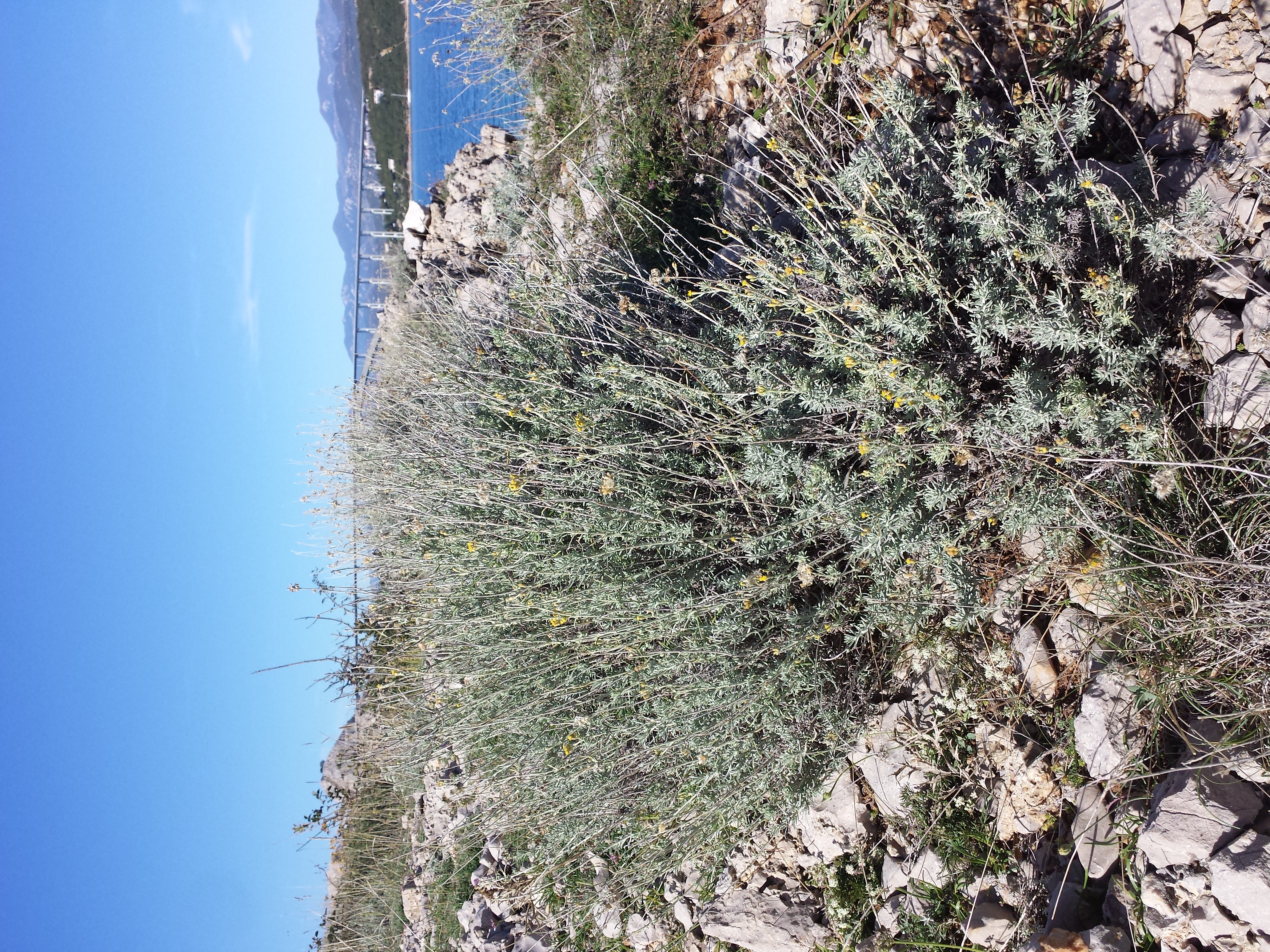
Helichrysum Mill. is a large genus of flowering plants in the family Asteraceae, comprising approximately 600 species — though around 917 descendant taxa are tracked in GBIF. Plants take a wide range of growth forms: annuals, herbaceous perennials, and shrubs, typically reaching 60–90 cm in height. The genus is distributed across Africa (with its greatest diversity in South Africa, which alone harbours some 244 species), Madagascar, Australasia, and Eurasia.
Plants are commonly called "everlasting flowers," "immortelles," or "strawflowers" — names that refer to the papery, long-lasting nature of their flower heads, which retain their colour and form when dried. This property has made many species valued as ornamental plants and in the dried-flower trade for centuries.
The genus is regarded as taxonomically challenging. Established by Philip Miller in 1754, it has historically served as a "wastebasket taxon" into which morphologically similar species were gathered. Molecular studies have revealed it to be polymorphic and probably polyphyletic, leading to the transfer of many former members into segregate genera such as Xerochrysum, Syncarpha, and Chrysocephalum. Taxonomic revision is ongoing.
Among the best-known species is Helichrysum italicum, the curry plant or Italian everlasting, whose foliage is steam-distilled to produce an essential oil prized in perfumery for its herbaceous, sweet, and honey-like scent profile.
Etymology
The name Helichrysum is derived from two Ancient Greek words: helios (ἥλιος), meaning "sun," and chrysos (χρῡσός), meaning "gold." The name alludes to the golden-yellow flower heads characteristic of many species in the genus. The alternative spelling Elichrysum (attributed to P. Miller, 1754) is treated as a synonym in GBIF.
Distribution
Helichrysum has a wide distribution across the Old World, centred on Africa. South Africa holds by far the greatest species diversity, with approximately 244 species. Additional concentrations occur in Madagascar and across Australasia. In Eurasia, the genus extends across the Mediterranean basin and into continental Europe, with native populations recorded in Albania, Algeria, Austria, Belarus, Belgium, Bulgaria, Cyprus, Estonia, Germany, Latvia, Lithuania, Luxembourg, and Morocco. In Switzerland specifically, two species are established: Helichrysum italicum and Helichrysum stoechas. Scattered records also exist for Malesia and Vietnam (origin uncertain) and for parts of the Americas (Mexico, Colombia, Bolivia), some of which may reflect cultivated or adventive occurrences.
Taxonomy
The genus Helichrysum was established by Philip Miller and published in 1754 in Gard. Dict. Abridg., Ed. 4. It belongs to the family Asteraceae, order Asterales, class Magnoliopsida. GBIF recognises approximately 917 descendant taxa, while Wikipedia estimates the core of well-defined species at around 600.
The genus has a long history as a taxonomic repository: morphologically diverse species from multiple lineages were historically grouped here, making Helichrysum polymorphic and probably polyphyletic in the modern sense. Substantial reclassification has transferred many species to segregate genera including Xerochrysum, Syncarpha, Chrysocephalum, and Laphangium, among others. GBIF lists thirteen generic synonyms including Argyrocome, Helipterum, Leontonyx, and Pentataxis. Taxonomic revision continues, and species limits within the residual genus remain contested.
Cultivation
Many Helichrysum species are grown as ornamentals for their papery, long-lasting flower heads, which are particularly valued in the dried-flower trade. Plants are generally tolerant of poor, well-drained soils — adapting to light sandy, medium loamy, and heavy clay substrates with mildly acidic to alkaline pH. Most species prefer full sun, though some tolerate semi-shade, and moderate moisture is beneficial.
Hardiness varies by species. In general, the genus occupies USDA zones 8–11 and UK hardiness zone 9, with most species frost-tender below approximately -7°C. In cooler climates they are grown as annuals or overwintered under glass.
Propagation
Helichrysum can be propagated by seed or by division of suckers in spring. When dividing, sections should be potted into a greenhouse or cold frame and grown on before planting out in summer.
Uses
Several Helichrysum species have been used in traditional medicine. PFAF records anthelmintic use (treatment of parasitic worms) as a documented traditional application, though documented medicinal applications are limited. No significant edible uses are recorded.
The most commercially significant application is the essential oil extracted from Helichrysum italicum (the curry plant or Italian everlasting) by steam distillation. This oil is prized in the fragrance industry for a complex scent described as herbaceous, sweet, and honey-like; it is used in perfumery and aromatherapy. More broadly, species across the genus have long been harvested and cultivated for dried-flower arrangements, a use reflected in the common names "everlasting," "immortelle," and "strawflower."

