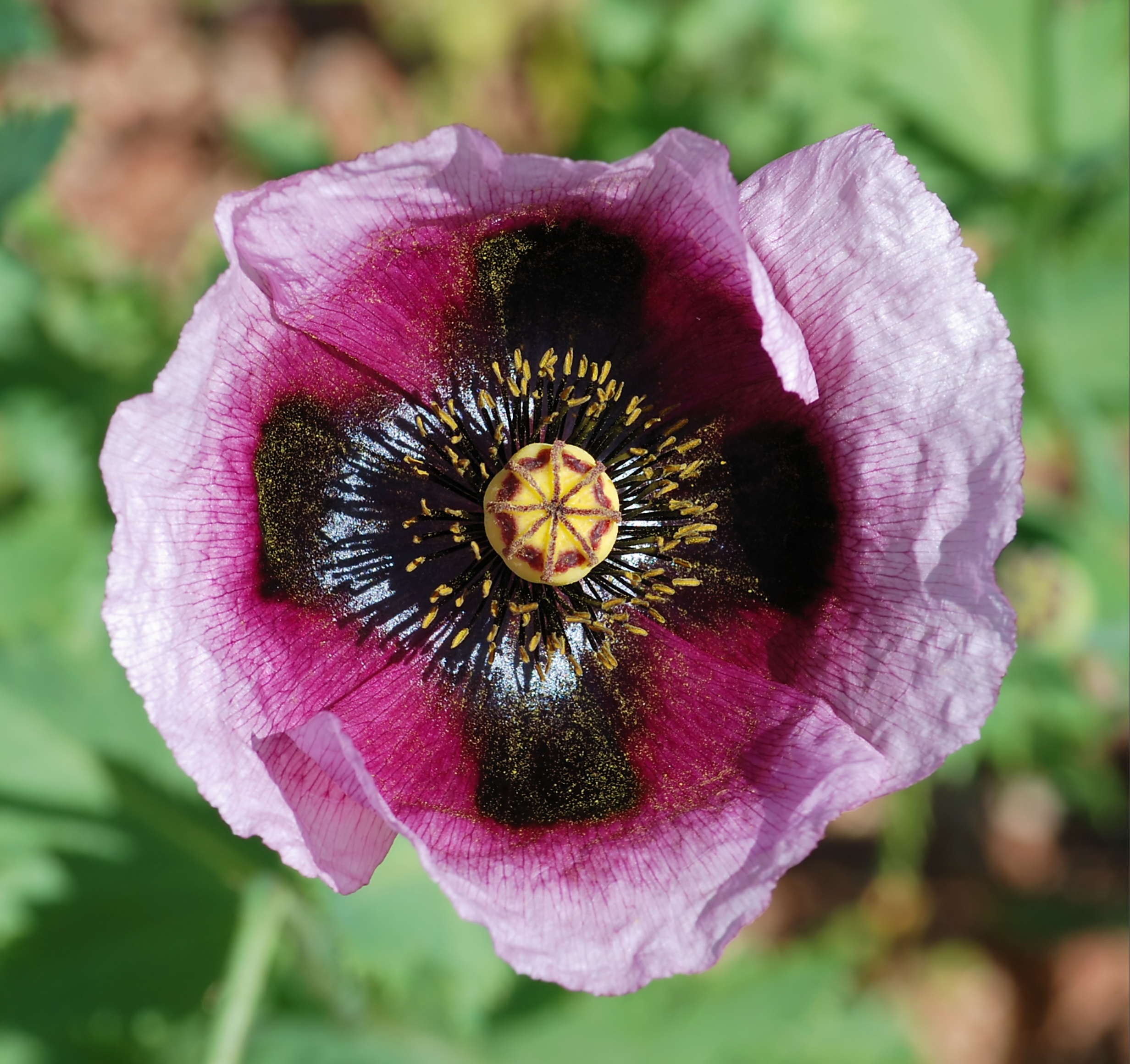
Papaver is a genus of about 66 to 68 species of herbaceous flowering plants in the poppy family, Papaveraceae, established by Carl Linnaeus in 1753. The genus sits within the order Ranunculales and subfamily Papaveroideae, with Papaver somniferum — the opium poppy — designated as the type species. Members are commonly known simply as poppies and include some of the most recognizable wildflowers and ornamentals in temperate horticulture.
The genus is native across the temperate and cold zones of the Northern Hemisphere, ranging through Europe, North Africa, the Middle East, Central Asia, the western Himalaya, the high Arctic of Greenland and northern Canada, and into the alpine regions of western North America. POWO notes an additional outlying native presence in South Africa. Species occupy habitats from Mediterranean grasslands and disturbed arable fields to the highest alpine screes and arctic tundra; the scapose species in section Meconella include some of the most northerly-growing vascular land plants on Earth.
Poppies are frost-tolerant annuals, biennials, or perennials that bleed a milky, yellowish, orange, or occasionally red sap when broken, and many species are rich in alkaloids — most famously the opiates morphine and codeine concentrated in Papaver somniferum. The genus shows unusually complex cytology, with polyploid and aneuploid races giving chromosome counts that range from 2n = 14 to over 100. Recent molecular work has folded several former segregate genera, including Afropapaver, Calomecon, and Stylomecon, back into Papaver as synonyms.
In cultivation, poppies have been grown as ornamentals since roughly 5000 BC in Mesopotamia, and the genus remains a staple of cottage and perennial gardens. Iceland poppy (P. nudicaule), Oriental poppy (P. orientale), and the annual Shirley strains of P. rhoeas are widely sold for borders and as cut flowers. They prefer full sun and sharply drained soil, are hardy in USDA zones 2a–7b, and are propagated by seed sown in situ or by root cuttings.
The cultural footprint of the genus is unusually large for a wildflower lineage. Ancient Greeks linked poppies to the gods of sleep and death; Papaver somniferum has been the source of opium and the modern pharmaceutical industry's opioid analgesics; and Papaver rhoeas, which colonized the churned ground of WWI's Western Front, became the central image of John McCrae's "In Flanders Fields" and the enduring symbol of remembrance worn each November across the Commonwealth.
Etymology
Papaver is the classical Latin name for the poppy and was adopted by Linnaeus when he formally established the genus in Species Plantarum (1753). The vernacular name "poppy" applies to the entire genus, and the type species Papaver somniferum carries an epithet meaning "sleep-bringing," reflecting the long-standing association — recorded in classical Greek culture — between poppies and the gods of sleep and death.
Distribution
The genus is centered on the temperate and cold Northern Hemisphere. POWO records a native range covering Europe (including Britain and the Mediterranean basin), Asia (the West Himalaya and Central Asia), North Africa (Algeria and Morocco), and the Middle East, with an additional disjunct native occurrence in South Africa. NCSU Extension extends the native range to Greenland and Canada, reflecting the arctic and alpine species in section Meconella. Outside the native range, poppies have naturalized widely — in the United States, South America, Australia, and parts of Southeast Asia — largely through ornamental escapes and as cereal-field weeds. At the country scale, Info Flora documents five native Swiss species, all alpine, alongside seven introduced or naturalized members. In the southwestern United States, SEINet records that scapose poppies are confined to arctic and alpine refugia, while all other naturalized species are Eurasian ornamentals, crop weeds, or ballast waifs, with only Papaver californicum considered a native caulescent species.
Ecology
Papaver species are frost-tolerant herbs adapted to open, often disturbed habitats. The annual and biennial species — notably P. rhoeas, P. dubium, and P. argemone — are classic arable weeds that thrive in tilled cereal fields, road verges, and other ground recently broken by people or by natural disturbance; this colonizing habit is what allowed P. rhoeas to carpet the shell-churned Western Front during World War I. At the opposite ecological extreme, the scapose poppies in section Meconella are restricted to arctic and alpine habitats and include species that range farther north than almost any other vascular plant. Stems bleed a milky sap that may be white, yellow, orange, or red, and the genus is broadly rich in alkaloids — properties that deter most mammalian herbivores.
Cultivation
Poppies are among the easiest cold-climate ornamentals to grow. NCSU Extension recommends full sun (six or more hours) or partial shade, well-drained soil, and rates the genus hardy across USDA zones 2a–7b. PFAF notes tolerance of light, medium, and heavy soils provided drainage is good, but emphasizes that poppies will not perform in shade. They are typically planted in mixed borders, cottage gardens, and meadow plantings; Iceland poppy (P. nudicaule) is also grown commercially as a cut flower. The seed-grown annuals self-sow readily in suitable conditions and naturalize freely. The genus has been in cultivation as an ornamental since approximately 5000 BC in Mesopotamia, making it one of the oldest deliberately grown flowering plants.
Propagation
The most common propagation method is direct sowing of seed in spring where plants are to flower; PFAF notes plants are self-fertile and self-sow readily in suitable soil. Perennial species such as Papaver orientale are additionally propagated by root cuttings, which NCSU Extension lists alongside seed as a standard technique for the genus.
Conservation
Several Papaver species are noted in the toxicological and weed-management literature rather than as conservation priorities. NCSU Extension flags that some species are rich in alkaloids, notably opiates, and that the milky-to-colored sap has teratogenic properties capable of causing developmental abnormalities. PFAF concurs that the plant is toxic to mammals at low levels, while noting that the mature seeds themselves are not toxic. Annual species can reduce cereal-crop yields when growing as weeds within fields. No genus-wide conservation listing is documented in the sources consulted, but individual arctic and alpine species (section Meconella) are restricted-range taxa worth tracking at the local level.
Cultural Uses
Few plant genera carry as broad a cultural footprint as Papaver. The opium poppy, Papaver somniferum, has supplied opium and the alkaloids morphine and codeine that underlie modern analgesic medicine, and its seeds and pressed oil remain culinary staples in European, South Asian, and Middle Eastern baking. Petals of other species have been used as folk sudorifics. The common poppy, Papaver rhoeas, became an international symbol of wartime sacrifice when its blooms colonized the disturbed soils of WWI's Western Front; the flower is central to John McCrae's poem "In Flanders Fields," and the custom of wearing a poppy on and around Remembrance Day became established across English-speaking Western countries during the 20th century. The species appears on postage stamps, coins, banknotes, and national flags across the Commonwealth. In Persian and Urdu literature red poppies symbolize martyrdom and eternal love, while in Chinese tradition they represent loyalty unto death. The genus has been deliberately cultivated as an ornamental since about 5000 BC in Mesopotamia, and ancient Greek culture associated poppies with the gods of sleep and death.
Taxonomy Notes
Papaver L. was established by Linnaeus in Species Plantarum (1753, p. 506), with Papaver somniferum as the type species. It is placed in family Papaveraceae, subfamily Papaveroideae, tribe Papavereae, within the order Ranunculales. POWO currently recognizes 66 accepted species, while Wikipedia cites 68 as of 2025 — a small disagreement that reflects ongoing nomenclatural work. POWO also lists six heterotypic synonyms folded into Papaver, including the former segregate genera Afropapaver, Calomecon, and Stylomecon. The genus is divided into informal sections; section Meconella encompasses the high-arctic and alpine scapose poppies. Cytogenetically Papaver is unusually variable, with polyploid and aneuploid races producing chromosome counts that span 2n = 14 to over 100. GBIF's backbone records 307 descendant taxa under the genus when subspecies, varieties, and synonyms are included.










