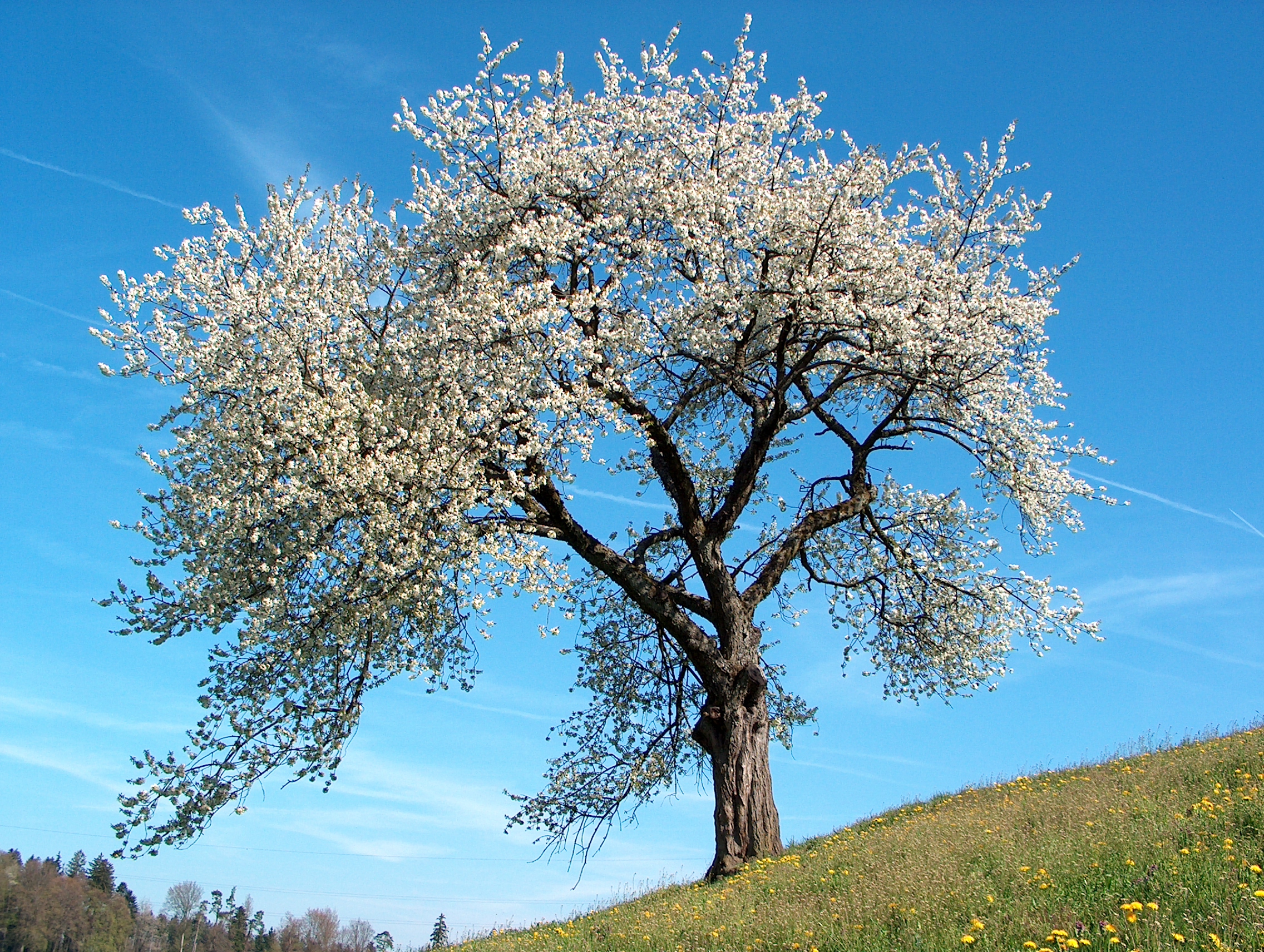
Prunus is a large genus of flowering trees and shrubs belonging to the rose family (Rosaceae), encompassing roughly 350 accepted species. The group is best known for producing stone fruits — edible drupes in which a fleshy outer layer surrounds a single large, hard-coated seed — including many of humanity's most cultivated food plants: peaches, apricots, plums, cherries, and almonds.
Members are either deciduous or evergreen. Leaves are simple, alternate, typically lance-shaped, and unlobed, often bearing small nectaries on the petiole. Flowers are radially symmetrical, with five petals and five sepals, and range from pure white to deep pink. A few species bear spiny stems. The fruits (drupes) vary enormously in size, flesh texture, and flavour across the genus, but share the defining characteristic of a stony endocarp enclosing the seed.
Prunus has a cosmopolitan native range: it occurs naturally across temperate North America, the neotropics of South America, and both temperate and tropical regions of Eurasia and Africa. The genus has also been widely introduced beyond its native range — to Australia, New Zealand, and oceanic islands — largely through horticulture and agriculture.
Modern phylogenetics divides Prunus into three subgenera. Subgenus Prunus contains the plums, apricots, almonds, peaches, and related groups. Subgenus Cerasus holds the true cherries, including the sweet cherry and sour cherry. Subgenus Padus encompasses the bird cherries, false bird cherries, cherry laurels, and the Pygeum group, many of which are found in tropical and subtropical regions.
Beyond fruit production, the genus is important for ornamental horticulture — particularly the flowering cherries collectively known in Japanese culture as sakura — and for timber, with black cherry (Prunus serotina) especially valued for fine furniture and cabinetry in North America. Many Prunus species also serve as larval host plants for a wide range of Lepidoptera. One important caveat: the seeds, leaves, and other parts of many species contain cyanogenic glucosides, notably amygdalin, which can release hydrogen cyanide on hydrolysis.
Etymology
The genus name Prunus derives from the Latin word prūnum, meaning plum fruit. Latin borrowed the term from Greek proumnon, which in turn traces to a pre-Greek language of Asia Minor — possibly related to Phrygian — reflecting the antiquity of plum cultivation in the eastern Mediterranean region. Carl Linnaeus first employed Prunus as a formal genus name in his 1737 Hortus Cliffortianus, consolidating several earlier generic names. By 1753 (Species Plantarum) he had formalised the genus in the binomial system, and by 1758 he had subsumed what he had previously treated as four separate genera — Amygdalus, Cerasus, Prunus, and Padus — into a single broadly circumscribed Prunus.
Distribution
Prunus has a naturally cosmopolitan distribution across the temperate and subtropical zones. It is native to North America (from Canada through the United States to Mexico and into the neotropics of South America), Europe, the Mediterranean basin, and across temperate and tropical Asia and Africa. POWO documents native occurrences in all major continental regions: Africa, Asia, Europe, North America, and South America. The genus has been introduced to Australia, New Zealand, and numerous oceanic islands through centuries of agricultural and horticultural activity, with some species becoming naturalised.
In Switzerland alone, InfoFlora records at least 18 Prunus species: native wild species include Prunus avium (wild cherry), Prunus mahaleb (St Lucie cherry), Prunus padus (bird cherry), and Prunus spinosa (blackthorn); introduced and naturalised species include Prunus serotina (black cherry), Prunus laurocerasus (cherry laurel), and several ornamental or fruit-crop species.
Taxonomy
Prunus L. was first published in Species Plantarum 1: 473 (1753), and is the accepted name under the current circumscription (POWO, GBIF). The genus belongs to order Rosales within family Rosaceae and is placed in class Magnoliopsida. POWO recognises 352 accepted species; GBIF records 1,419 total descendants (species and infraspecific taxa combined). Forty-two heterotypic synonyms at genus rank are recognised, including many former genera: Amygdalus L., Armeniaca Scop., Cerasus Mill., Padus Mill., Pygeum Gaertn., Aflatunia Vassilcz., Louiseania Carrière, Maddenia Hook.f. & Thomson, Microcerasus (Webb & Berthel.) M.Roem., and others.
Modern phylogenetic studies support dividing Prunus into three subgenera: subg. Prunus (plums, apricots, almonds, peaches, desert almonds), subg. Cerasus (true cherries), and subg. Padus (bird cherries, false bird cherries, cherry laurels, Pygeum). The broad circumscription merging these formerly separate genera is widely accepted in contemporary floristics, though some regional treatments retain segregate genera.
Ecology
Many Prunus species serve as larval food plants for a diverse array of Lepidoptera (butterflies and moths). Flowers are pollinated primarily by bees and other insects attracted to the abundant nectar and pollen produced by the five-petalled blooms. The fleshy drupes are dispersed by birds and mammals that consume the fruit flesh and pass or discard the stone.
Species within the genus produce cyanogenic glucosides — particularly amygdalin — in their seeds, leaves, bark, and other tissues. On hydrolysis, these compounds yield hydrogen cyanide, which acts as a deterrent to herbivory. While the ripe fruit flesh of many species is edible and palatable to humans and wildlife, the seeds and foliage of numerous Prunus species can be toxic to livestock and humans if consumed in quantity.
Ecologically, the genus occupies habitats ranging from temperate deciduous forests and shrublands to upland rainforests and gallery forests (in the case of tropical species such as Prunus africana). Species also contribute to agroforestry systems through erosion control and organic matter inputs from leaf litter.
Cultivation
Prunus species are cultivated on every inhabited continent, primarily for edible stone fruits and for ornamental horticulture. The major crop species — sweet cherry, sour cherry, peach, nectarine, apricot, plum, and almond — are among the world's most economically important temperate fruits. Ornamental cherries (sakura and allied cultivars) are planted for spring blossom, and cherry laurels (Prunus laurocerasus) are widely used as hedging and screening plants.
Most Prunus species perform best in full sun with well-drained, medium to light soils at neutral to mildly acidic pH. They are generally intolerant of waterlogged conditions. Hardiness varies widely by species: many are fully hardy throughout the UK and northern temperate zones, while tropical or subtropical species (e.g. Prunus africana) require warmer conditions. Columnar and weeping ornamental cultivars are available for space-limited gardens. Self-fertile fruiting cultivars simplify orchard management in domestic settings.
Propagation
Prunus is propagated by seed, grafting, and cuttings. Seeds have relatively short viability and germinate most reliably when sown fresh; under ideal conditions germination typically occurs within 35–50 days at rates of 60–80%. For cultivated varieties — which rarely come true from seed — grafting onto compatible rootstocks is the standard commercial method. Rootstock selection influences tree vigour, size, and fruit precocity. The robustness of grafting in the genus is illustrated by multi-variety composites such as the "Tree of 40 Fruit," in which 40 distinct varieties are grafted onto a single rootstock.
Cultural Uses
Prunus species underpin significant food traditions worldwide. Stone fruits — cherries, plums, peaches, apricots, and almonds — have been cultivated since antiquity in the Near East and Central Asia and feature prominently in cuisines across Europe, Asia, and the Americas. Sloe berries (Prunus spinosa) are used in liqueurs such as sloe gin. Almonds (Prunus dulcis) are consumed as a nut and pressed for oil.
In Japan, the flowering cherry (sakura) occupies a central place in cultural life: annual cherry-blossom viewing (hanami) is a national tradition. Flowering cherry cultivars have been selected and refined over many centuries.
Medicinally, Prunus africana bark extract has been used in treating benign prostatic hyperplasia, and traditional medicine across Africa has employed various Prunus species for fever, malaria, wound healing, and gastrointestinal complaints, with active compounds including amygdalin and phytosterols. Black cherry (Prunus serotina) wood is prized in North American furniture-making and cabinetry.










